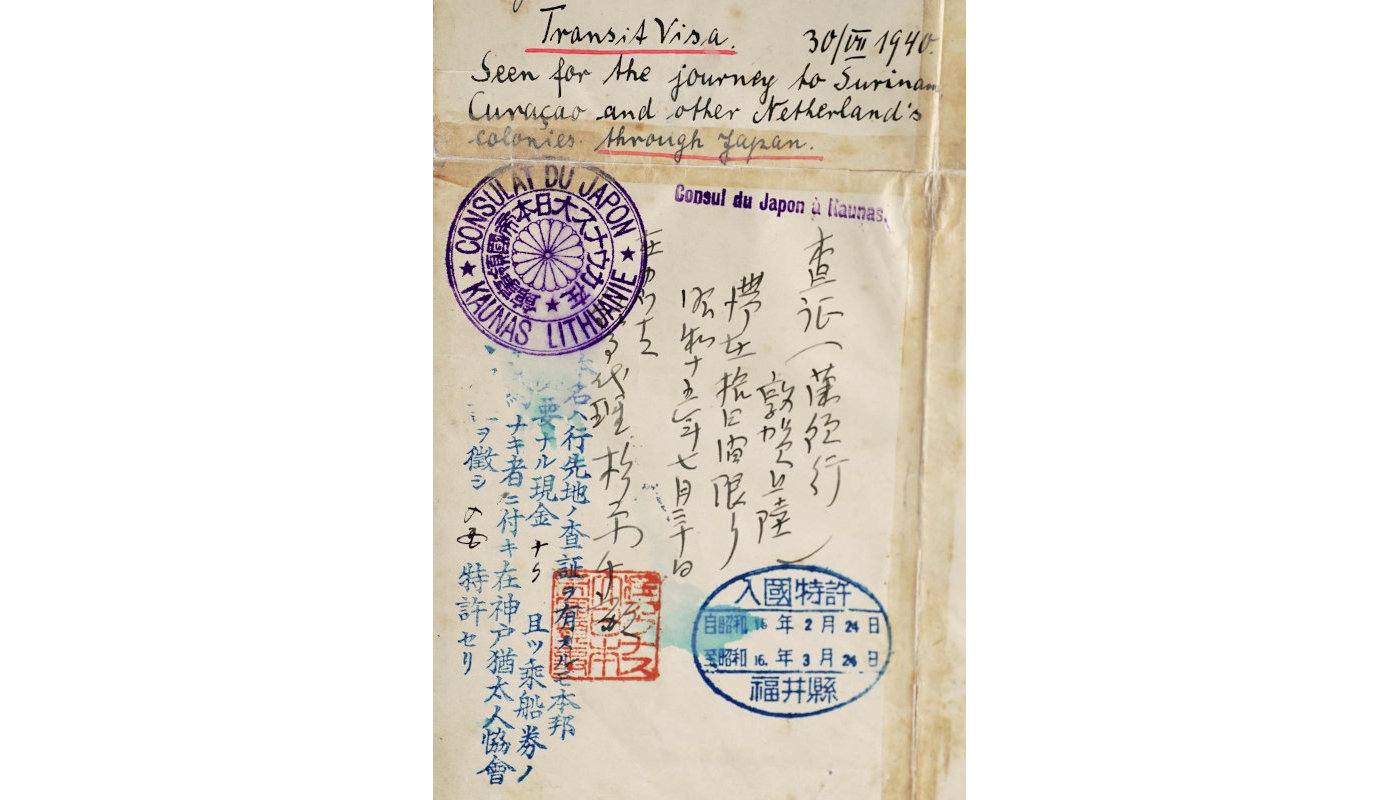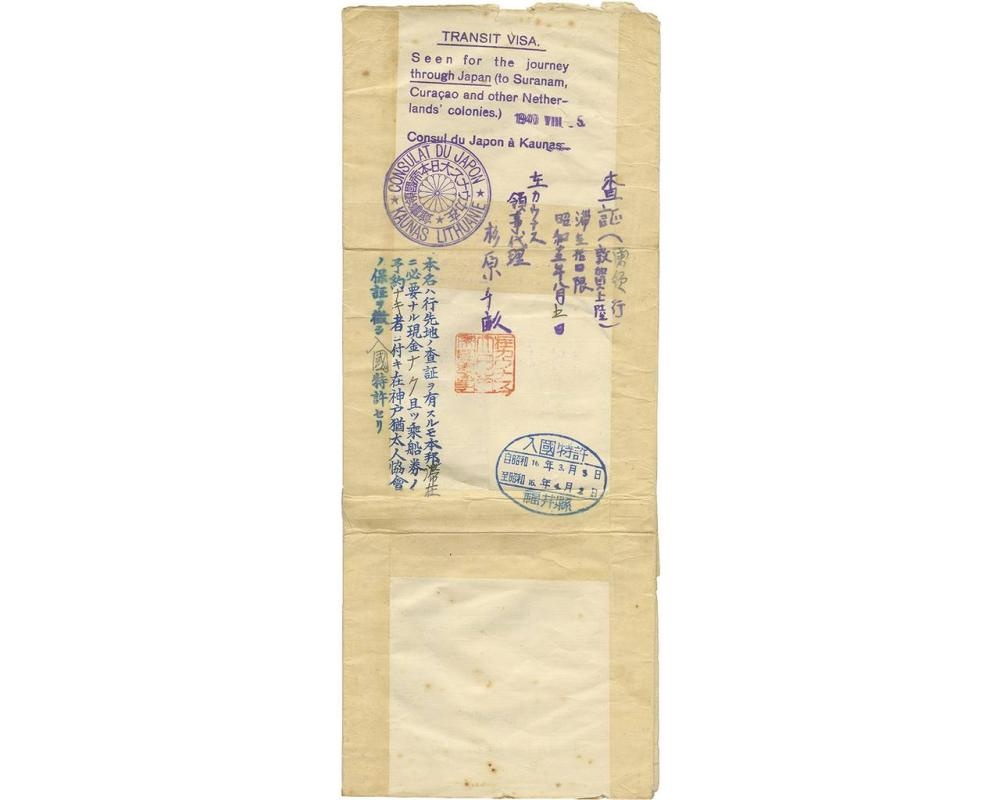
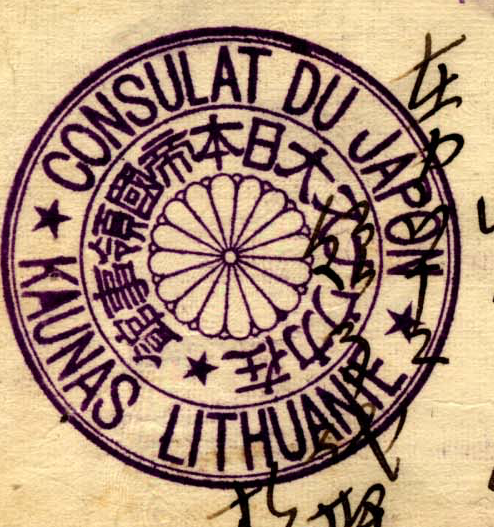
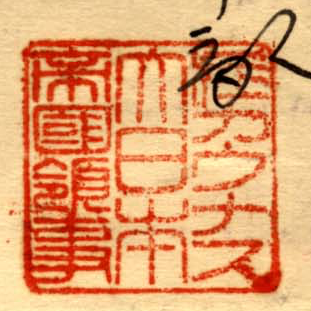
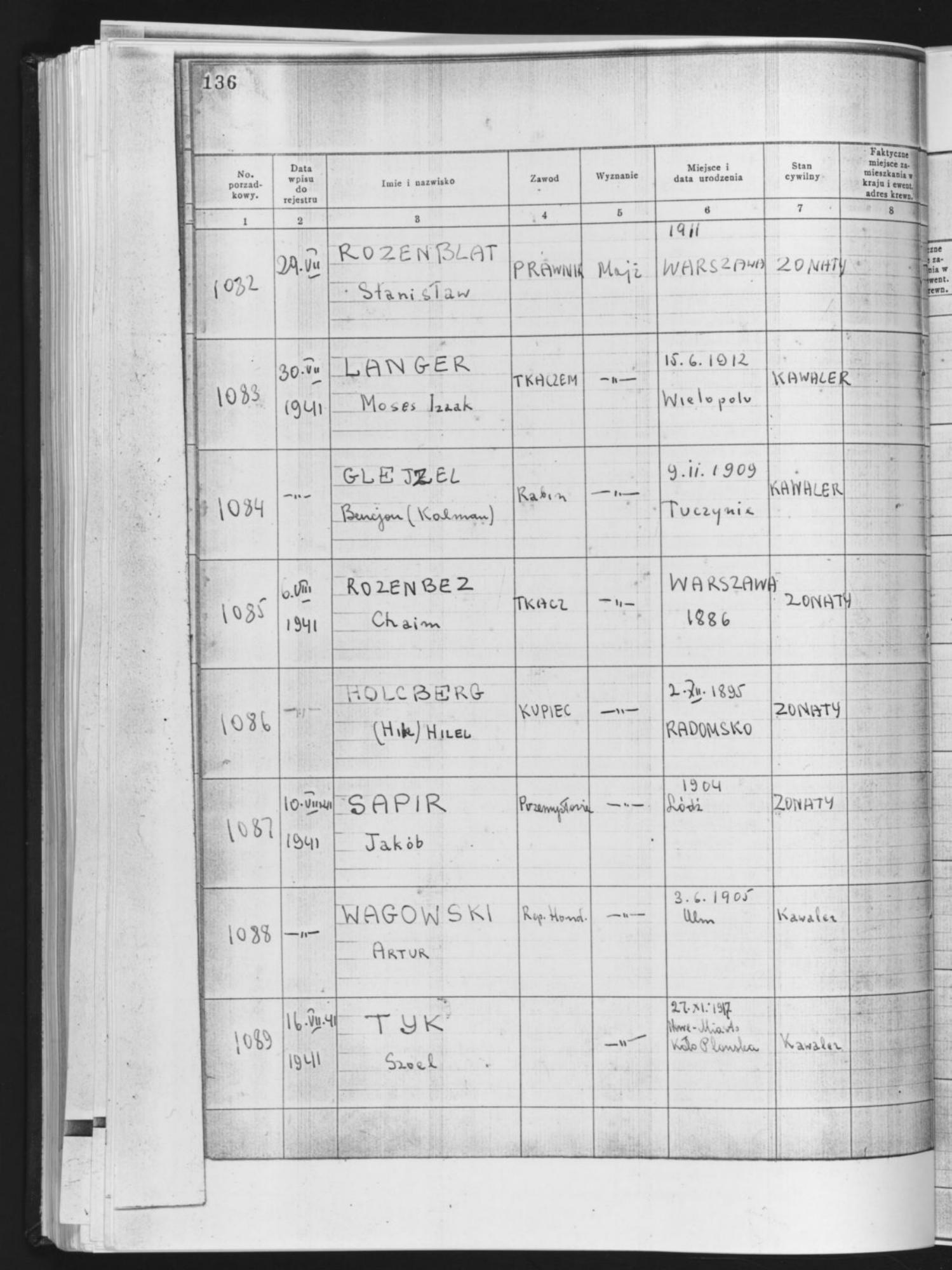
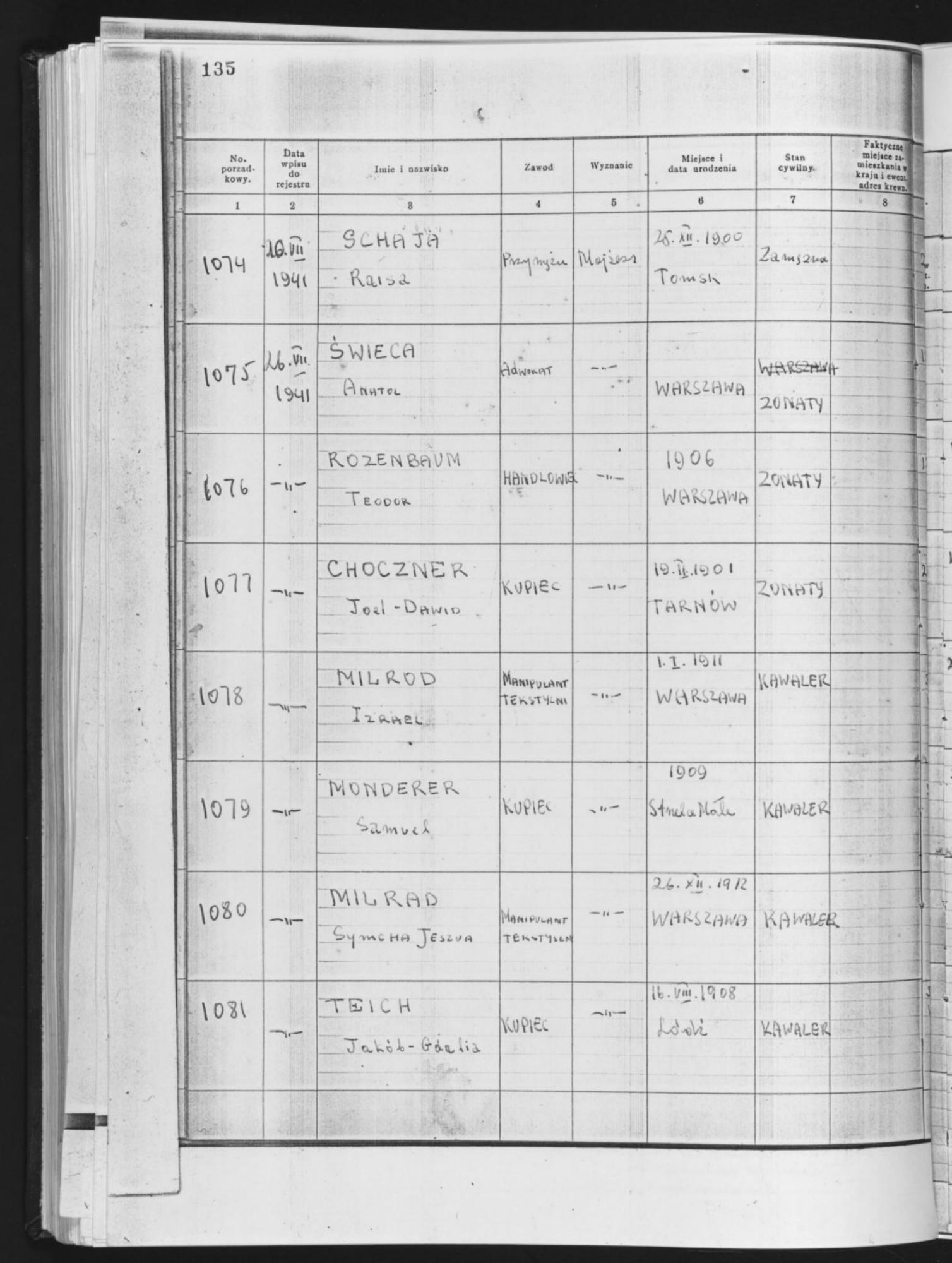
Sugihara's seal
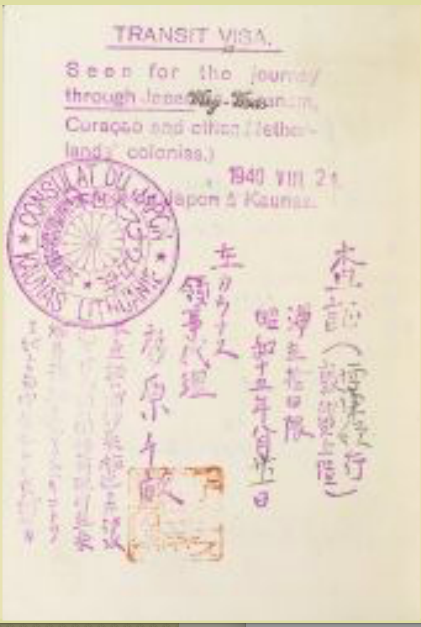
命のビザ
Visas for Life · Kaunas, 1940

The Sugihara Visa Archive

In the summer of 1940, Japanese vice-consul Chiune Sugihara wrote transit visas for Jewish refugees trapped in Lithuania — without waiting for his government's permission. This archive documents them one name at a time.

Searches the name as you type it. Spellings changed at every border, so switch to Fuzzy on the results page to catch variants — Zielonka from Zell.

2,140 visas recorded 378 documented 351 people with documents recovered 1,762 still to find
Where to start

Also on the site: Anatomy of a Visa · The Curaçao Loophole · Cast of the Rescue · The Lists · Together · Methodology · Resources

The mission

Map every visa. Tell every story.

In three months of 1940, Chiune Sugihara wrote roughly 2,140 visas by hand — each one a family's way out. This archive exists to account for every one of them: to match each name on his list to the documents that made the escape possible, and to tell the story of every family who carried them out of Europe. We are not there yet. Here is how far we have come.

2,140
Visas recorded on Sugihara's list
378
Visas & documents mapped
218
Family stories told
351
People with documents recovered
Freshly documented · the archive is growing

Recently added

Apoteker DawidNew
Apoteker Dawid
No. 1300
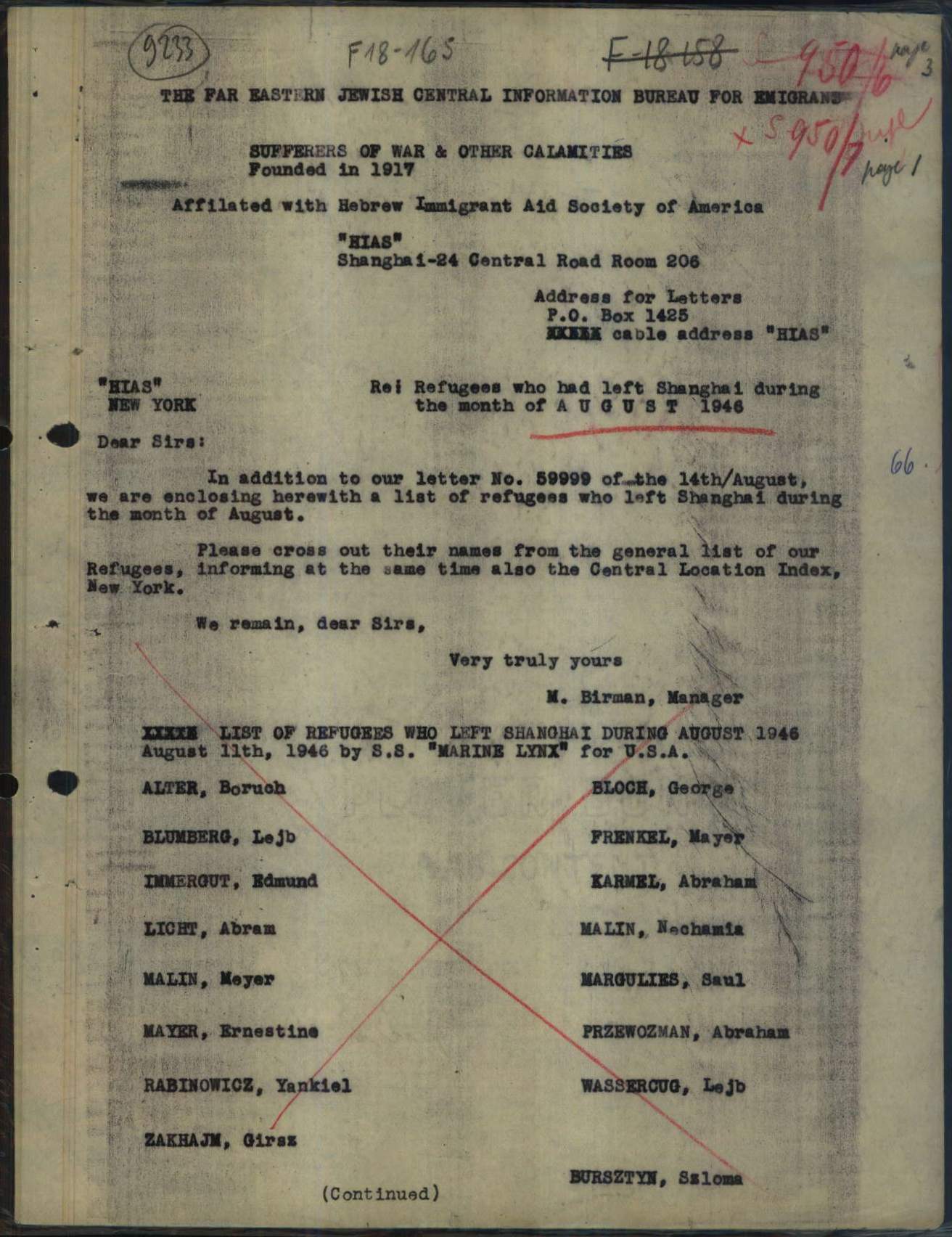
Abram LichtNew
Abram Licht
No. 1412
Icchok MelamedowiczNew
Icchok Melamedowicz
No. 1768
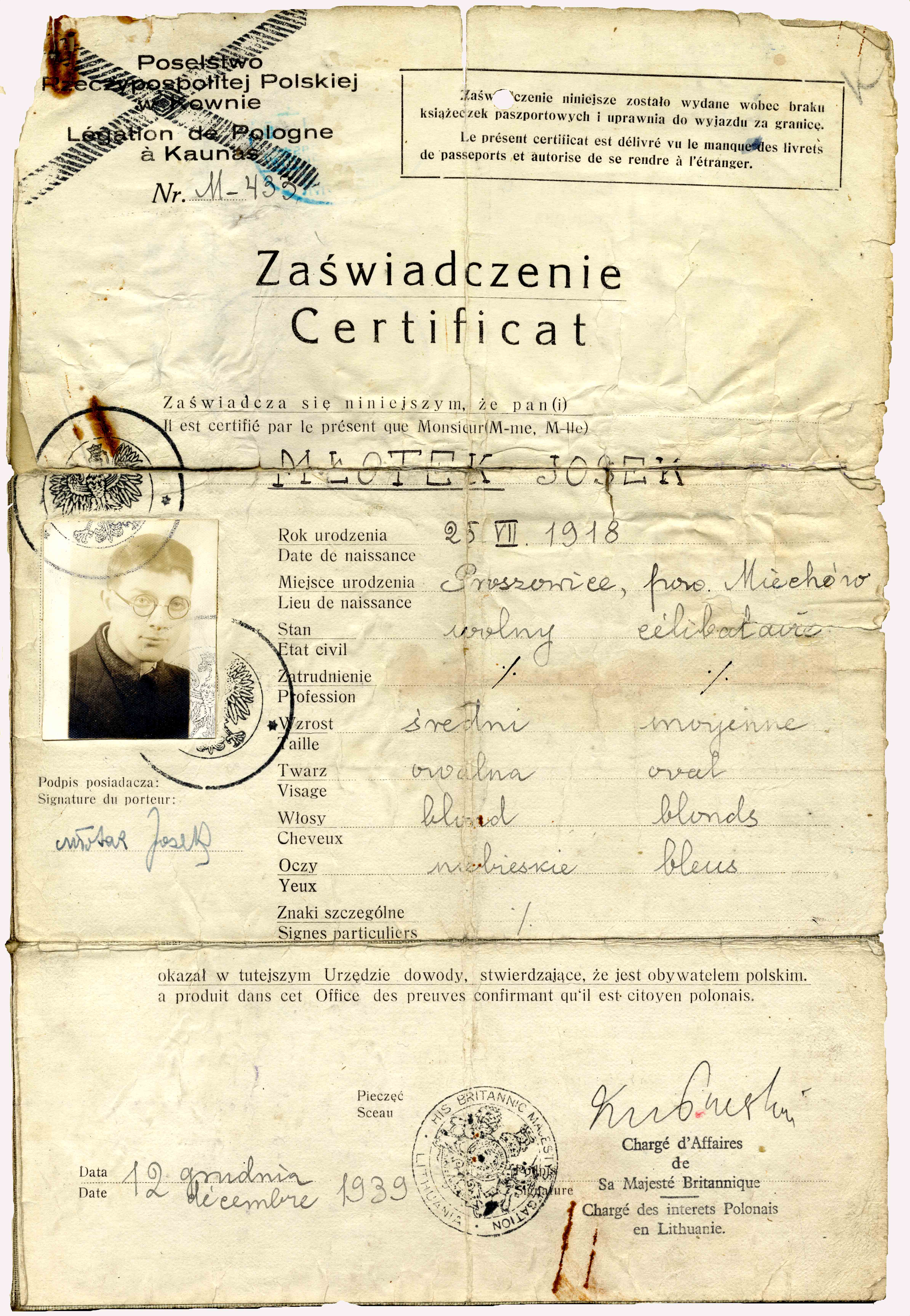
Josek MlotekNew
Josek Mlotek
No. 1860
Mozes LangerNew
Mozes Langer
No. 2032
Samuel MondererNew
Samuel Monderer
No. 665
Izrael MilrodNew
Izrael Milrod
No. 1561
In the record, lately · corrections & new detail
CorrectionAvram (Abram) Liwer · No. 1026 — an internal note naming living relatives (marked not published) sat in a reader-facing field, a… · 21 Sep 2026 CorrectionAvram (Abram) Liwer · No. 1026 — owner's decision of 21 Sep 2026 (strip): editor's-log clauses of 7 Aug 2026 were printing as pr… · 21 Sep 2026 CorrectionChava (Hawa) Liwer · No. 1025 — pipeline vocabulary in a reader-facing field (flagged 14 Sep 2026); the fact it recorded (age 4… · 21 Sep 2026 CorrectionChava (Hawa) Liwer · No. 1025 — owner's decision of 21 Sep 2026 (strip): editor's-log clauses of 7 Aug 2026 were printing as pr… · 21 Sep 2026
See all recent additions → The full log of changes →
“Whoever saves one life, saves the world entire.”
— Mishnah, Sanhedrin 4:5 · inscribed on the Righteous Among the Nations medal
The man · Kaunas, July–September 1940

Who was Chiune Sugihara?
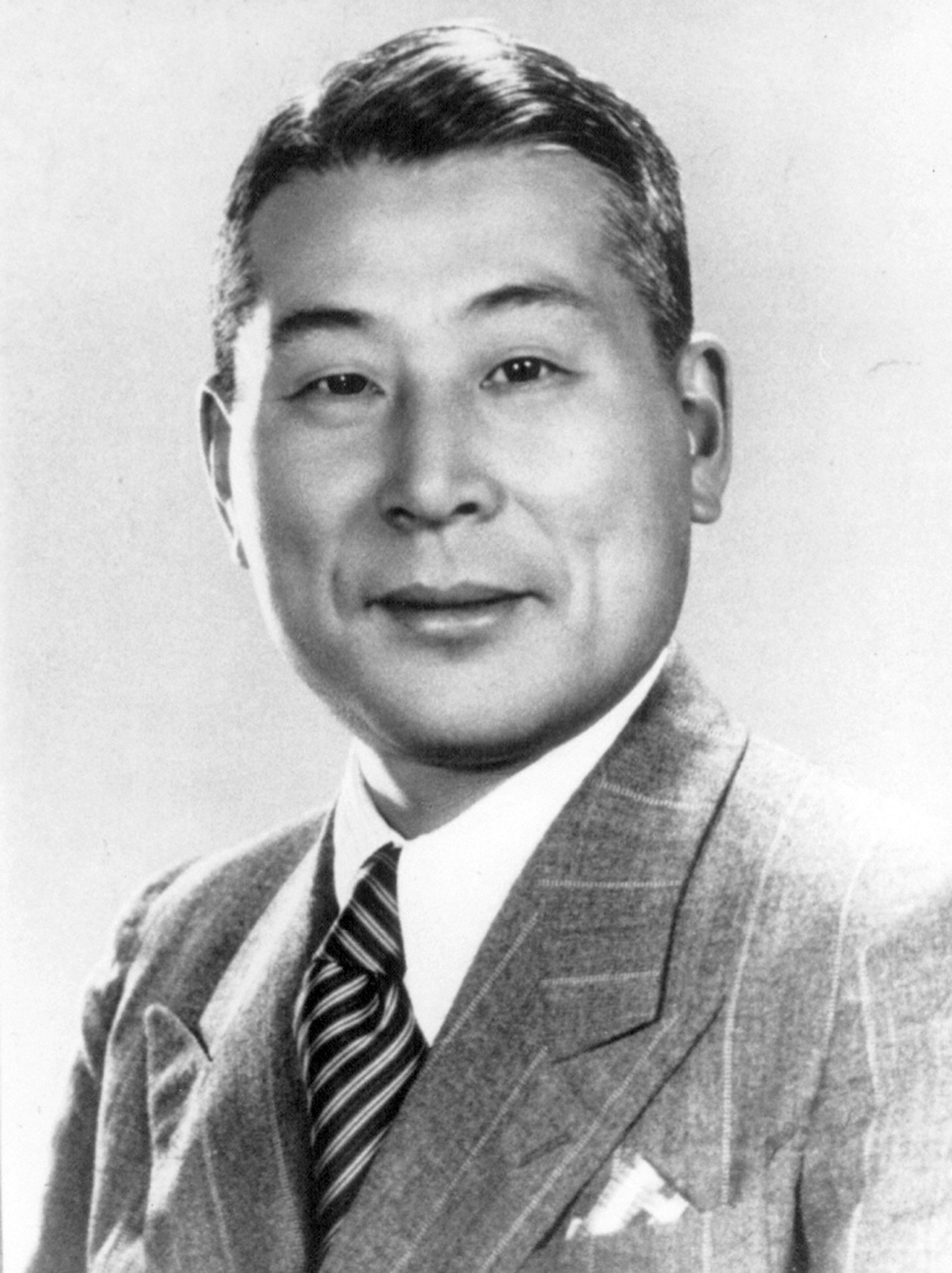
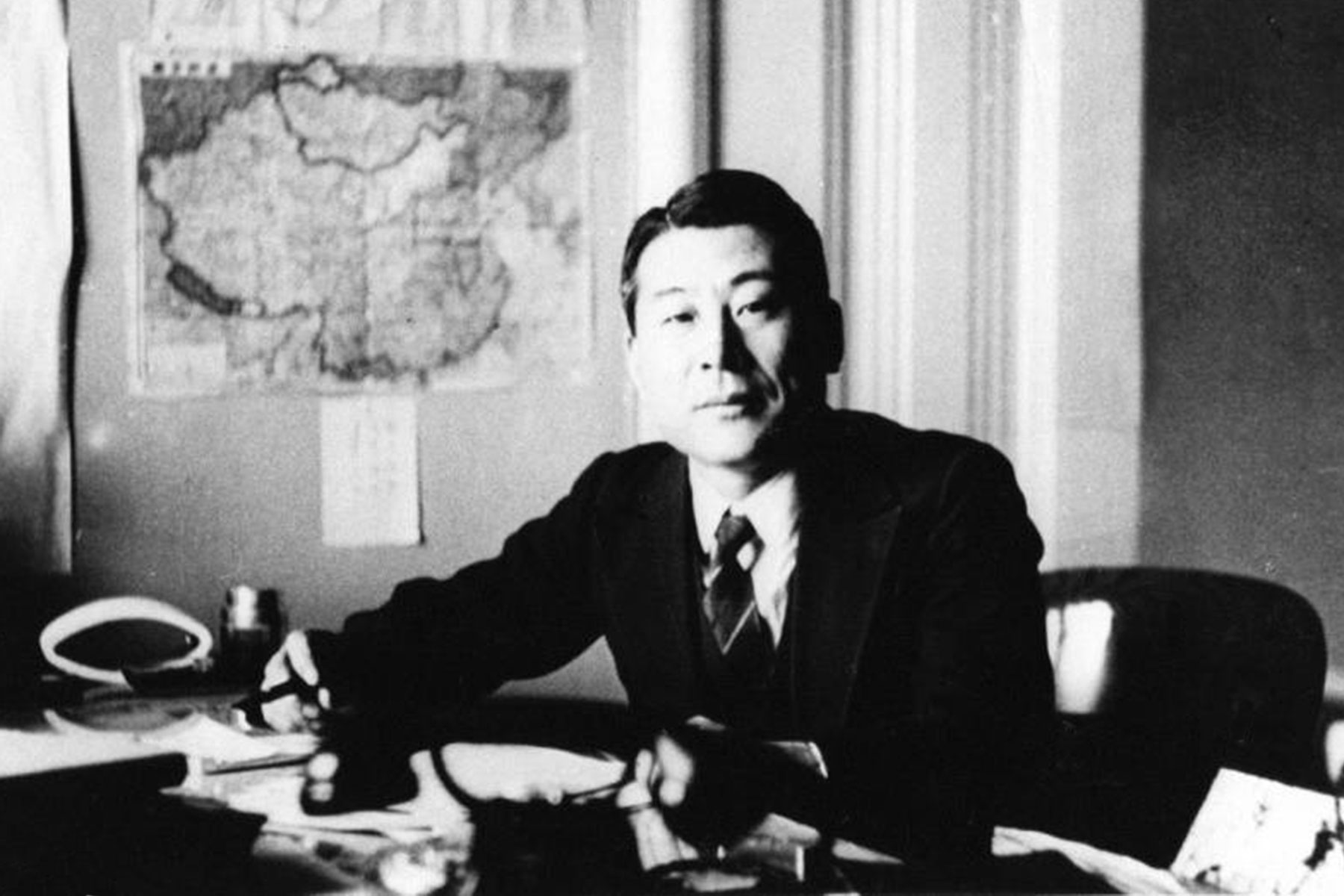
Portrait of Chiune Sugihara
Chiune Sugihara (1900–1986), Japanese vice-consul at Kaunas.
Photograph courtesy of the Sugihara family.

Chiune Sugihara (1900–1986) was Japan's acting consul in Kaunas, Lithuania — the man remembered today as the “Japanese Schindler.” In 1985 Yad Vashem named him Righteous Among the Nations. This is what he did in the summer of 1940.

Three months, a rubber stamp, and a conscience

By the summer of 1940 the trap had closed. Germany held the west; in June the Soviet Union annexed Lithuania. Thousands of Jewish refugees — many already once uprooted from Poland — were stranded in Kaunas with nowhere legal to go. One by one, the consulates shut their doors.

Two stayed open a crack. The Dutch honorary consul, Jan Zwartendijk, realised the Caribbean colony of Curaçao required no formal visa and began endorsing passports for it. But to reach it a refugee had to cross the entire Soviet Union — and for that they needed a Japanese transit visa.

“I may have to disobey my government, but if I don't, I would be disobeying God.”— Chiune Sugihara

Sugihara, Japan's acting consul in Kaunas, cabled Tokyo three times for permission. Three times the Foreign Ministry refused. He decided to write the visas anyway. For some six weeks — often eighteen hours a day, his hand cramping, his wife Yukiko kneading it at night — he signed transit visa after transit visa, passing them through the consulate gate and, at the last, from the window of the departing train as he was recalled on 4 September 1940.

A note on the sources. The account above follows the Sugihara family's own published telling, in Yukiko Sugihara's memoir Visas for Life. Some of its details — the exchanges with Tokyo, and when and where the last visas were written — are disputed among the recipients of the visas, their descendants, and members of Sugihara's family, who do not all remember it the same way or read the surviving documents the same way. The archive keeps the published account and records that it is contested, rather than quietly choosing between them.

A single visa could carry a whole family. Those who held one began an improbable journey east — by rail across Siberia to the Pacific, and onward to refuge scattered across the world. This archive follows them by name, matching Sugihara's own list against the documents and stories their descendants have kept.
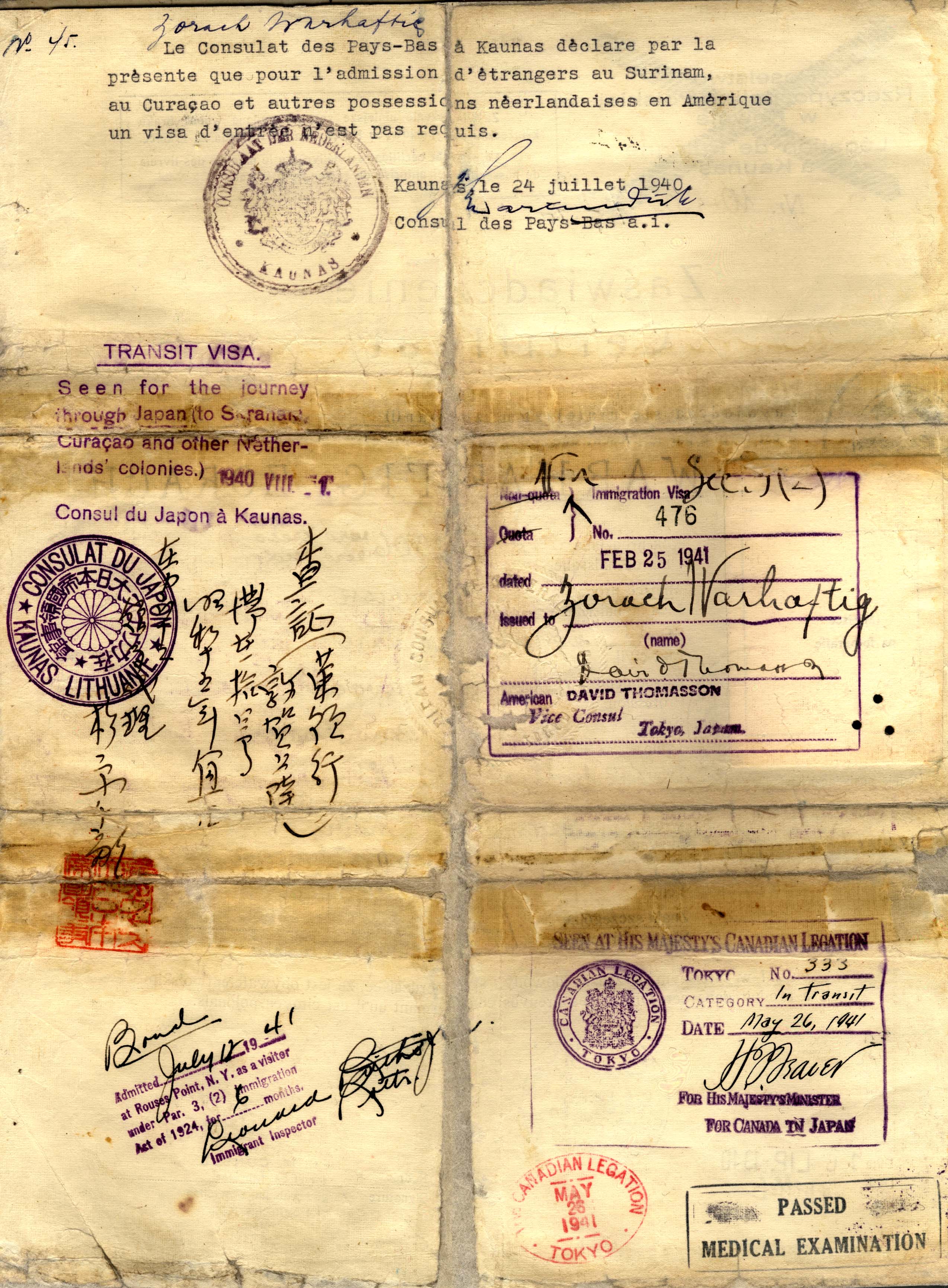
KaunasMoscowOmsk IrkutskVladivostokTsuruga Kobe Shanghai · Palestine · the Americas · Australia
After Kaunas · 1940–1986

The years after

Sugihara's war did not end at the Kaunas railway station. He was posted on to Prague, Königsberg and Bucharest, and at the war's close he and his family were held in a Soviet internment camp for more than a year before they saw Japan again. In 1947 the Foreign Ministry asked for his resignation — officially a post-war staff cut, though he and Yukiko believed it was the price of the visas.

Two decades of obscurity followed: odd jobs, and years in Moscow where his Russian served a Japanese trading firm. The family endured its own losses, burying their youngest son. Then, in 1968, an Israeli diplomat who had escaped Kaunas as a teenager on one of his visas found him again. Recognition came slowly — Yad Vashem named him Righteous Among the Nations in 1985, a year before he died, still little known in his own country. Today an estimated 40,000 people are alive as descendants of those he saved.

The journey · one visa, half a world

Where Sugihara's visa led

Most had first waited in Vilna before reaching Kaunas for their visas, then crossed the Soviet Union to the Pacific. From Japan they scattered. The circles mark where the families in this archive finally settled — each sized by how many we have traced so far.

VilnaKaunasMoscowOmskIrkutskVladivostokKobeUnited States · 52British Palestine (Israel) · 15Shanghai · 16Canada · 10Australia · 10India · 1S. Rhodesia · 1
Trans-Siberian railway Sea to Japan Onward emigration Final destination · count
Explore the interactive map →
Faces from the list

The people behind the numbers

Zorach Warhaftig
Zorach Warhaftig
No. 455 · organised the escape
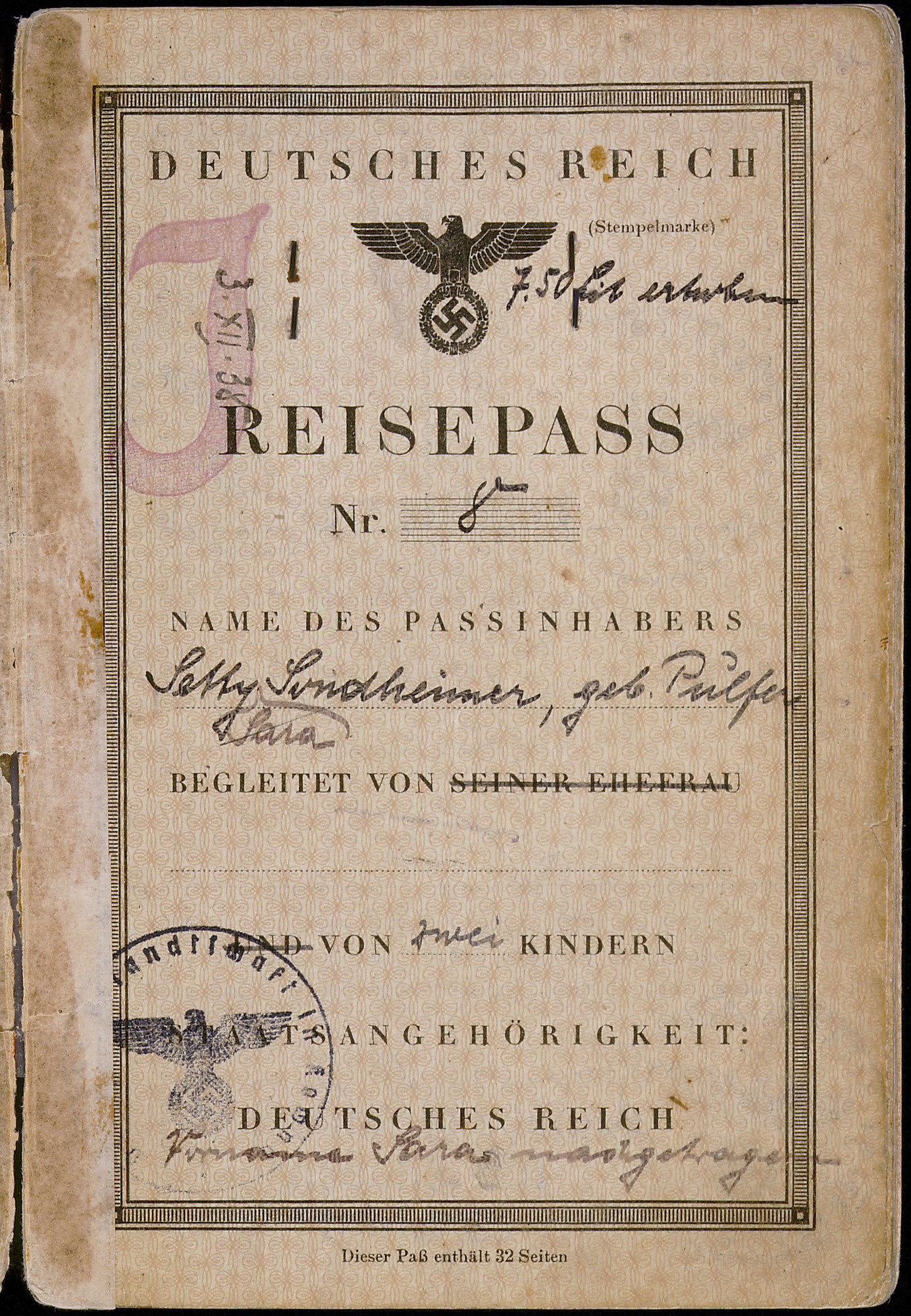
The Sondheimer family
No. 1317 · Berlin → Kaunas → USA
Berl Schor
Berl Schor
No. 77 · a boy in Kobe, aged 13
Hersz Praszkier
Hersz Praszkier
No. 1048 · died in Shanghai, 1944
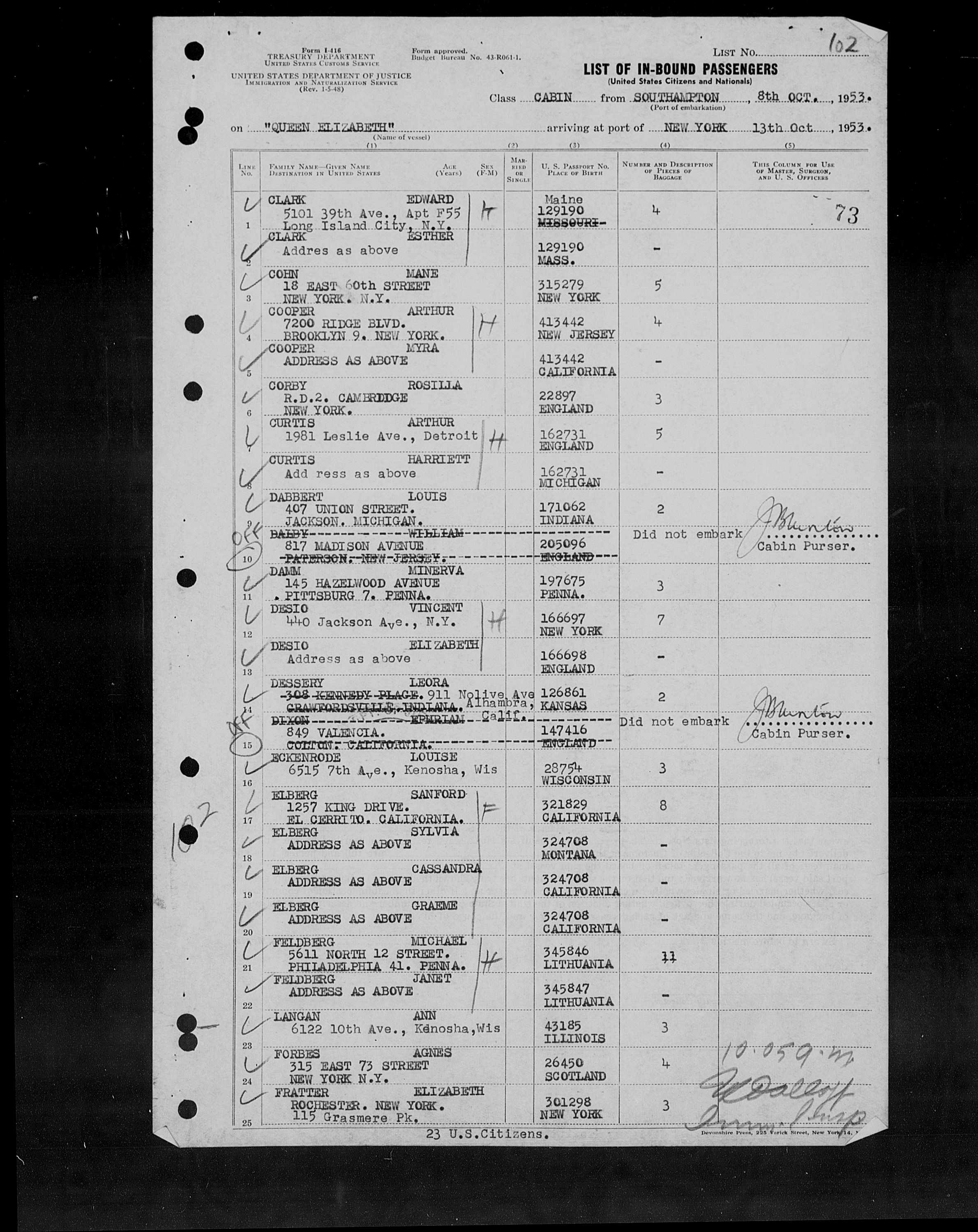
Owsei Feldberg
Owsei Feldberg
No. 3
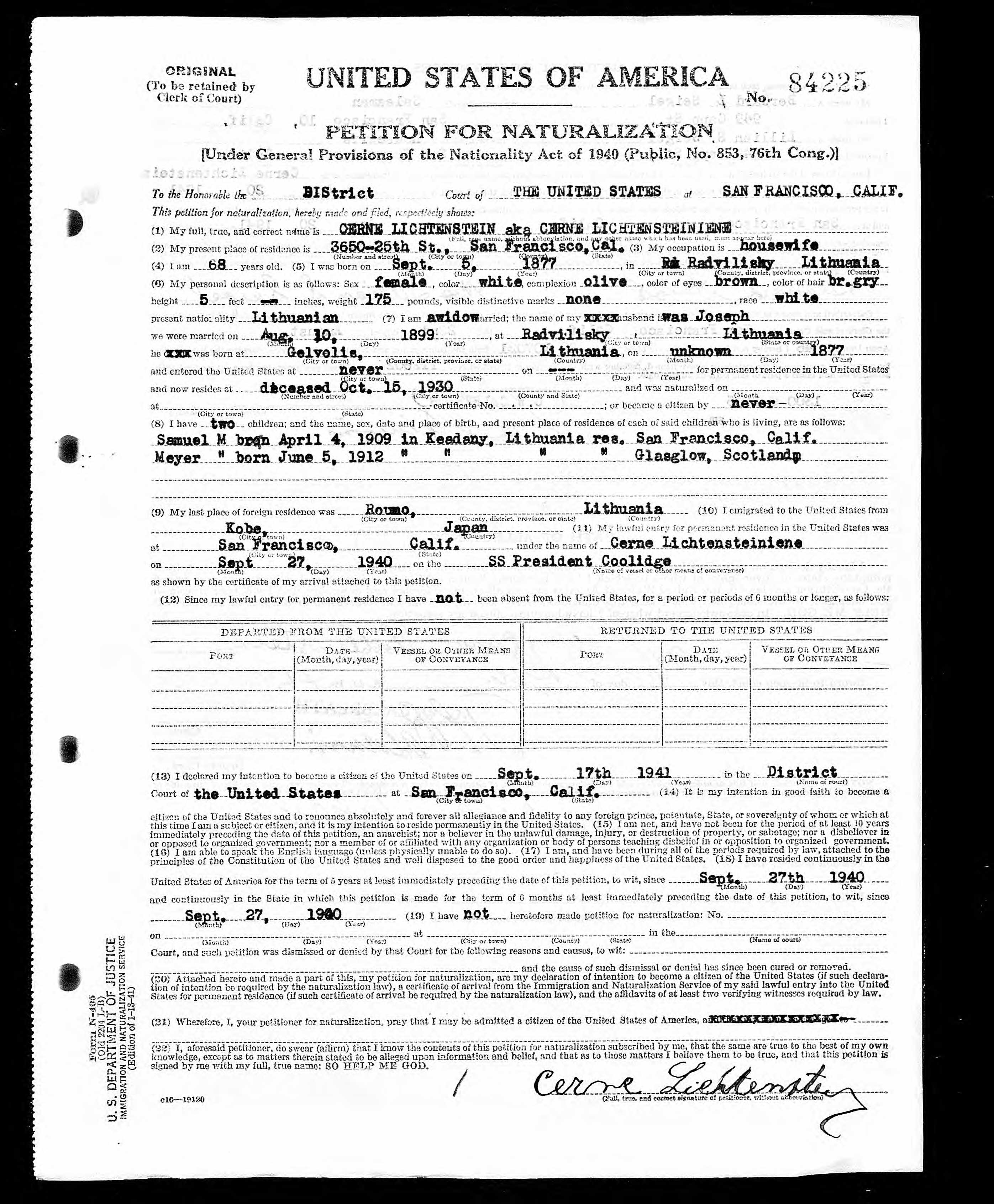
Cerne Lichtensteiniene
No. 5
Louis Finkelstein
Louis Finkelstein
No. 7
See the full wall of documents →
Descendants & families

Do you have a Sugihara visa?

If your family carried one of these documents out of Europe, help us record it. Share the visa and the story — every one we add returns a name to the list.

Contribute a document