Zupnik Moses
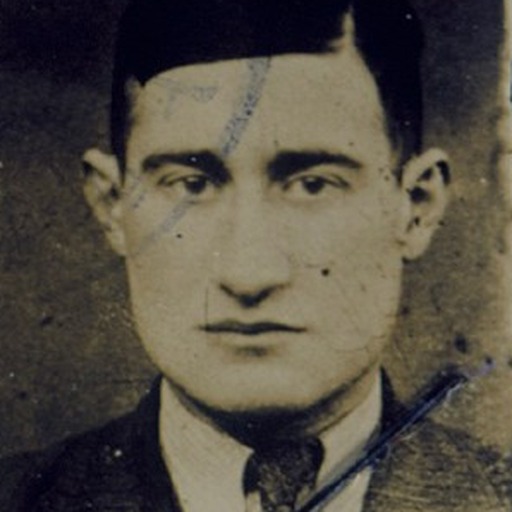
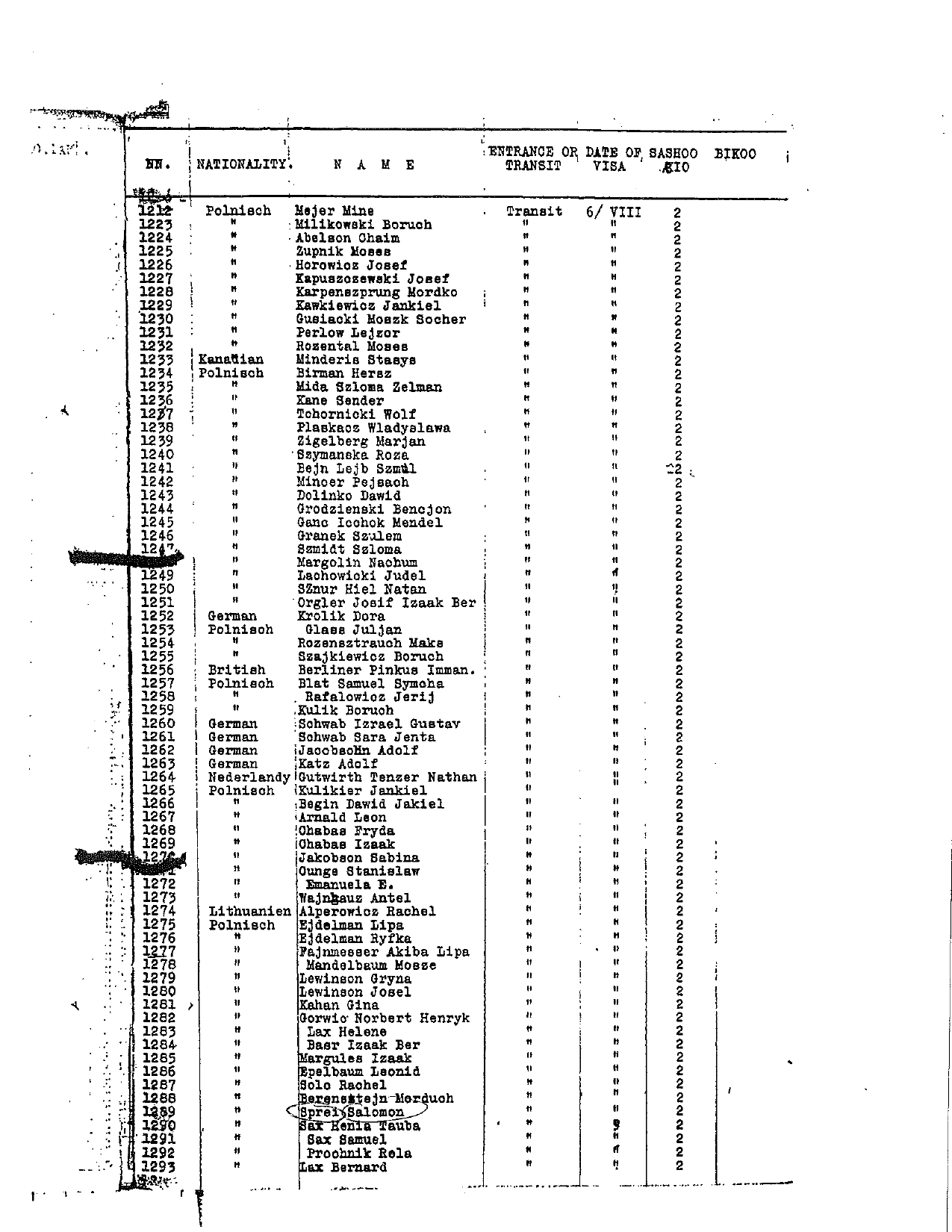
Zupnik Moses received transit visa no. 1225 at the Japanese consulate in Kaunas on 6 August 1940. The register records rabbinical student - mir yeshiva, aged 22.
Documents
| Name | Moses Zupnik |
|---|---|
| Citizenship | Polnisch [Polish] |
| Visa | Transit |
| Issued | 6 Aug 1940 · arrived in Japan 25 Jan 1941 |
| Line | 1225 |
What the register records
- Nationality as recorded
- Polnisch
- Age in 1940
- 22
- Occupation
- Rabbinical Student - Mir Yeshiva
The journey
Reached Japan; reached Shanghai; registered in Kobe for Canada.
What is known
When the Mir Yeshiva needed three hundred visas, Reb Leib Malin chose Moshe Zupnik — a German-raised twenty-two-year-old with fluent German and one borrowed presentable suit — to get them. Turned away once, he bribed the Polish doorman with Yaakov Ederman, was told by secretary Wolfgang Gudze that an entire community was impossible, and asked to see the consul himself. Sugihara pressed him — "It's wartime. How will you get money and ships?" — and then said yes. Zupnik spent the next two weeks inside the consulate stamping visas beside Gudze, one of the strangest and most consequential partnerships of the rescue. He learned beside Rav Chatzkel Levenstein through the Shanghai years and died in 2010.
Moshe Zupnik, a student of the Mir Yeshiva which had fled from Poland to Lithuania, approached Sugihara's secretary Wolfgang Gudze to seek visas for the yeshiva's 300 students and teachers stranded in Kaunas. He kept up his vigil at the Japanese consulate for two weeks. Sugihara let him use the consulate stamp to help produce the transit visas, and the group travelled out through Japan on paper naming Curaçao. The Mir Yeshiva survived the war intact. Zupnik later asked Sugihara why he had risked his career for strangers; Sugihara answered that he had pity on them.
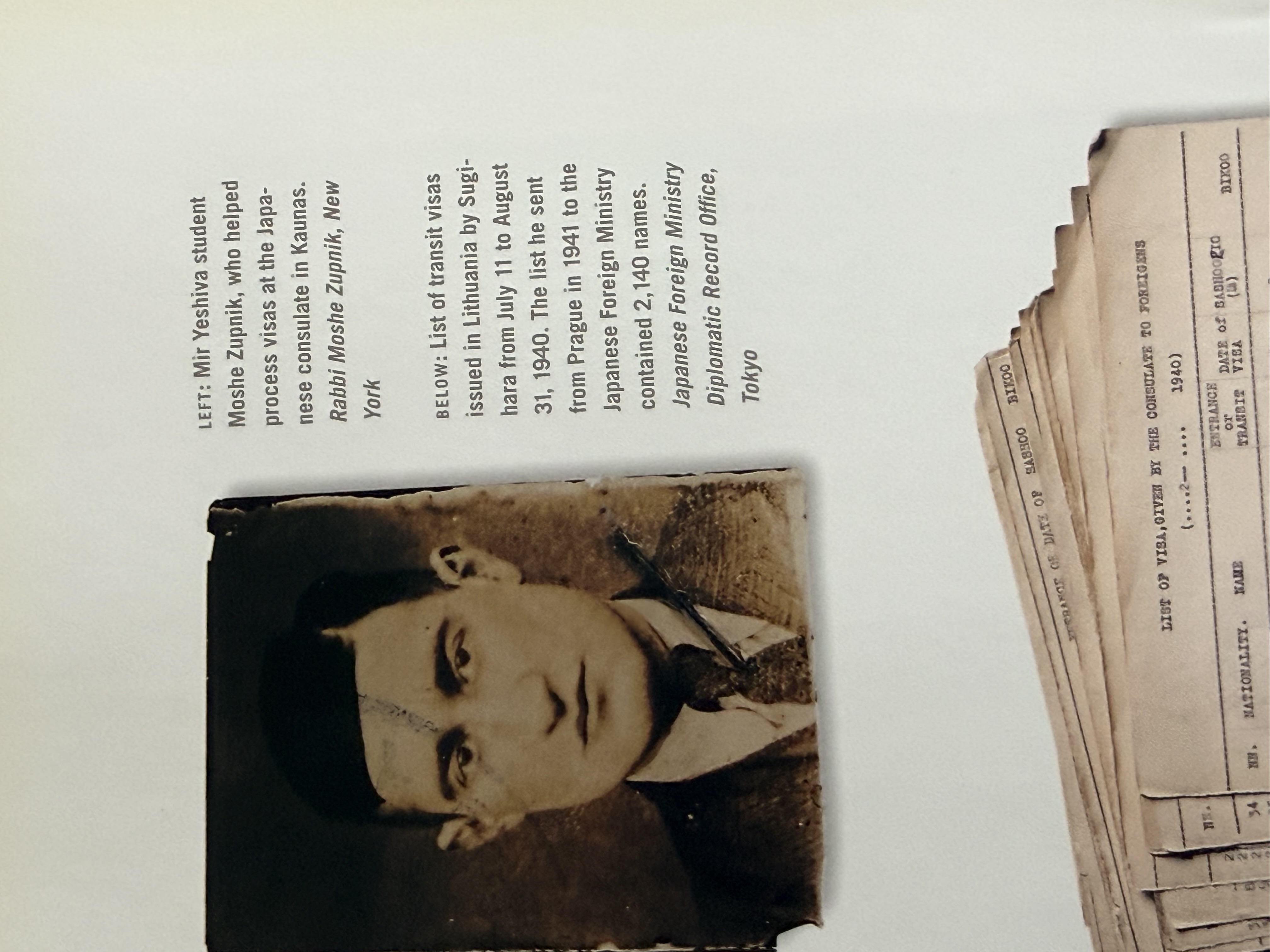
Moshe Zupnik was a Mir Yeshiva student who helped process transit visas at the Japanese consulate in Kaunas. He later became known as Rabbi Moshe Zupnik and settled in New York. A list of transit visas issued in Lithuania by Sugihara from July 11 to August 31, 1940 is also displayed, along with a copy of the list Sugihara sent from Prague in 1941 to the Japanese Foreign Ministry, containing 2,140 names.
I am a member of the Mir Yeshiva. I have three hundred passports with me. We will go to Curacao. Help us to get there. He simply handed over the consulate stamp and allowed me to make visas!
Mir Yeshiva student Moshe Zupnik, who helped process visas at the Japanese consulate in Kaunas. List of transit visas issued in Lithuania by Sugihara from July 11 to August 31, 1940. The list he sent from Prague in 1941 to the Japanese Foreign Ministry contained 2,140 names. LIST OF VISA, GIVEN BY THE CONSULATE TO FOREIGENS
Where this comes from
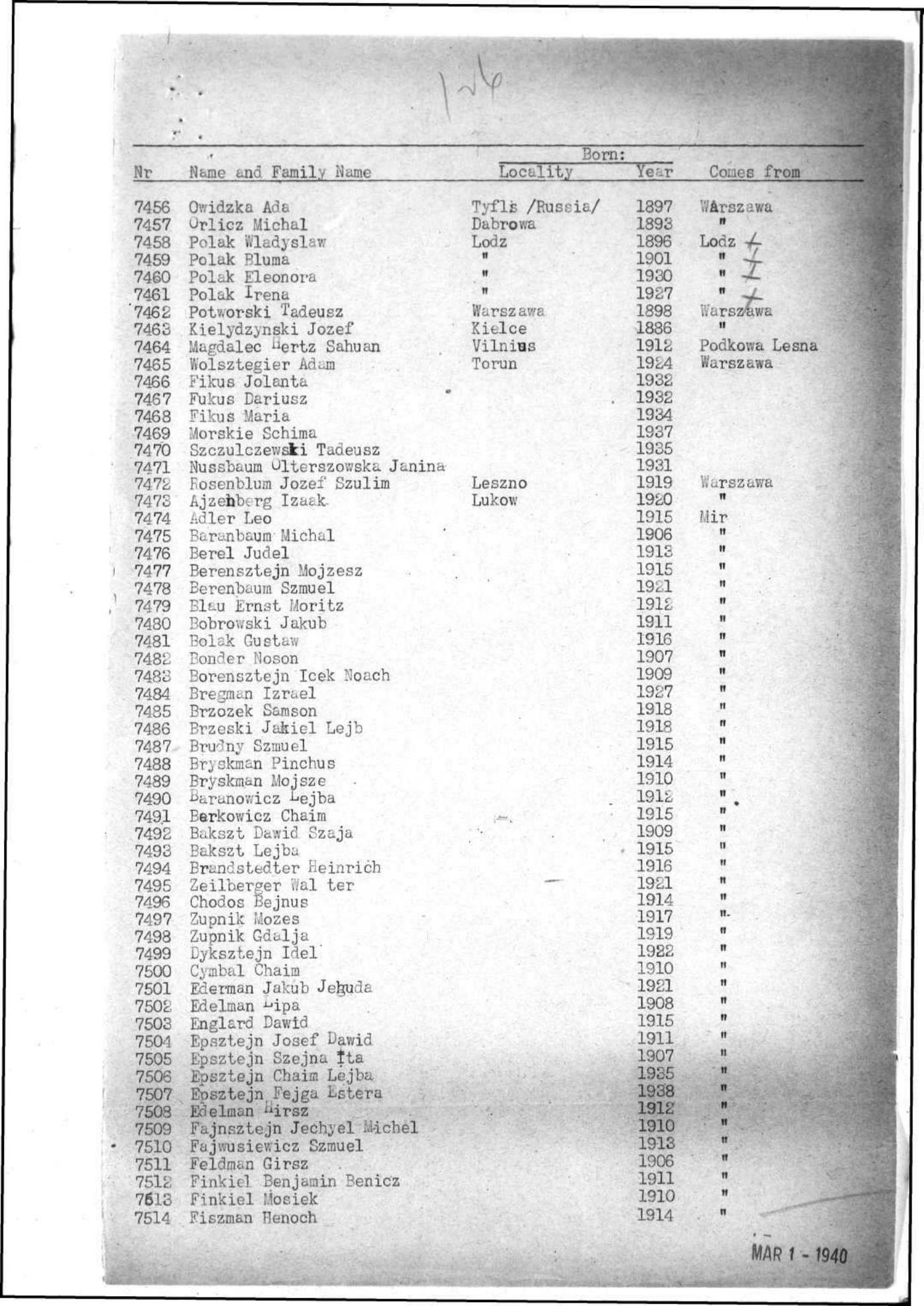
- List of Refugees, Vilna, 1940 — JDC Archives, New York, collection AR 33/44, file 00876. The contemporary register of Polish Jewish refugees in Lithuania, running to more than nine thousand numbered entries; the fullest independent check…
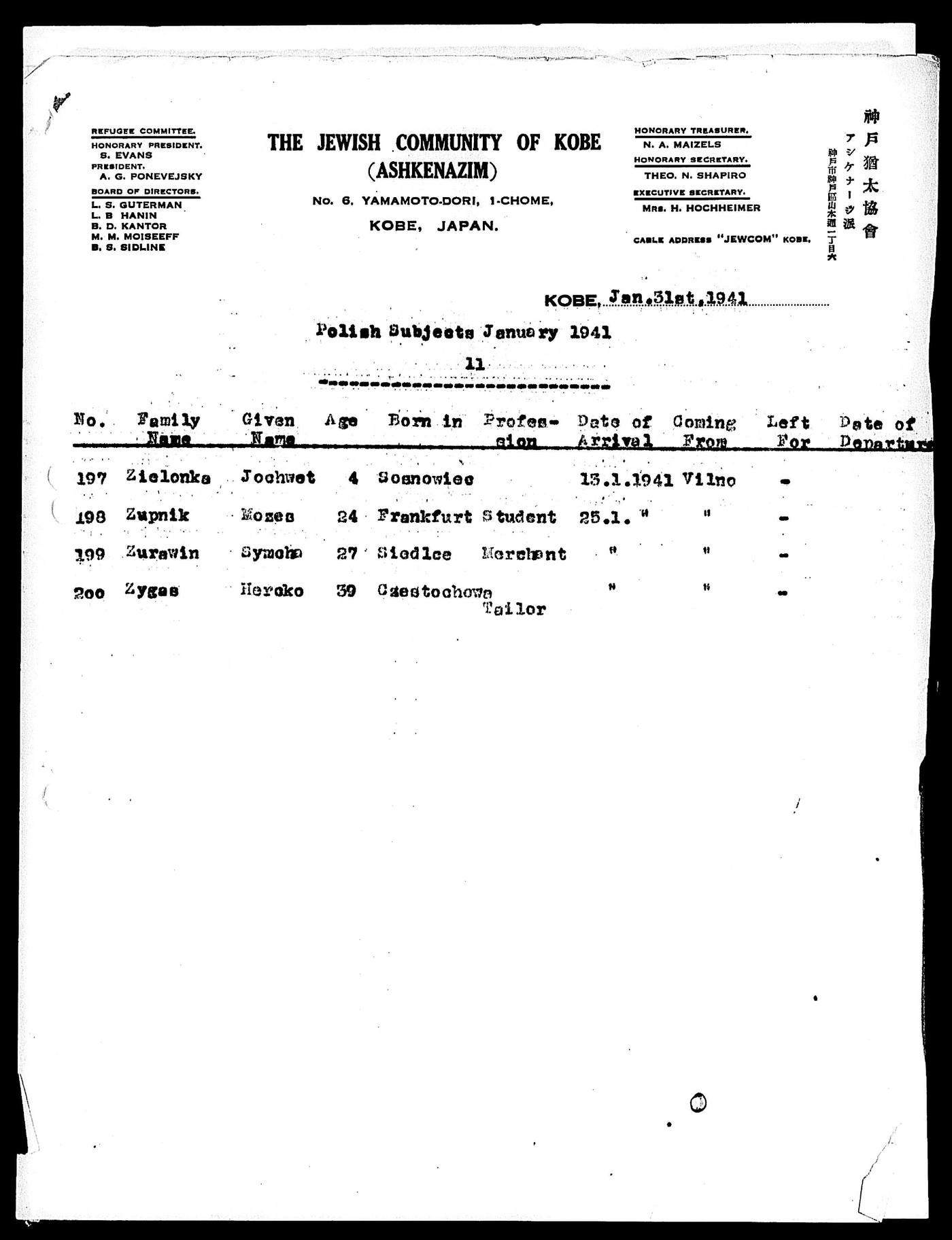
The 1940 Vilna refugee list has, at entry 7497, Mozes Zupnik, born 1917, who had come from Mir; the year agrees with the register's compiled age. - The JEWCOM register — the refugee register kept by the Refugee Committee of the Jewish Community of Kobe (Ashkenazim) at No. 6 Yamamoto-dori, 1-chome, whose cable address was 'JEWCOM Kobe'. Eighty-four pages on the committee's own printe…
Entry 198 of the Kobe Jewish Community's refugee register: aged 24, born at Frankfurt, a student, who arrived in Japan on 25 January 1941. - Study of the Mir Yeshiva's wartime displacement — the yeshiva's flight from Poland into Lithuania, its billeting at Keidan and Kedainiai, and its passage through Kobe to Shanghai.
named in this history of the Mir Yeshiva's escape - United States Holocaust Memorial Museum, Holocaust Survivors and Victims Database — the Flight and Rescue electronic dataset (source 20725): USHMM's own transcription of the Kaunas register, 2,140 persons with citizenship, visa type, iss…
USHMM Flight and Rescue dataset: arrived in Japan 25 Jan 1941 (line 1225) - Rabbi Chuna (Elchonon Yosef) Hertzman, Mirer yeshive in golus — the Mir yeshiva in exile (Brooklyn: the author, 1950). A 28-page Yiddish account by a student of the yeshiva of its road from Mir to Vilna, Keidan, Kobe and Shanghai, with a…
In Rabbi Chuna (Elchonon Yosef) Hertzman's Mirer yeshive in golus (Brooklyn, 1950), p. 19, he is the student the yeshiva sent to the Japanese consul at Kaunas: one student of the yeshiva, HaRav Moshe Zupnik, went in to him and explained our situation, Hertzman writes, after which the whole yeshiva received Japanese transit visas. - "California, San Francisco, Passenger Lists, 1893-1953", FamilySearch — index entry for Moses Zupnik, 1946: born about 1918, Poland. Digitised from NARA microfilm publication M1410 (passenger lists of vessels arriving at San Francisco).…
FamilySearch's index of the San Francisco passenger lists, read by the archive on 20 September 2026, has Moses Zupnik, born about 1918 in Poland, arriving at San Francisco in 1946 on the General M. C. Meigs. The register's compiled line gives 1918, and the two are 0 years apart, and the name occurs once on the register. The ship's manifest heading says she sailed from Shanghai, and a passenger born in Poland landing at San Francisco in 1946 from Shanghai is the route's end: the refugees who waited out the war there. So the entry is taken as this person's under the archive's rule of 19 September 2026 for records from the route. The sheet is NARA microfilm publication M1410, film 384, image 450, read by the archive on 20 September 2026. - UNRRA China Office, S-1132-0000-0181, registration of Polish rabbis and rabbinical students, their lists and sailings, Shanghai 1945–1946 (UN Archives, AG-018-001)
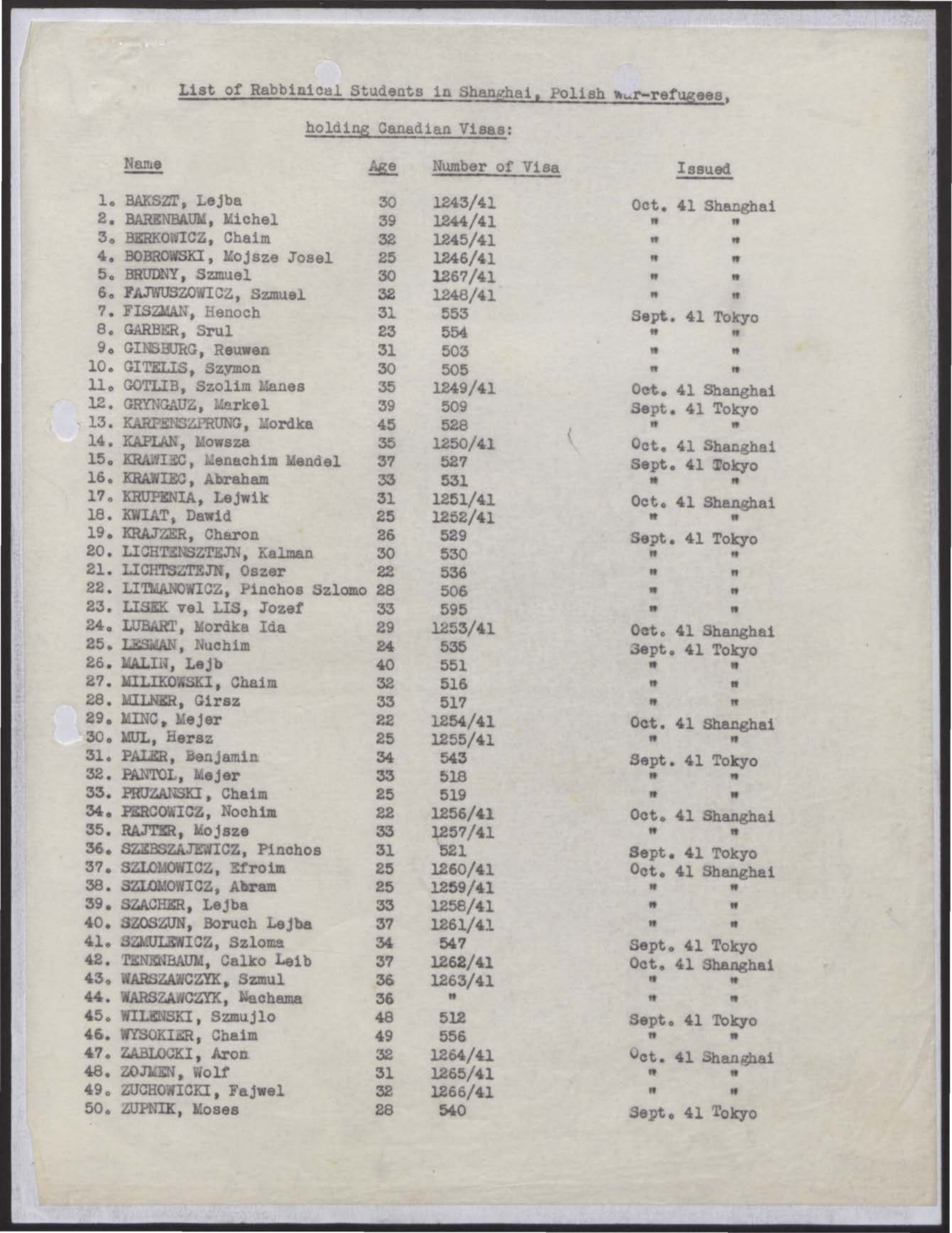
UNRRA's China Office registered him in Shanghai in 1946 among the Polish rabbis and rabbinical students, as a rabbinical student who wished to go on to Palestine. He was one of the fifty rabbinical students holding Canadian visas issued in Tokyo in September 1941 (visa No. 540). (United Nations Archives, UNRRA China Office records.) - The 1950 United States census (US National Archives, 1950census.archives.gov)
In April 1950 the United States census found him in Brooklyn, aged 32, born in Germany, a Hebrew teacher, with his wife and children (National Archives, 1950 census, enumeration district 24-510, sheet 5). - Polish rabbis and rabbinical students registered with UNRRA, Shanghai (United Nations Relief and Rehabilitation Administration, China Office;… — United States Holocaust Memorial Museum, Holocaust Survivors and Victims Database, list 48676
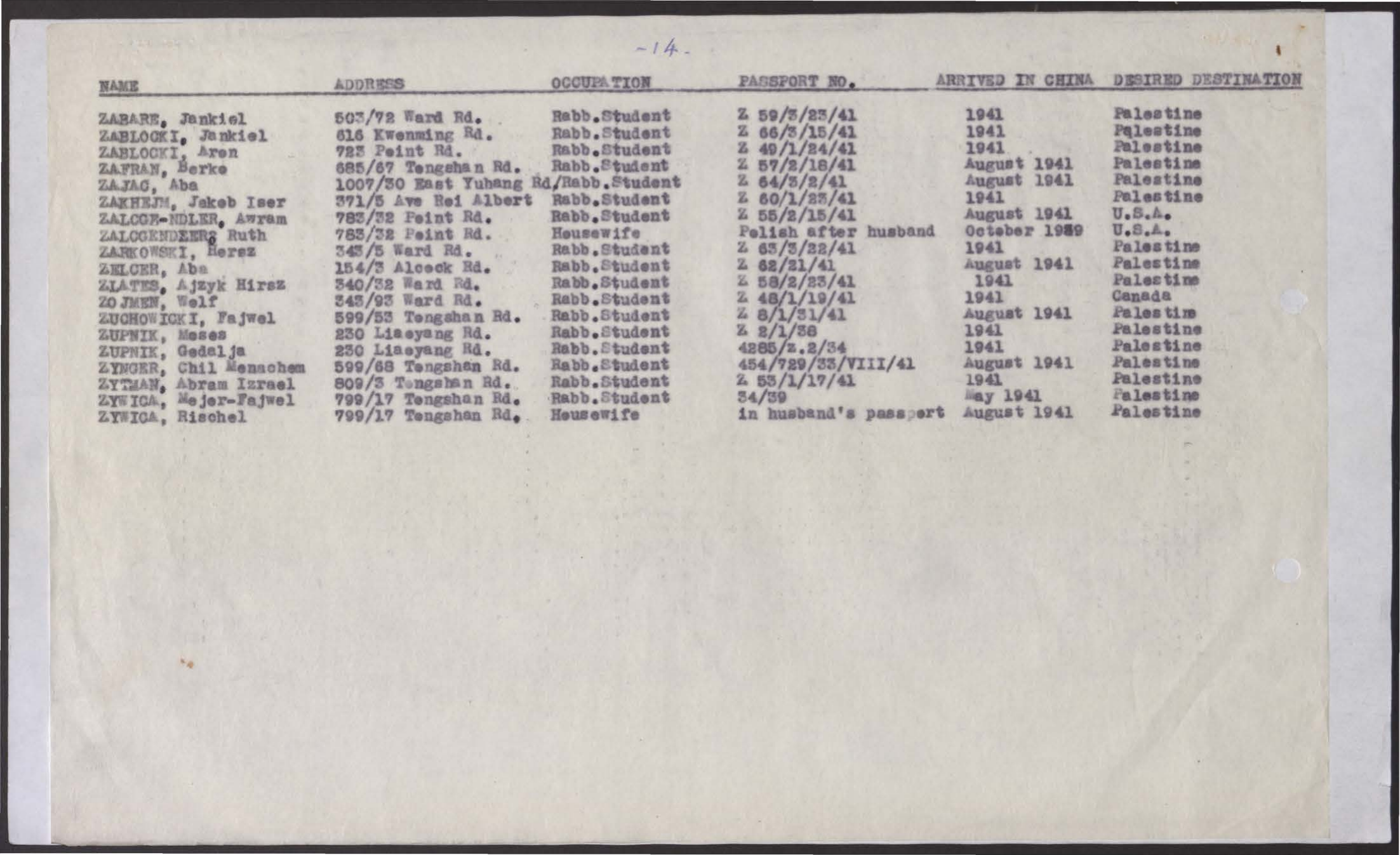
The United Nations Relief and Rehabilitation Administration's Shanghai register of Polish rabbis and rabbinical students, indexed by the United States Holocaust Memorial Museum, has Moses Zupnik, rabbinical student, arrived in China in 1941, wishing to go to Palestine. The name occurs once on the register; the list is of the refugees who came from Vilna by way of Kobe, and an arrival in Shanghai in 1941 is the route this line is recorded as taking. - Students of the Mir yeshiva in Shanghai: three lists of the students of the Rabbinical College "Mirrer Yeshiva" (United States Holocaust Memorial Museum, Holocaust Survivors and Victims Database, lists 48681, 48682 and 48654)
Moses Zupnik is named on two of the three lists of the students of the Mir yeshiva in Shanghai indexed by the United States Holocaust Memorial Museum. This is the only line on the register with this given name and surname, and the lists are of the yeshiva that came from Vilna by way of Kobe to Shanghai in 1941, the route the register records for its students. - Oral history interview with Moshe Zupnik — United States Holocaust Memorial Museum, Flight and Rescue collection (RG-50.494.0007)
In his oral history for the United States Holocaust Memorial Museum Moshe Zupnik says he was one of six Mir students sent to the Dutch consul in Kaunas to have the Curacao notes stamped in 300 passports, and that he then took the passports to the Japanese consulate. He says he met the consulate's German secretary, Wolfgang Gudze, and then Sugihara himself, with whom he spoke English, and that he afterwards sat for about two weeks beside Gudze stamping the visas of the Mir students and of everyone else who handed in a passport. He recalls Sugihara saying the visas were to be good only for Curacao. He travelled with the yeshiva by Moscow, Vladivostok and a ship to Japan, and says the group stayed in Kobe about six months, he himself in a house on Yamamoto Dori, before moving to Shanghai by ship in time for the High Holidays and living in the Sephardic synagogue on Museum Road. After the war he sailed on one of the first ships, went through Canada, and came to Brooklyn, where he taught and then worked in textiles. He says his parents and sister were killed in Poland in 1942; he had postcards from them until April 1942. - "The Great Shanghai Escape Part V" — Jewish History Soundbites, 42 minutes. Recorded interview, transcript held by the archive. Subtitles as published with the recording. places named: Vilna, Shanghai, Mir; bodies named: JDC, Mir Yeshiva.
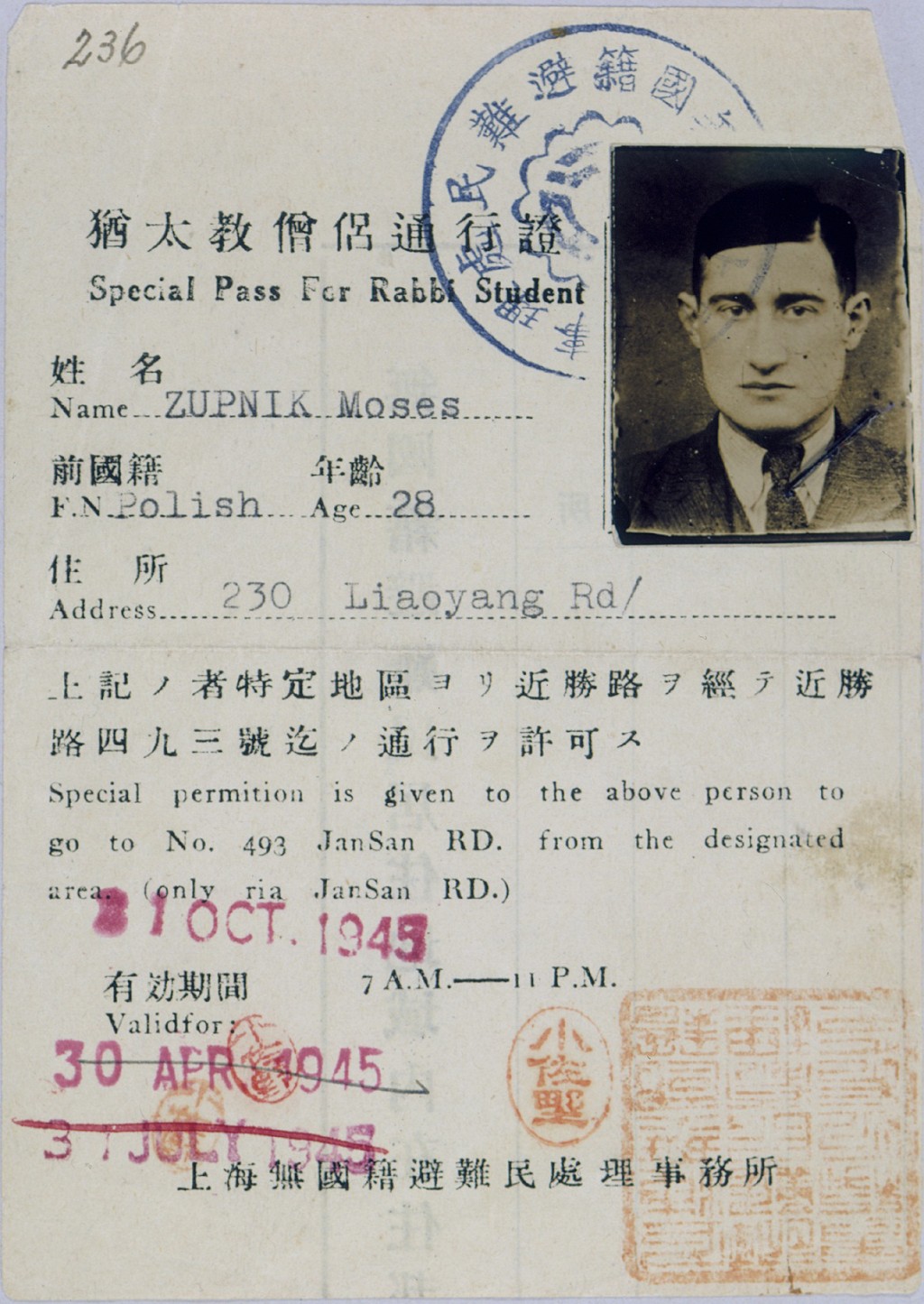
Rabbi Yehuda Geberer, in a 2023 lecture, says Moshe (Misha) Zupnik, a Mir student with a German passport, was sent by the yeshiva to get the Japanese transit visas, spoke German with Sugihara's German assistant, Wolfgang Gudze, and was given a desk in the consulate to help write the visas. Zupnik later told a documentary that Gudze, asked why he was helping, said the world is a wheel, and one day those on top might be below (about twenty-six to twenty-nine minutes in). - A Special Pass for Rabbi Student issued in Shanghai to Moses Zupnik (No. 1225), Polish, aged 28, of 230 Liaoyang Road, No. 236, 1945, with his photograph.
- Chiune Sugihara - Wikipedia
- Collections Search - United States Holocaust Memorial Museum
- Sugihara Virtual Exhibit — Solly Ganor
- Rabbi Yair Hoffman, VIN News (28 Jan 2024): "The Real Story of the Escape of the Mir Yeshiva to Shanghai" — Reb Moshe Zupnik (1918-2010): sent by Reb Leib Malin (No.936), borrowed Binyomin Zeilberger's suit, entered with Yaakov Ederman (…
- USHMM, Flight and Rescue (2001), catalogue page: portrait of Rabbi Moshe Zupnik, New York, and Sugihara's list (Diplomatic Record Office)
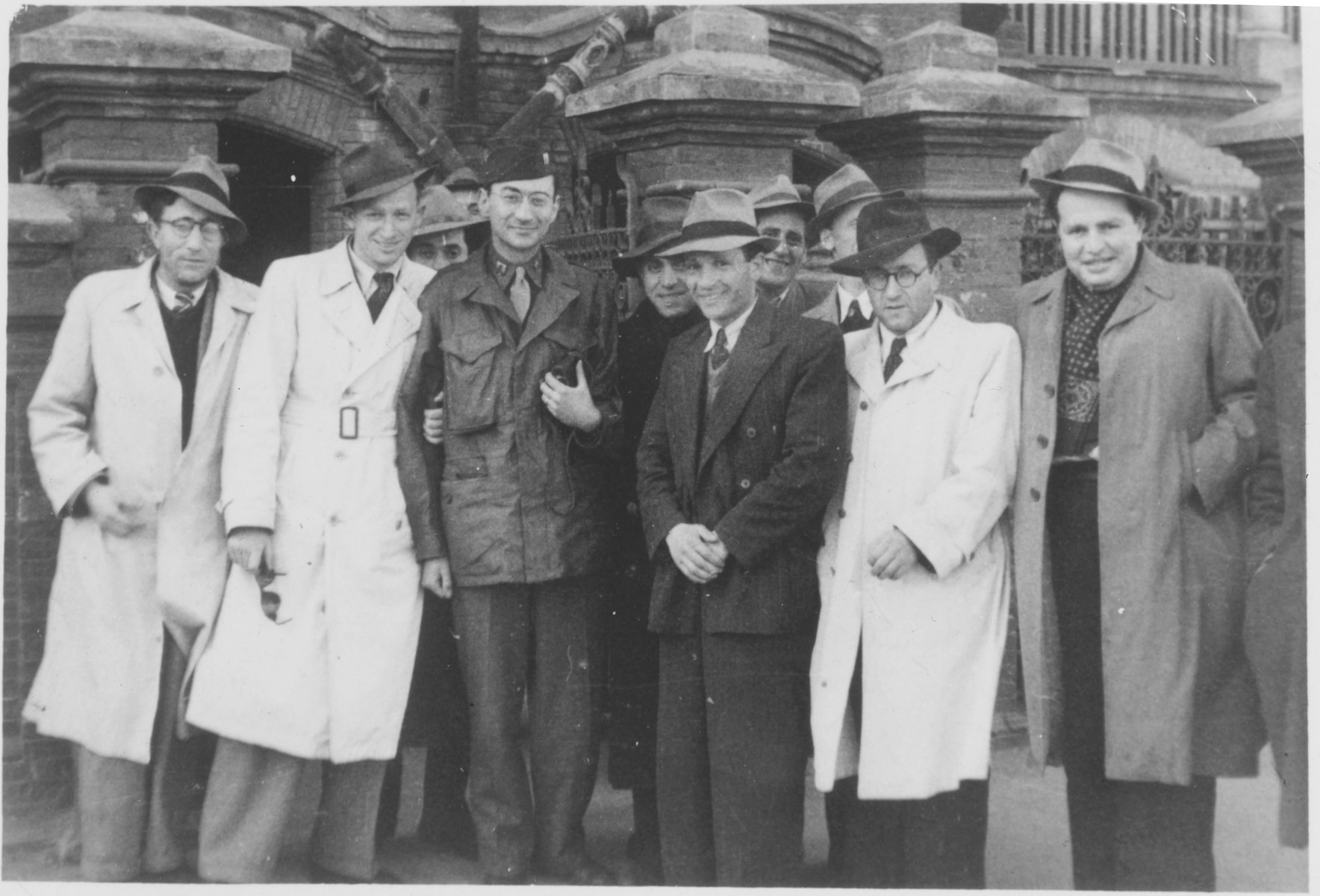
- Mir yeshiva students in Shanghai, c. 1945–46 (photograph 30207, Max Reid), courtesy of Rabbi Jacob Ederman
- Oral history interview with Moshe Zupnik — United States Holocaust Memorial Museum, Flight and Rescue collection (RG-50.494.0007)