Granek Szulem
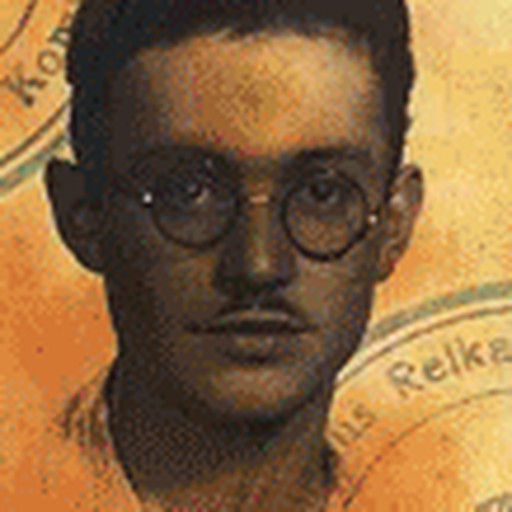
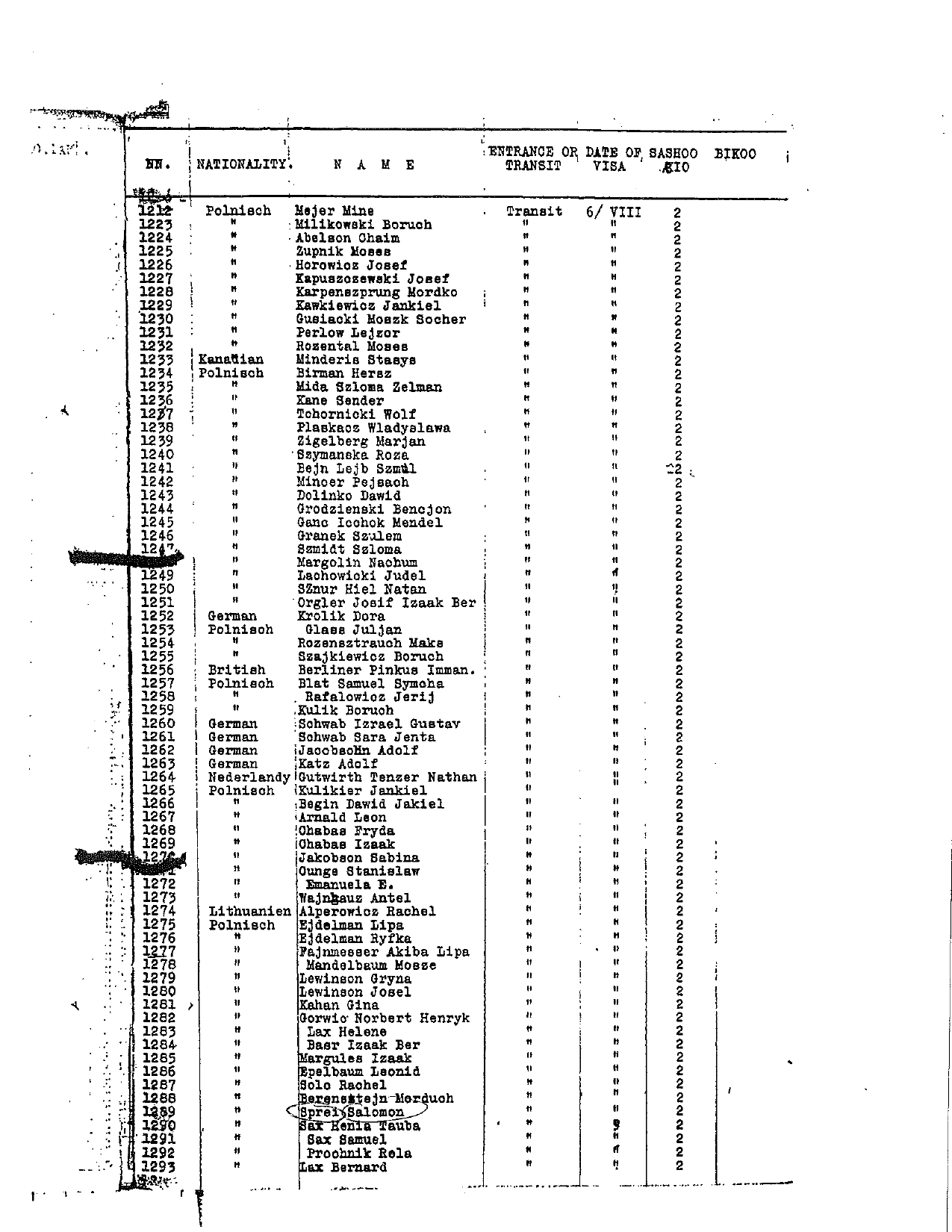
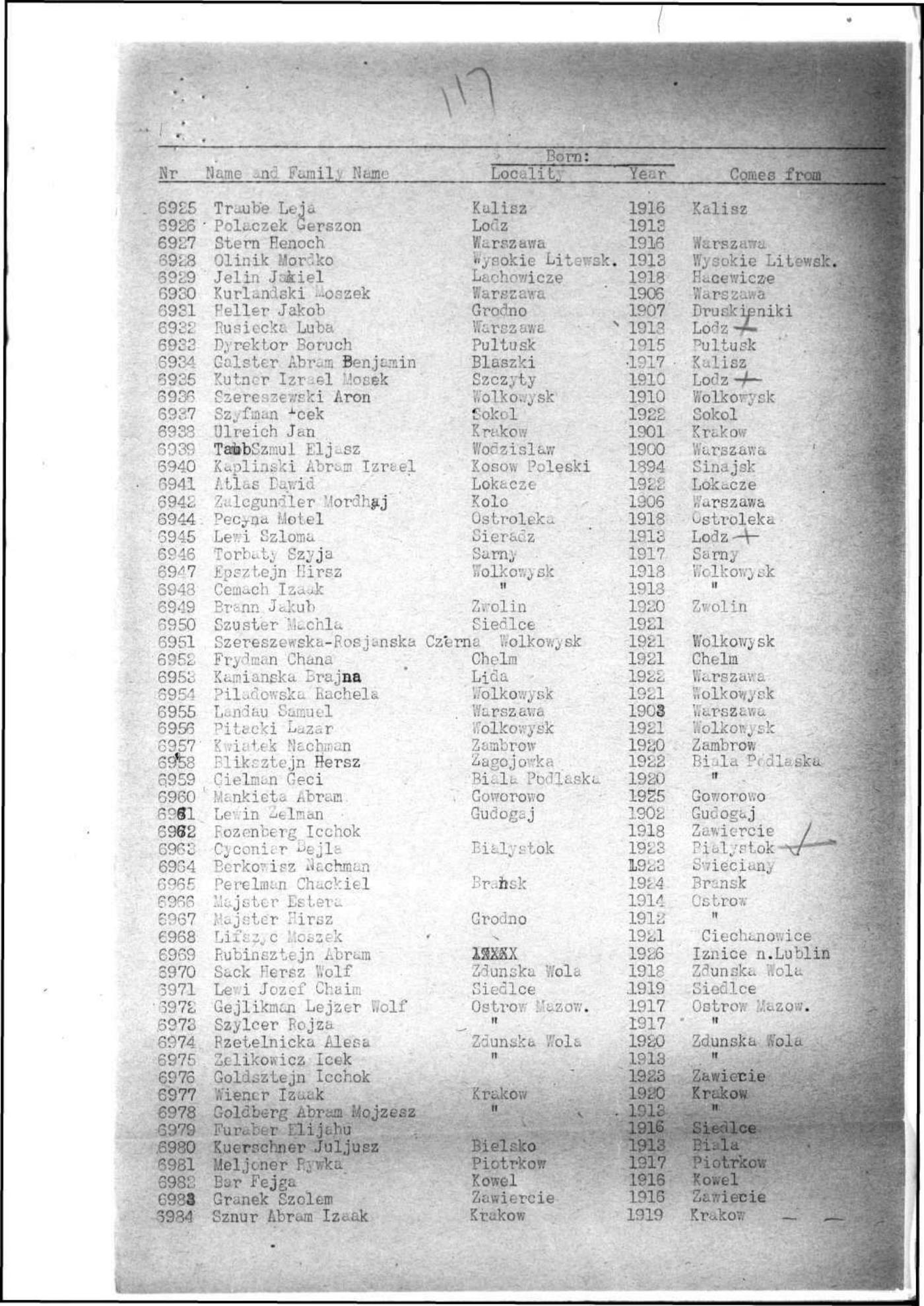
Granek Szulem received transit visa no. 1246 at the Japanese consulate in Kaunas on 6 August 1940. Aged 24 in 1940.
What the register records
- Nationality as recorded
- Polnisch
- Age in 1940
- 24
The journey
Destination given in the Kitade-Bluman list: Palestine.
What is known
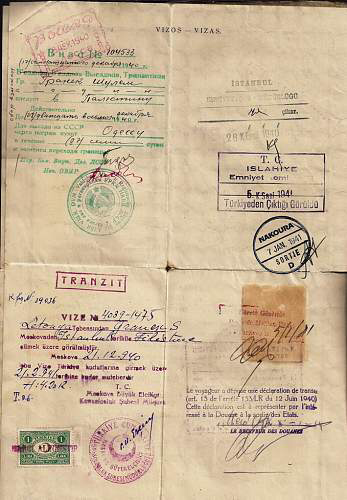
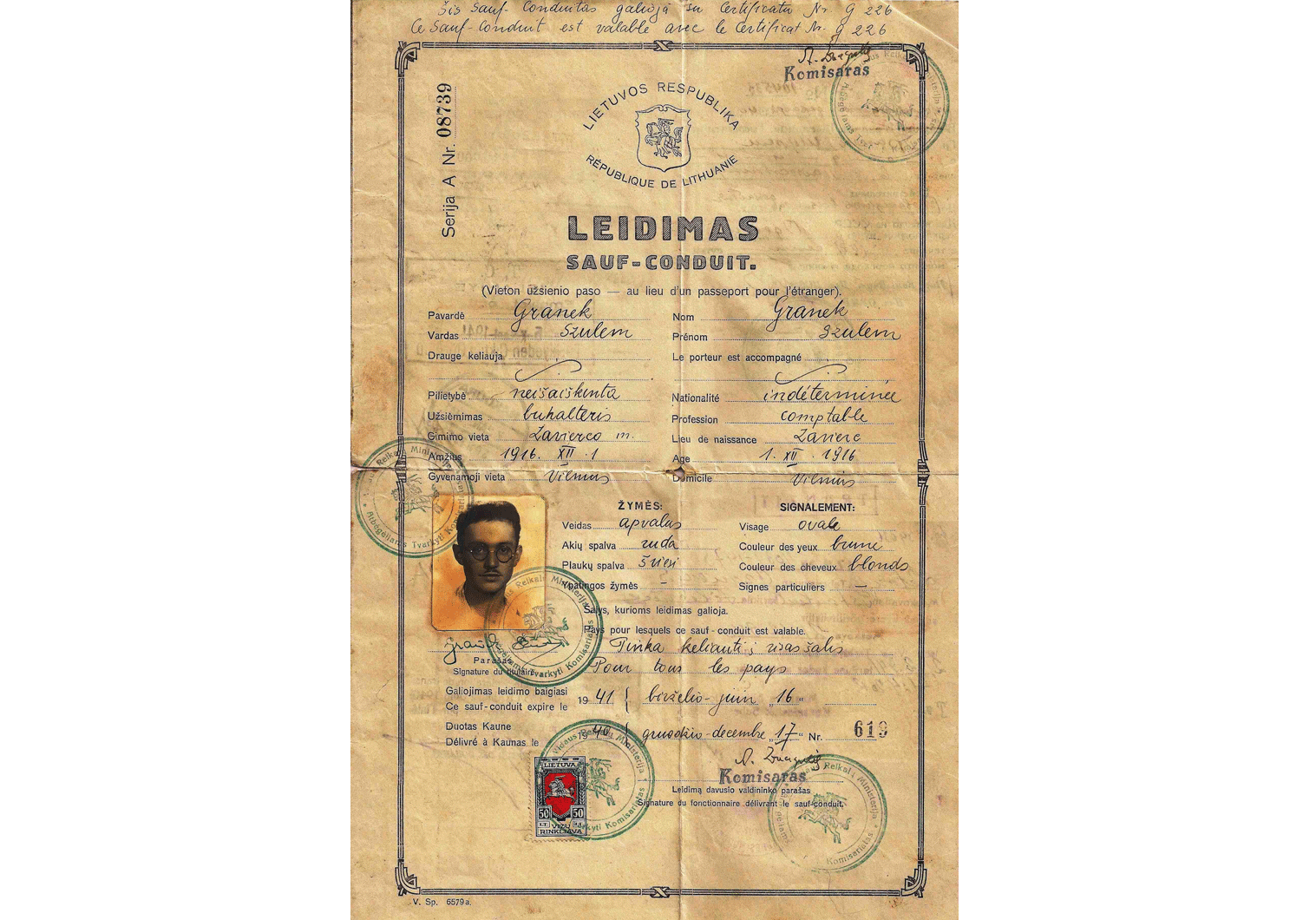
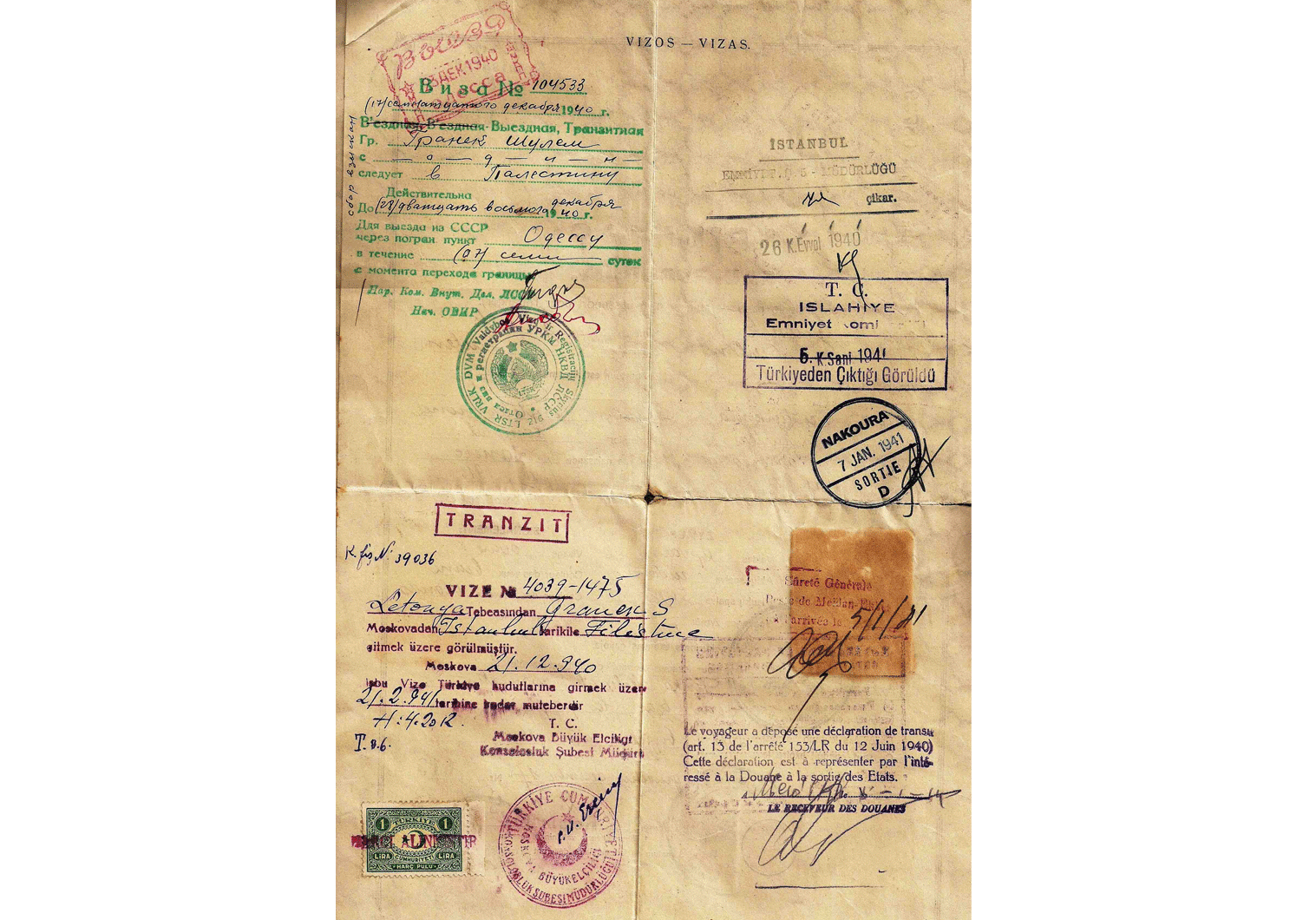
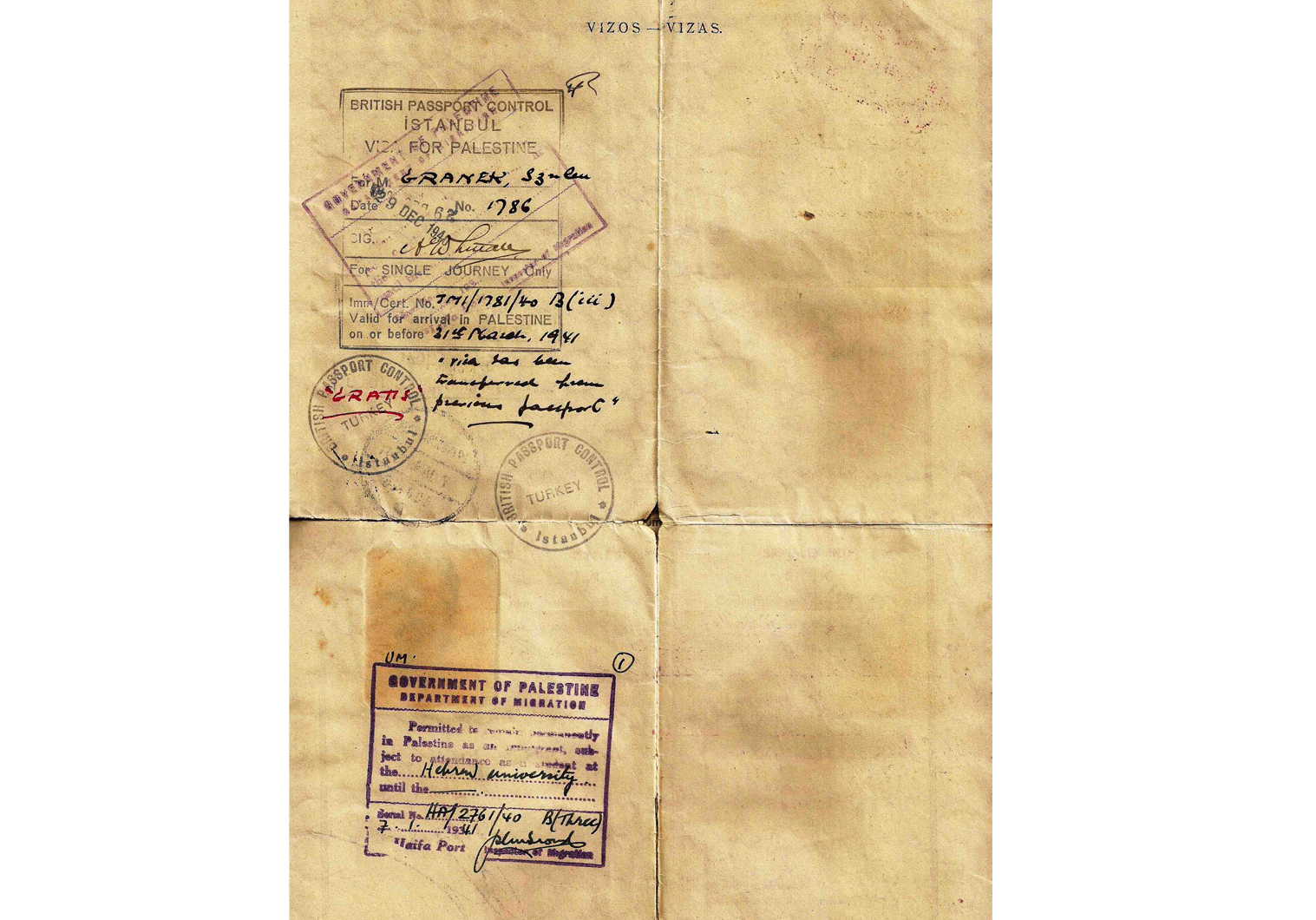
Szulem Granek, a Polish-Jewish refugee in Lithuania, received a Lithuanian Sauf-Conduit (NKVD exit permit) in Kaunas on 17 December 1940 — months after Sugihara's consulate closed. His route ran Kaunas to Moscow on a Turkish transit visa, then Odessa, Istanbul — where British consular officer (and MI6 agent) Arthur Whittall facilitated onward passage — arriving in Haifa, Palestine on 7 January 1941. His escape shows the Kaunas corridor continuing after the Sugihara visas ended.
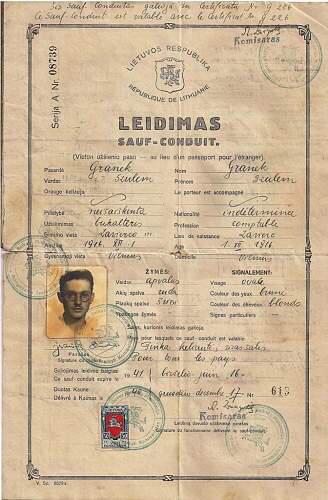
This is a Lithuanian Republic 'Leidimas / Sauf-Conduit' (safe-conduct/travel document) issued to Szulem Granik, born 1916 in Zawiercie, of undetermined nationality. The document was issued at Kaunas (Kaunas/Kowno) around December 1940 and includes a photograph of the young man.
This is the worn green cloth cover of a Lithuanian travel document booklet (safe-conduct pass). The cover reads 'LEIDIMAS / SAUF-CONDUIT' (Lithuanian and French for 'safe-conduct'). No holder name or visa details are visible on the cover.
LIETUVOS REPUBLIKA / REPUBLIQUE DE LITHUANIE LEIDIMAS / SAUF-CONDUIT Serija A Nr. 08730 Zawiercie 1916
LEIDIMAS SAUF-CONDUIT
Where this comes from
- List of Refugees, Vilna, 1940 — JDC Archives, New York, collection AR 33/44, file 00876. The contemporary register of Polish Jewish refugees in Lithuania, running to more than nine thousand numbered entries; the fullest independent check…
The 1940 Vilna refugee list has, at entry 6983, Szolem Granek, born 1916 at Zawiercie, who had come from Zawiercie; the year agrees with the register's compiled age. - HaTzofe, 3 May 1949 (National Library of Israel, Historical Jewish Press)
Szulem Granek reached the Land of Israel and joined the religious kibbutz group that settled Kfar Etzion. He was among its defenders who fell when Kfar Etzion was overrun on 13 May 1948; the memorial page reprinted from the survivors' bulletin in HaTzofe on 3 May 1949 gives him as Shalom son of Yaakov Granek, born in 1916 at Zawiercie, who left a wife and two children (National Library of Israel, Historical Jewish Press). - Izkor — the Israeli Ministry of Defence's memorial site for the fallen: Private Shalom Granek, Kfar Etzion, 13 May 1948
Izkor, the Israeli Ministry of Defence's memorial site for the fallen, carries his life: Shalom Granek, son of Breindel and Yaakov, born 1 December 1916 at Zawiercie, a bookkeeper in Katowice and a leader in the religious Zionist youth movement HaShomer HaDati. Called up to the Polish army in 1939, he retreated with his unit across the San, worked as a waiter in Lwów, and went on with his group to Lithuania. In Kaunas he worked for the committee aiding the refugees of the Torah va'Avodah movement and, as the biography puts it, in the "visa industry" of distant and exotic countries by which many left occupied Lithuania. He himself reached Palestine early in 1941 by way of Russia and Turkey, not through Japan, which is why the Kobe records do not have him. He joined the Avraham group at Kfar Pines, married, taught the Tehran children in 1943, and was among the first party that went up to found Kfar Etzion, where he ran the orchards and commanded the western sector in the siege. He fell when Kfar Etzion was taken on 13 May 1948, leaving a widow and young family, and was reburied on Mount Herzl on 17 November 1949. The birth year and town agree with the 1940 Vilna refugee list's Szolem Granek, born 1916 at Zawiercie, and with the register's age; the survivors' memorial list in HaTzofe of 3 May 1949, read by the archive on 18 October 2026, gives the same father, year and town (Izkor, izkor.gov.il, read 18 October 2026). - HaTzofe, 17 January 1941 (National Library of Israel, Historical Jewish Press)
Szulem Granek's arrival is in the press: HaTzofe reported on 17 January 1941 that among the Polish refugees who had just reached the Land from Lithuania were members of the centre of HeChalutz HaMizrachi, Shalom Granek, Chaim Solnik and Yaakov Frisch (National Library of Israel, Historical Jewish Press). - The Lithuanian sauf-conduit of Szulem Granek, Series A No. 08739, No. 615, issued at Kaunas in December 1940, born at Zawiercie in 1916, with his photograph.
- A document held in the archive's files
- 1940 Lithuanian Refugee travel certificate - Our Passports
- A document held in the archive's files
- A document held in the archive's files
- A document held in the archive's files
- A visa page of Szulem Granek's sauf-conduit: a Soviet exit visa for Odessa, a Turkish transit visa No. 4039-1475 issued at Moscow on 21 December 1940, and the Turkish police stamp at Islahiye and a Naqoura border stamp, January 1941.


