Gutwirth Tenzer Nathan
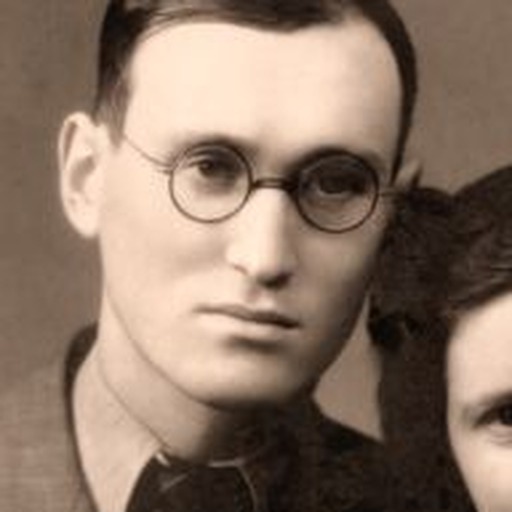
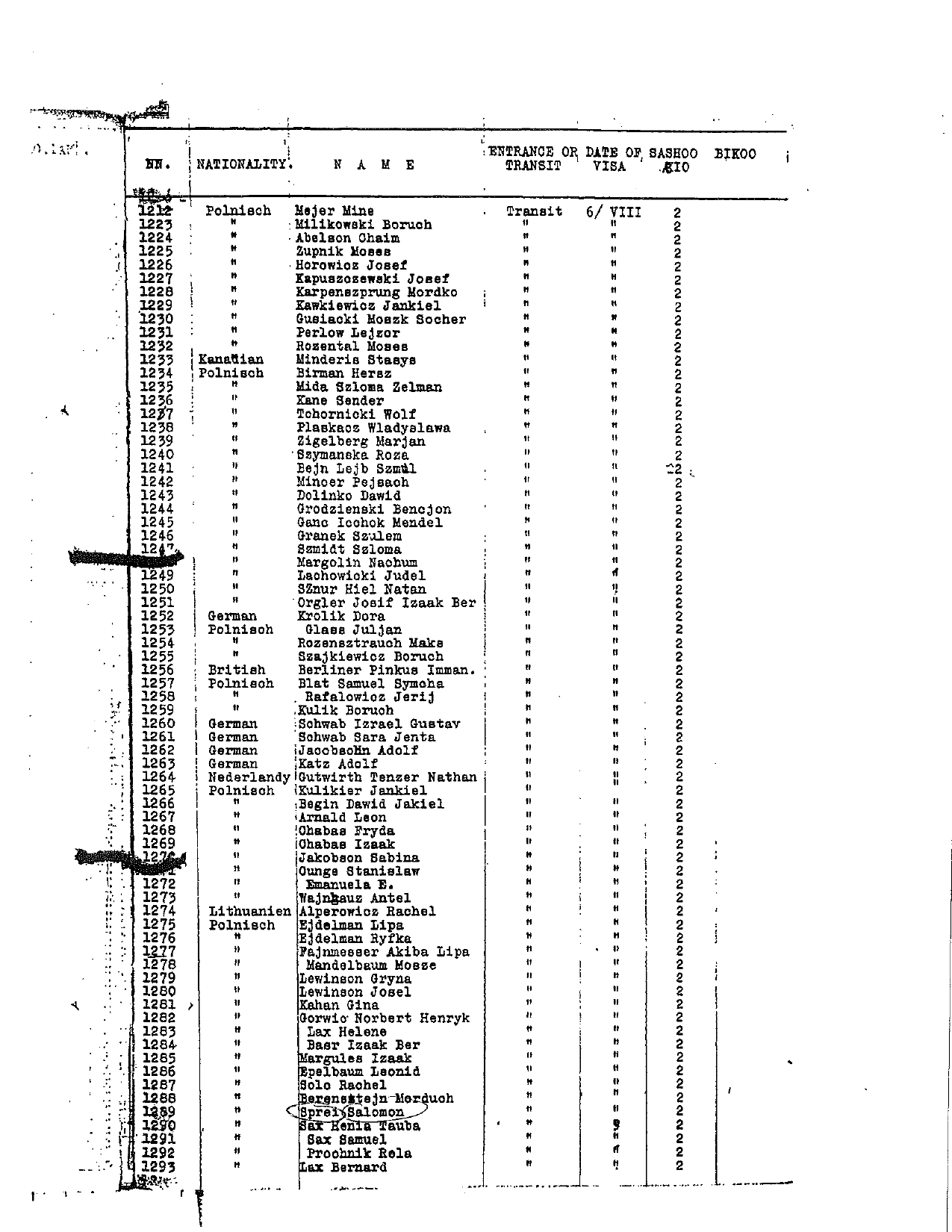
Gutwirth Tenzer Nathan received transit visa no. 1264 at the Japanese consulate in Kaunas on 6 August 1940. The register records rabbinical student - telshe yeshiva, aged 24.
What the register records
- Nationality as recorded
- Netherlandy
- Age in 1940
- 24
- Occupation
- Rabbinical Student - Telshe Yeshiva
- Family, per the Kitade-Bluman list
- wife Nechama (23)
The journey
Reached Japan; reached Shanghai; registered in Kobe for Indonesia.
Travelled with, and never given a number
- Nechama — wife, aged 23
The register recorded visa holders. It did not reliably record the wives and children who travelled on somebody else’s visa, so these people have no entry of their own and cannot be searched for. Where the archive has recovered a name, it is here.
What is known
Nathan Gutwirth befriended Jan Zwartendijk before Zwartendijk was appointed Dutch consul. Nathan had walked into the Philips office in Kaunas, drawn by the familiar Philips sign, which reminded him of home. There were very few Dutch citizens in Lithuania, and the two men formed a bond; after that, Zwartendijk passed his Dutch newspapers on to Nathan twice a week. Nathan, who was studying at the Telz yeshiva, could not return home because the Netherlands was under German occupation. He began exploring the possibility of reaching one of the Dutch colonies in the West Indies. Curaçao particularly interested him because of its proximity to the United States, where his Lithuanian fiancée Nechama had a sister. Nathan wrote to the Dutch ambassador in Riga, L. P. J. de Decker, asking about entry to Curaçao, and suggested that the declaration omit the requirement for a landing permit from the local governor. De Decker then authorised Consul Zwartendijk to copy into Nathan's Dutch passport the wording he had already used for Pessla Sternheim Lewin. Nathan showed his Curaçao declaration to Zorach Warhaftig, a Warsaw lawyer and leader of the Mizrachi movement in Poland. Warhaftig asked Nathan to return to Zwartendijk and find out whether he would issue similar declarations to the other refugees. Zwartendijk listened and, without hesitation, said yes. Nathan brought the answer back to Warhaftig, who travelled around Lithuania visiting the yeshivas and spreading the news among the refugees, urging them to obtain the same declarations. Soon thousands were lining up outside the Philips office. The mass rescue was in motion. This is the family's account, reconstructed with Nathan Gutwirth's grandson from Nathan's own memoir; where published writers tell it differently, this page follows the family. Amended 29 September 2026: until this date this page said he looked to the Dutch colonies ‘in the East or West Indies’. He asked only about the West Indies; the request for the East Indies was Pessla Lewin’s. Arlette Liwer-Stuip, 29 September 2026.
After arriving in Japan, Nathan learned that a ship carrying seventy-four Jewish refugees had not been permitted to disembark at Tsuruga because its passengers lacked Curaçao declarations or any other proof of a final destination, and had been sent back towards Vladivostok, with the frightening possibility of Siberian camps beyond it. Nathan and his closest friend, Lev Sternheim, went to the Dutch consul, Niek de Voogd, and showed him Nathan's own Curaçao declaration. De Voogd gave them a hundred blank sheets of official consulate letterhead, which Nathan and Lev took to the Jewish Community, where Curaçao declarations were typed onto them. The Japanese captain had promised not to unload the refugees at Vladivostok if a radio message reached the ship before it entered Soviet waters. The message arrived in time; the ship turned round, and the refugees landed at Tsuruga. Told by the family from Nathan's memoir; the list of the seventy-four, on the Netherlands Legation's paper, is on this archive's Curaçao page.
Where this comes from
- The JEWCOM register — the refugee register kept by the Refugee Committee of the Jewish Community of Kobe (Ashkenazim) at No. 6 Yamamoto-dori, 1-chome, whose cable address was 'JEWCOM Kobe'. Eighty-four pages on the committee's own printe…
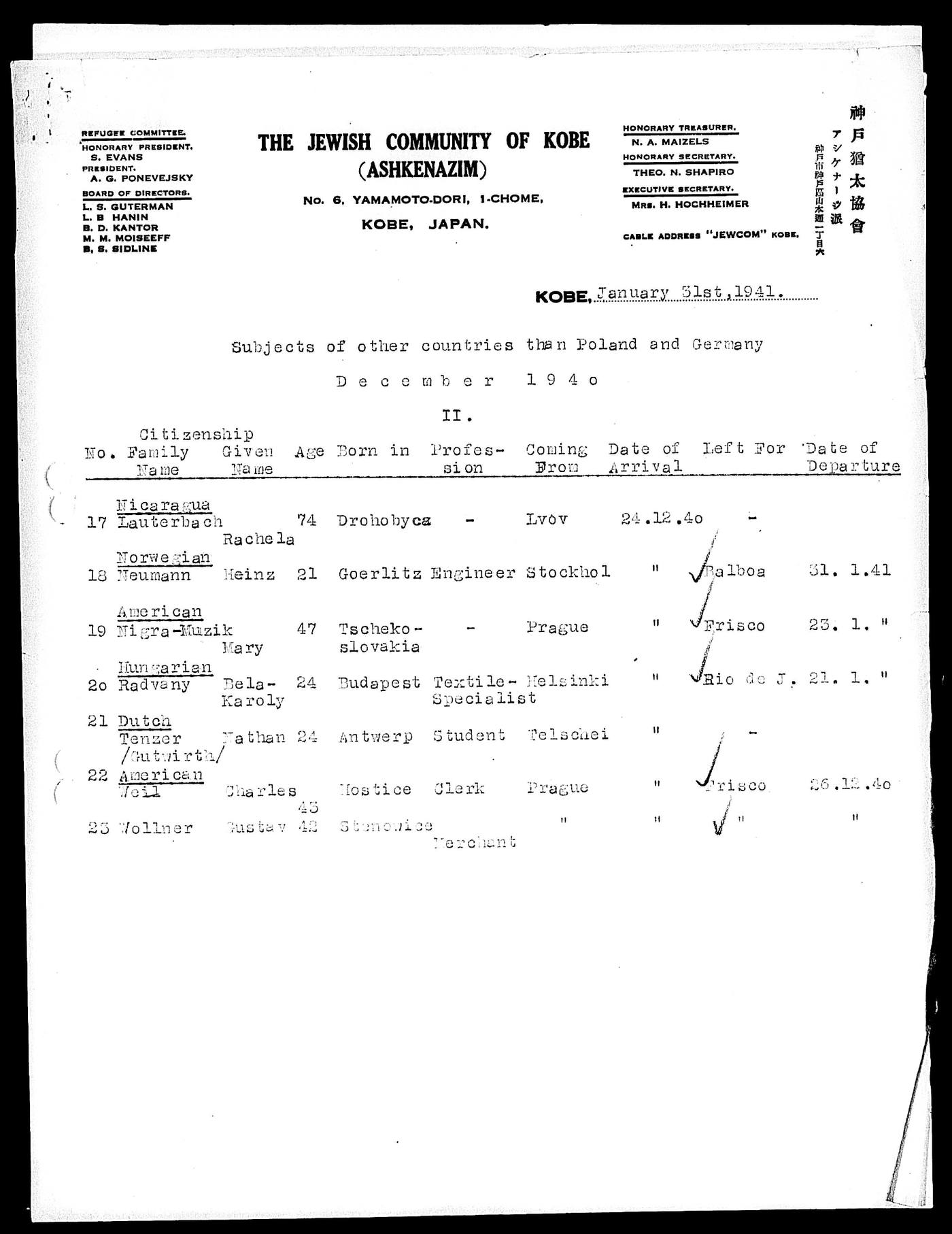
Entry 21 of the Kobe Jewish Community's refugee register: listed among Dutch subjects, aged 24, born at Antwerp, a student, who travelled from Telschei. - JDC Japan Emigration List — Kobe yeshivas, 1941 (Mir, Kamieniec, Slonim, Kleck, Radin, Telz, Lubavitch & others)
1916 Antverpen (Antwerp, as the list types it); Telz Yeshiva - Arlette Liwer on NATHAN GUTWIRTH, register No. 1264 — a page written for this archive and sent on 9 August 2026. It sets out what the register line can and cannot be read as, the spellings its damaged text allows, and her family's own ac…
A page written for this archive setting out this register line, the spellings its damaged text allows, and the family's own account. Given by Arlette Liwer-Stuip. - Takayoshi Iwata, "Kobe and Jewish Refugees" (神戸とユダヤ難民), Kobe City history bulletin no. 26, March 2017 — English translation published by the City of Kobe
He and his wife reached Kobe on 24 December 1940, Dutch nationals come from Telšiai. The Jewish community's list of December arrivals gives them no onward destination: their visa named Curaçao, and they knew it would not land them there. (Takayoshi Iwata, 'Kobe and Jewish Refugees', Kobe City history bulletin no. 26 (2017), English translation published by the City of Kobe.) - Gedenkstätte Stille Helden (German Resistance Memorial Center, Berlin), biography of Nathan Gutwirth (gedenkstaette-stille-helden.de), pointed out by Hans de Vries, 22 September 2026
Berlin's Silent Heroes Memorial gives his life after Kobe: he went on to the Netherlands East Indies in 1941, was called up into the Dutch army, was taken prisoner by the Japanese, and was freed in September 1945. It gives his birth as Antwerp, 24 December 1916, and his death as Antwerp, 2000. (Gedenkstätte Stille Helden, Berlin, biography of Nathan Gutwirth; pointed out by Hans de Vries.) - Proposal to Yad Vashem for the recognition of NICOLAAS ARIE JOHANNES ('NIEK') DE VOOGD as Righteous Among the Nations, reference CAS-248383, written by his nephew Johannes Willem de Vries and supplied to this archive by the author. Twent…
With the help of the Dutch consul at Kobe, Niek de Voogd, who found the Dutch refugees work in the Indies, he left Kobe for Java in the summer of 1941. In February 1942 the Japanese arrested him and his wife Nechama there, and they spent three and a half years in camps. After the war he stayed in touch with the de Voogds, and in April 1977 he placed the first notice of mourning for de Voogd in the Nieuw Israëlietisch Weekblad. (Hans de Vries, proposal to Yad Vashem for N. A. J. de Voogd, January 2020.) - Oral history interview with Moshe Zupnik — United States Holocaust Memorial Museum, Flight and Rescue collection (RG-50.494.0007)
Moshe Zupnik remembers that the first note stating that no visa was needed for Curacao went to a Dutch student of the Telz yeshiva, whose name he gives as Gottlieb. The register's only Dutch Telshe student is Nathan Gutwirth. - Oral history interview with Jan Zwartendyk (the consul's son) — United States Holocaust Memorial Museum, Flight and Rescue collection (RG-50.494.0014), 9 July 1999
In his oral history for the United States Holocaust Memorial Museum, Jan Zwartendijk's son says that the Curacao idea began with a Dutch yeshiva student, Nathan Gutwirth, who knew his father, asked whether he himself could go to Curacao, and then asked on behalf of Polish and Lithuanian friends; Gutwirth told Zorach Warhaftig, who, in his words, 'pushed' people to get the Curacao note. Moshe Zupnik, in his own oral history, remembers the same first note going to a Dutch student of the Telz yeshiva. - Benjamin Fishoff, filmed interview, 2007 — on YouTube under the title 'BenjamenFishoffInt2007'. Pointed out to the archive by Hans de Vries, 29 September 2026.
Benjamin Fishoff, who studied with him at Telshe, said in 2007 that Gutwirth, a Dutch citizen, was the one who asked the Dutch consul how to leave Europe, was told that Curaçao needed no visa, and then went to Sugihara for a transit visa to Japan; others heard of it from him and from Dr Levine and went the same way (about eight to eleven minutes in). - "The Great Shanghai Escape Part IX" — Jewish History Soundbites, 44 minutes. Recorded interview, transcript held by the archive. Subtitles as published with the recording. places named: Kobe, Yokohama, Shanghai, Mir; bodies named: Mir Ye…
Rabbi Geberer, drawing on Gutwirth's own filmed testimony, says that in March 1941 Gutwirth heard in Kobe that a ship carrying seventy-four refugees with Japanese transit visas but no Curaçao notes was being sent back towards the Soviet Union, and in three days persuaded the Dutch consul at Kobe, who had never met him, to sign seventy-four Curaçao notes; the ship was turned back to Japan. (about twenty-seven to thirty-three minutes in). - Marcia Reynders Ristaino, Port of Last Resort: The Diaspora C… — between 1,200 and 1,400 Curaçao visas, on the book's count. A screenshot of the page taken 29 January 2017; publisher and year read from the owner's copy, 19 September 2026.
- Eric Shaffer, 'From Poland to Shanghai: The Story of the Mir Yeshiva's Survival of World War II', a fifteen-page paper, c. 2007.
- Chiune Sugihara Facts - The Sugihara Curaçao Visas
- The Angel of Curaçao – Mishpacha
- Sugihara Database
- Jan Zwartendyk Jr., "Jan Zwartendijk — his activities as Dutch consul in Lithuania, 1940" (remember.org, updated 3 December 2005)
- Akira Kitade, Japan Forward (22 Jan 2018): "The Woman Who Opened the Path for Visas for Life" — Peppy Sternheim Lewin (b.1911); only THREE Dutch nationals on the register: Rachel Sternheim No.16, Levi Sternheim No.18, Nathan Gutwirth No.…
- Lucas Bruijn / remember.org "Chiune Sugihara Facts" (canonical URL): Zwartendijk first declaration 22 Jul, LAST 2 Aug (No.2345 to ELIASZ KUPINSKI AND FAMILY — highest recovered; first ~1,300 handwritten, then stamp; stopped when Soviets…
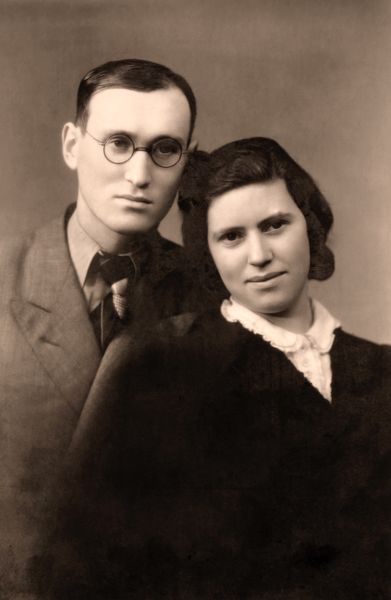
- A studio portrait of a young couple, the man in round spectacles and a dark suit, the woman in a dark dress with a white collar; sepia, probably the late 1930s. One of four photographs of the Gutwirth family sent by Arlette Liwer-Stuip w…
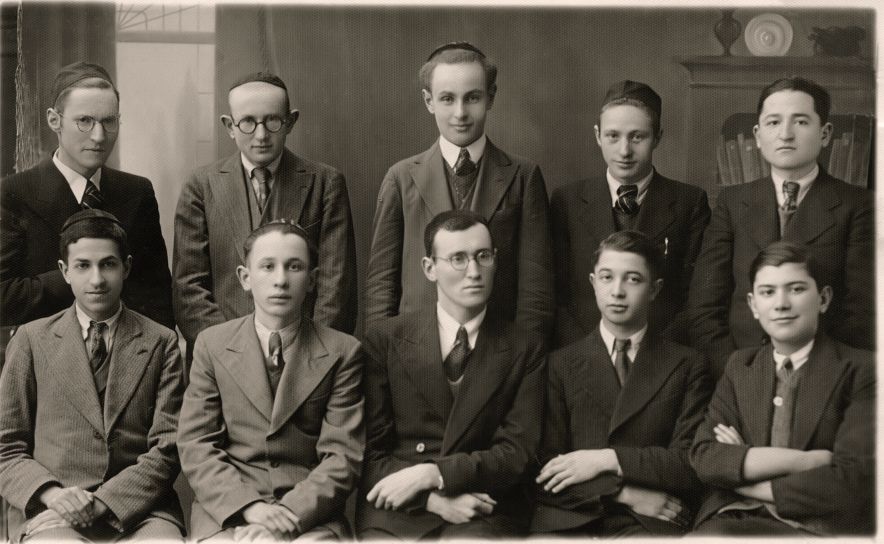
- A group photograph of ten young men in suits, five standing and five seated, in a room with bookshelves and a window; the 1930s. One of four photographs of the Gutwirth family sent by Arlette Liwer-Stuip with the family's permission, 14…
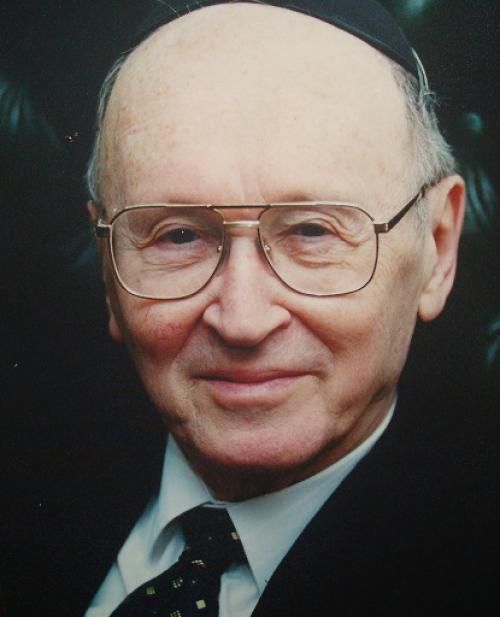
- A colour portrait of an elderly man in a black skullcap, spectacles and a dark suit and tie; late twentieth century. One of four photographs of the Gutwirth family sent by Arlette Liwer-Stuip with the family's permission, 14 September 20…
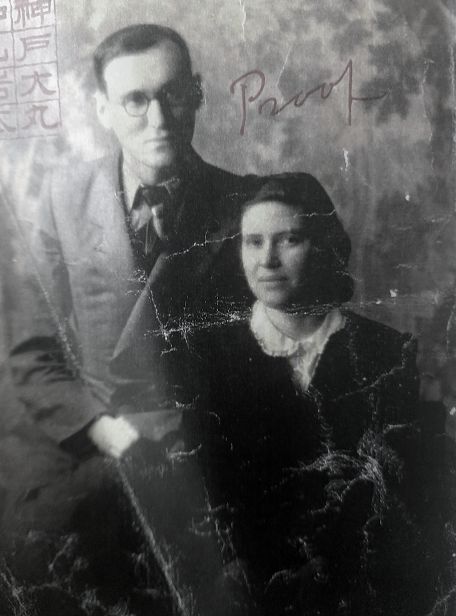
- A studio proof of a couple, the man in round spectacles and a dark suit, the woman in a white blouse, the print creased and marked; a Japanese studio's stamp at the top left reads Kobe, and the word 'Proof' is written across the top righ…
- Nathan Gutwirth family archive, with assistance from his grandson — the family's account of Nathan Gutwirth, written for this archive by Arlette Liwer-Stuip with his grandson, drawing on Nathan's own unpublished memoir, which stays with…