Szepsenwol Fejga
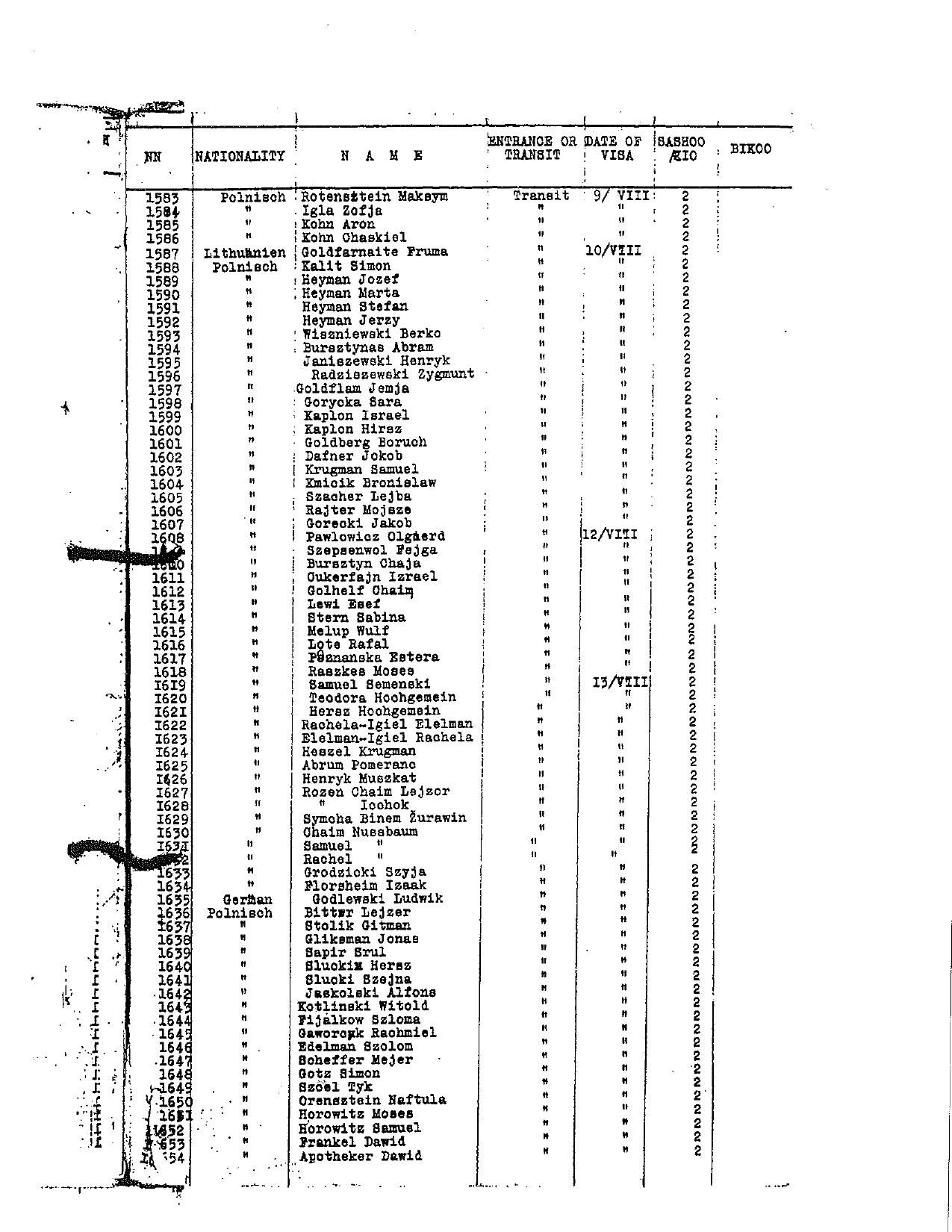
Szepsenwol Fejga received transit visa no. 1609 at the Japanese consulate in Kaunas on 12 August 1940. Aged 18 in 1940.
What the register records
- Nationality as recorded
- Polnisch
- Age in 1940
- 18
- Family, per the Kitade-Bluman list
- sister Lucille (17)
The journey
Reached Japan; aided by the Polish ambassador Tadeusz Romer; registered in Kobe for USA.
Travelled with, and never given a number
- Lucille — sister, aged 17
The register recorded visa holders. It did not reliably record the wives and children who travelled on somebody else’s visa, so these people have no entry of their own and cannot be searched for. Where the archive has recovered a name, it is here.
What is known
Lucille Szepsenwol, whose father died three months before her birth, planned to immigrate to the United States with her mother and sister Fejga, but the German invasion of Poland in 1939 prevented them from completing their papers. Fearing Soviet arrest for their membership in a Jewish Zionist youth group, Lucille and her sister fled from Soviet-occupied Volozhin to Vilna, where their mother later joined them. The sisters traveled to Kovno to retrieve their American immigration papers and obtained Japanese transit visas, then left Vilna via the Trans-Siberian Express, arriving in Japan in September 1940 and the United States in November 1940. Their mother joined them a year later.
Lucille's father died three months before she was born, and her mother planned to immigrate to the United States with Lucille and her sister Fejga. Their emigration was interrupted by the German invasion of Poland in 1939; fearing Soviet arrest for being in a Jewish Zionist youth group, the girls fled from Volozhin to Vilna, where their mother later joined them. Lucille and Fejga traveled to Kovno, retrieved their American immigration papers and obtained Japanese transit visas directly from Chiune Sugihara. They left Vilna by the Trans-Siberian Express, arrived in Japan in September 1940, reached the United States in November 1940, and their mother joined them a year later.
Lucille, whose father died before she was born, planned to immigrate to the United States with her mother and sister Fejga, but the German invasion of Poland in 1939 halted their final paperwork. Fearing Soviet arrest as members of a Jewish Zionist youth group, Lucille and her sister fled Volozhin to Vilna, where their mother later joined them. The sisters traveled to Kovno to collect their American immigration papers and obtained Japanese transit visas from Chiune Sugihara. They left Vilna aboard the Trans-Siberian Express, reached Japan in September 1940, and arrived in the United States in November 1940; their mother joined them a year later.
My mother just pushed us on the train and just as she pushed us on the train, she sort of threw the two valises after us and the train took off. We never got even a chance to say good-bye to her. Lucille and her sister traveled to Kovno for those papers and also succeeded in obtaining Japanese transit visas.
My sister and I pushed ourselves into the room with, uh, Mr. Sugihara. He was...he asked us our name. He asked us where our parents were. We told him. My father was not living. My mother has no papers. And he looked very sympathetic at us and he just stamped, gave us the visa right there on the spot. We got very hysterical. My sister and I got hysterical, started to cry and started to say, "Thank you, thank you," in Polish. And he just raised his hand like saying, it's okay.
Lucille and her sister traveled to Kovno for those papers and also succeeded in obtaining Japanese transit visas. They left Vilna, traveling by the Trans-Siberian Express, and arrived in Japan in September 1940. In November 1940, they arrived in the United States.
Where this comes from
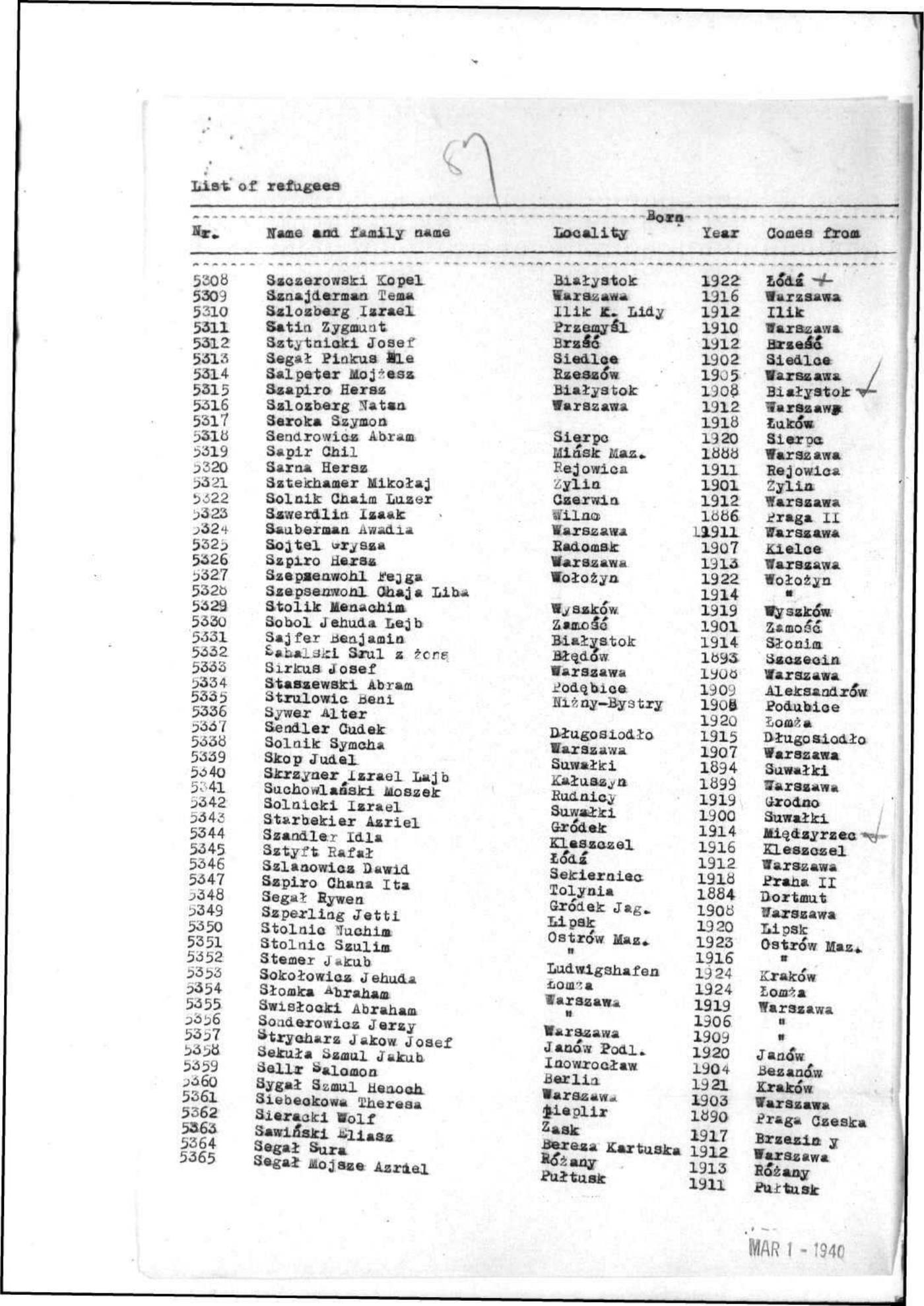
- List of Refugees, Vilna, 1940 — JDC Archives, New York, collection AR 33/44, file 00876. The contemporary register of Polish Jewish refugees in Lithuania, running to more than nine thousand numbered entries; the fullest independent check…
The 1940 Vilna refugee list has, at entry 5327, Fejga Szepsenwohl, born 1922 at Wołożyn, who had come from Wołożyn; the year agrees with the register's age and Wołożyn agrees with the archive's other records. - Oral history interview with Lucille Camhi (née Szepsenwol) — USC Shoah Foundation Visual History Archive, interview 8728. Catalogue: born Mar 25 1924, Wolozyn (Nowogródek, Poland); born Wolozyn 25 Mar 1924… — the interviewee may be living
USC Shoah Foundation VHA interview 8728: Lucille Camhi (née Szepsenwol) — her sister Fejga, with whom she travelled — gave a testimony (catalogue: born Mar 25 1924, Wolozyn (Nowogródek, Poland)); born Wolozyn 25 Mar 1924; Bluman: No.1609 Szepsenwol Fejga, 18, sister Lucille (17) - "California, San Francisco, Passenger Lists, 1893-1953", FamilySearch — index entry for Fejga Szepsenwol, 1940: born about 1922, Poland. Digitised from NARA microfilm publication M1410 (passenger lists of vessels arriving at San Francisc…
FamilySearch's index of the San Francisco passenger lists, read by the archive on 20 September 2026, has Fejga Szepsenwol, born about 1922 in Poland, arriving at San Francisco in 1940. The register's compiled line gives 1922, and the two agree. The name occurs once on the register, and a Polish-born passenger landing at San Francisco in 1940 fits the route through Japan, so the entry is taken as this person's under the archive's rule of 19 September 2026 for records from the route. - Manifest of alien passengers, SS President Coolidge, sailing from Kobe 9 November 1940, arrived San Francisco November 1940 (NARA, passenger lists of vessels arriving at San Francisco, M1410, film 366; read on FamilySearch's copy)
The National Archives' passenger list of the President Coolidge (FamilySearch's copy) records Fejga Szepsenwol, 18, born in Wołożyn and last living in Vilna, sailing from Kobe in November 1940 with her sister Chaja-Liba on US immigration visas issued in Tokyo. The sisters were going to a cousin, Ida Saidenberg, in Brooklyn; their mother was named as nearest relative in Vilna. - Takaharu Furue, Director, Port of Humanity Institute: “Table of Jewish refugees entering Japan in October — from the records of Sugihara survivors who landed at Tsuruga” (資料調査: 10月分ユダヤ避難民入国者表), Journal of the Japan Sea Coastal History Re…
The Fukui prefectural police's table of the Jewish refugees who entered Japan in October 1940, as Takaharu Furue publishes it, records the landing at Tsuruga on 19 October 1940 of テイガ・セプセンウオール, aged 18, Polish, a no occupation, bound for the United States, with a sister written チヤーヂヤ, 17. The police wrote the names in Japanese script; Furue gives the entry Sugihara's number 1609, and the archive takes it as this line on his reading, the name and the age agreeing with the compiled register. - Lucille Szepsenwol Camhi describes obtaining Japanese transit visas from Chiune Sugihara in Kovno | Holocaust Encyclopedia
- Chiune Sugihara - Wikipedia
- Chiune Sugihara | Holocaust Encyclopedia
- Lucille Szepsenwol Camhi describes saying goodbye to her mother when leaving for Vilna with her sister | Holocaust Encyclopedia
- Polish Jewish Refugees in Lithuania: Unexpected Rescue, 1940–1941 | Holocaust Encyclopedia
- USHMM oral testimony VIDEO: Lucille Szepsenwol Camhi describes obtaining Japanese transit visas from Sugihara in Kovno (family archive copy)
- Oral history interview with Lucille Camhi (née Szepsenwol) — USC Shoah Foundation Visual History Archive, interview 8728. Catalogue: born Mar 25 1924, Wolozyn (Nowogródek, Poland); born Wolozyn 25 Mar 1924… — the interviewee may be living
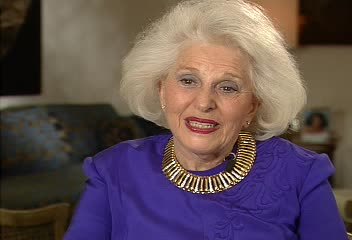
- Catalogue still for the oral history of Lucille Camhi — USC Shoah Foundation Visual History Archive, interview 8728 (the archive's public catalogue frame); links to the testimony at vha.usc.edu/testimony/8728