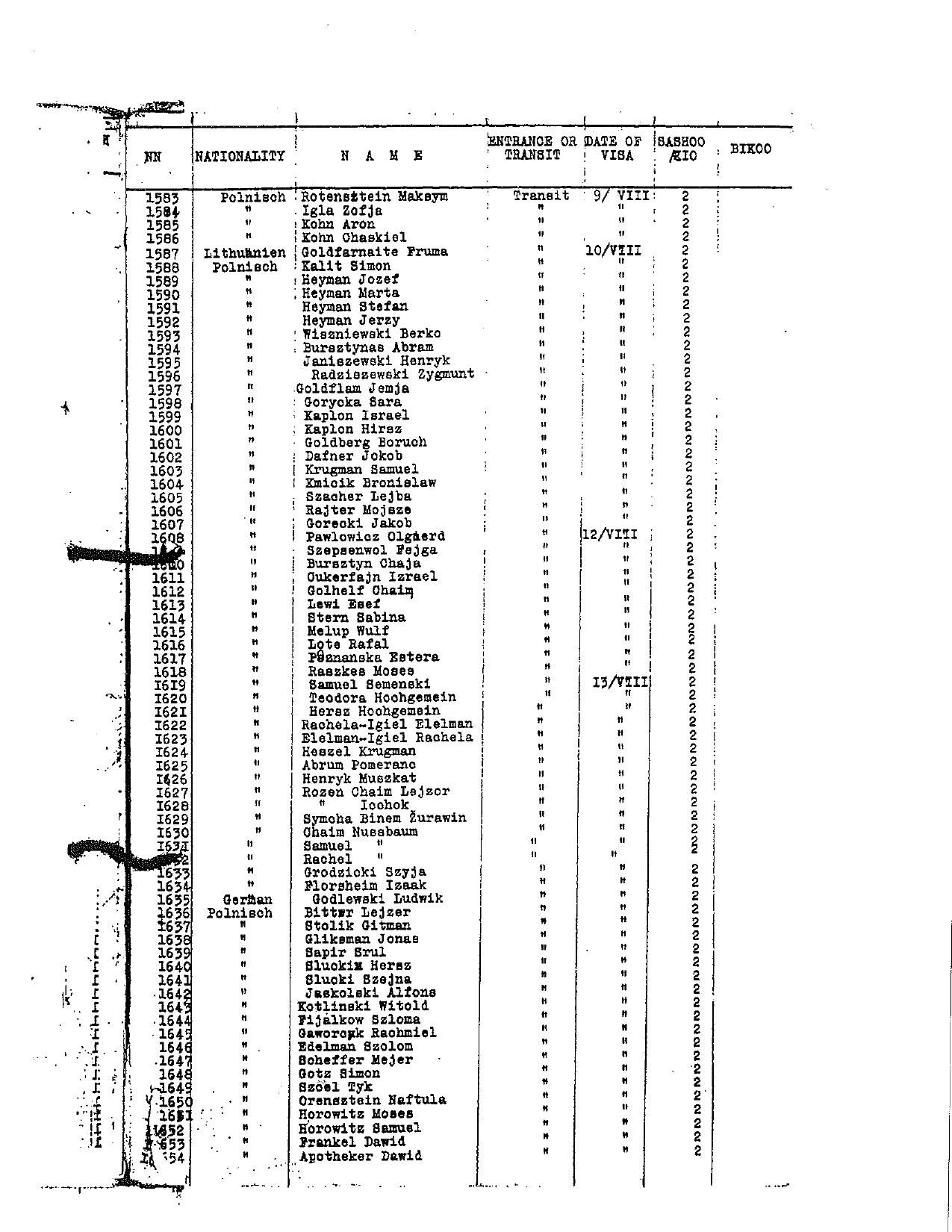
Apotheker Dawid received transit visa no. 1654 at the Japanese consulate in Kaunas on 13 August 1940.
The records themselves14 documents
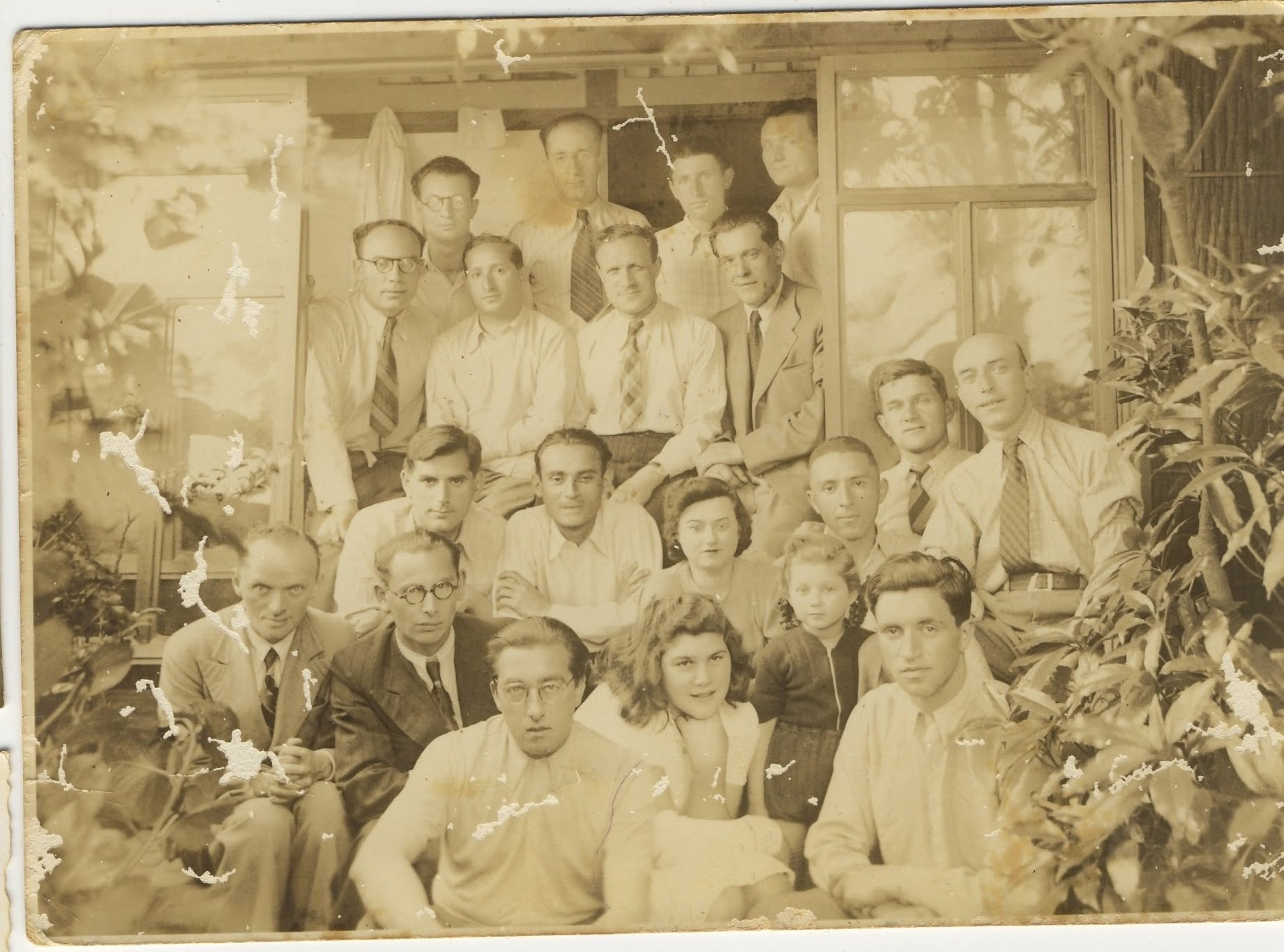
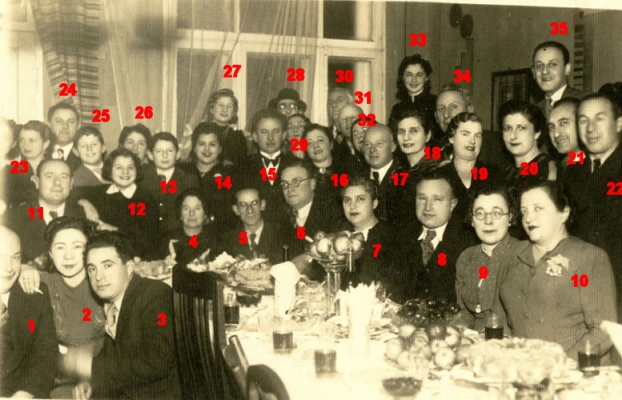
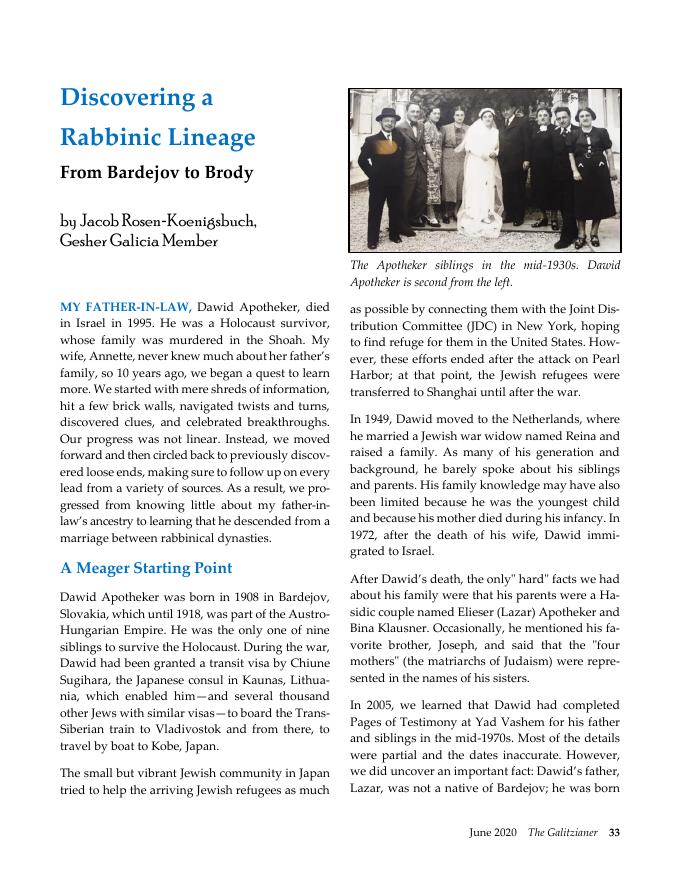
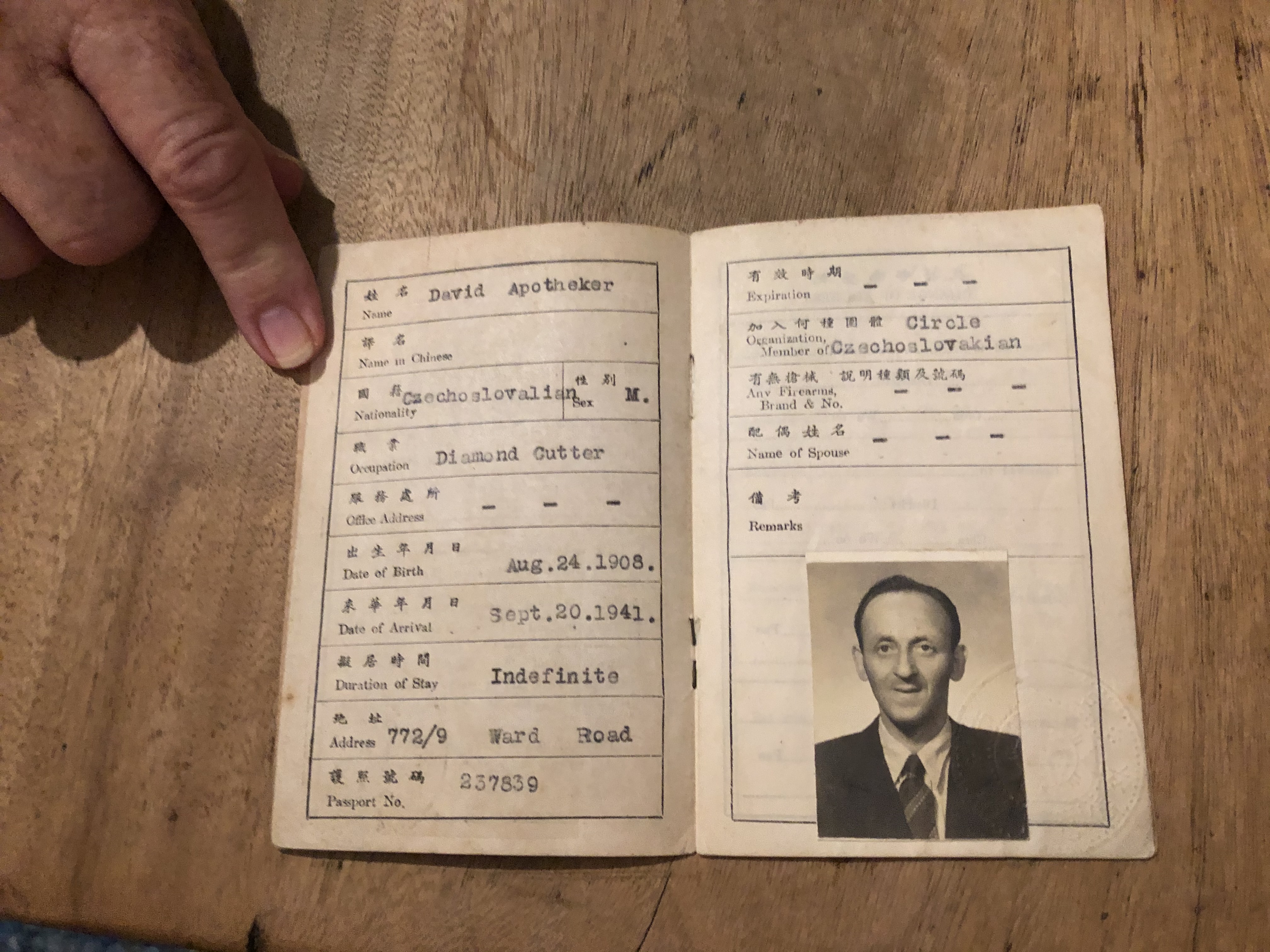
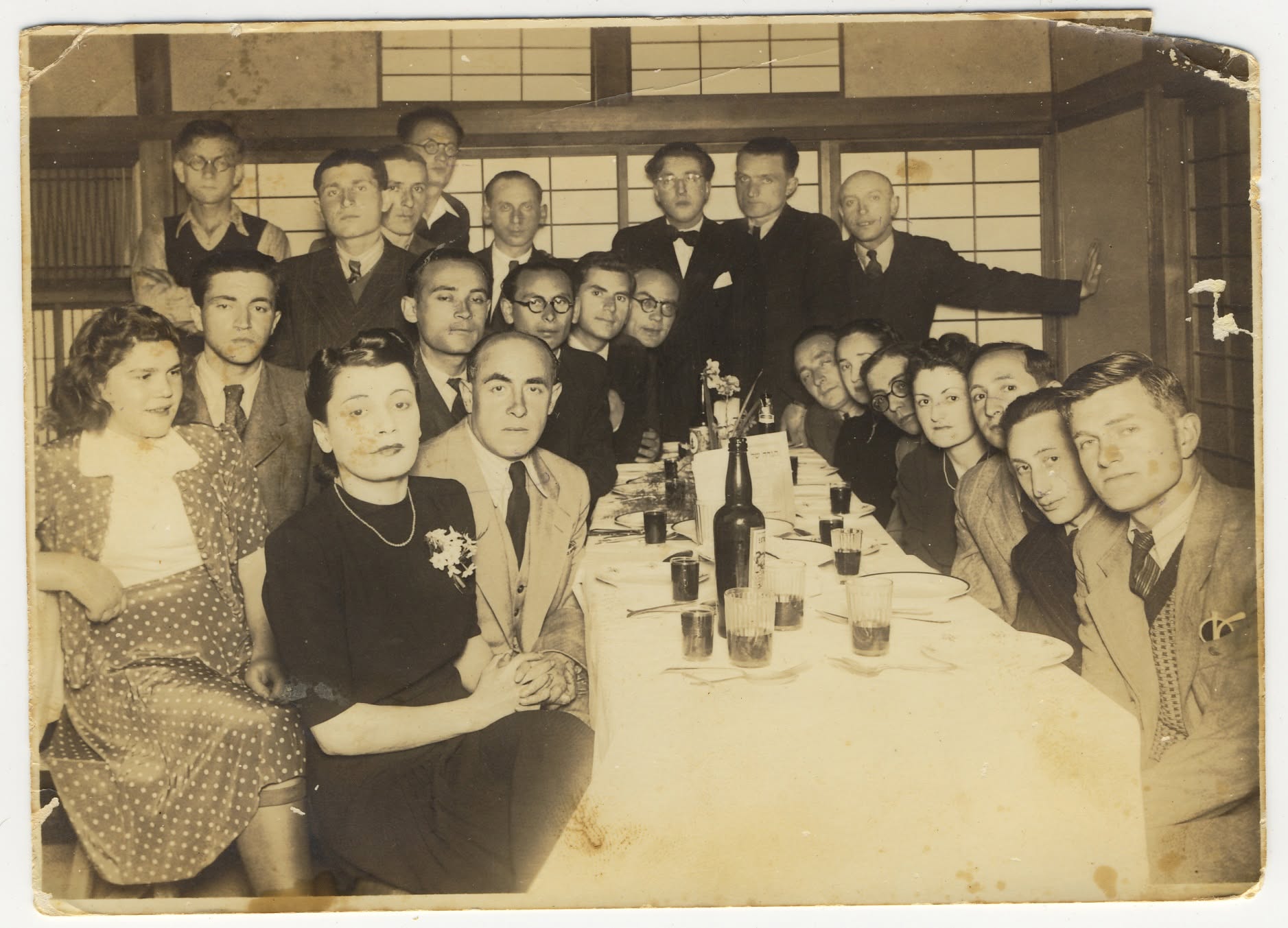
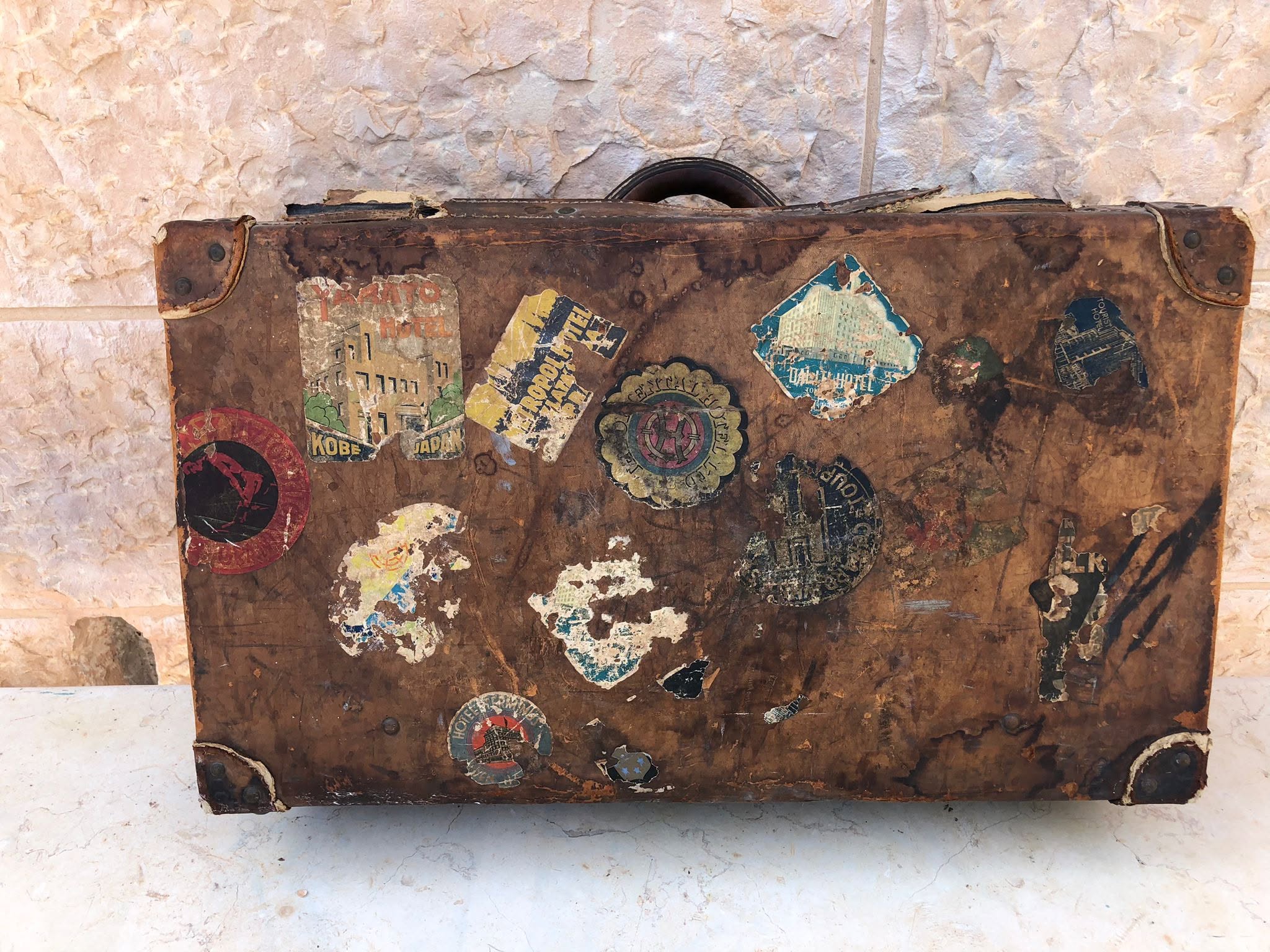
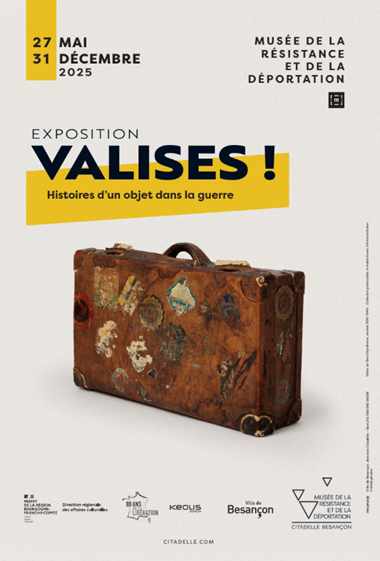
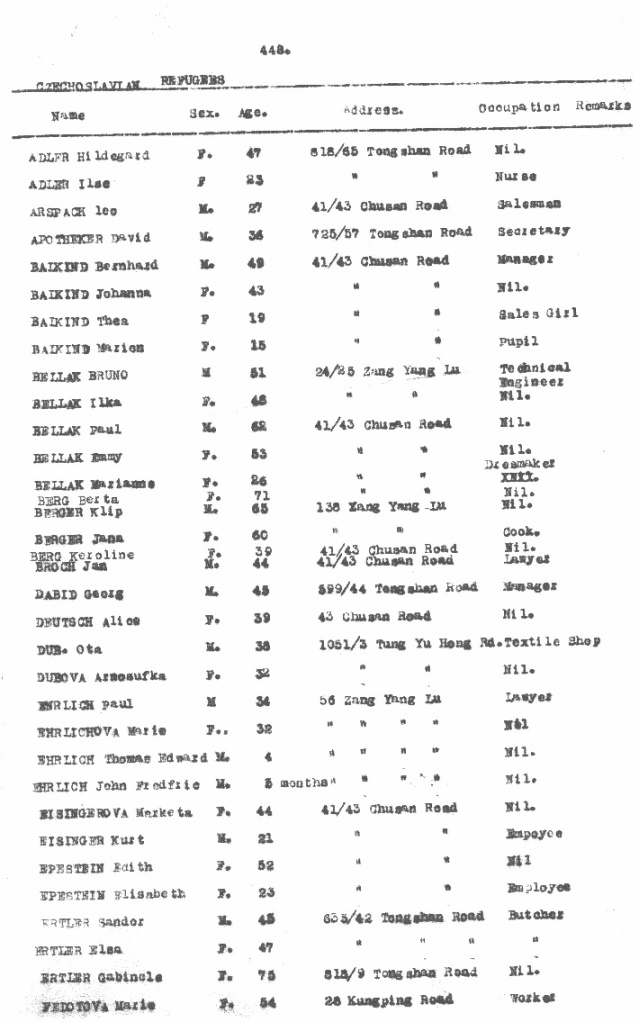
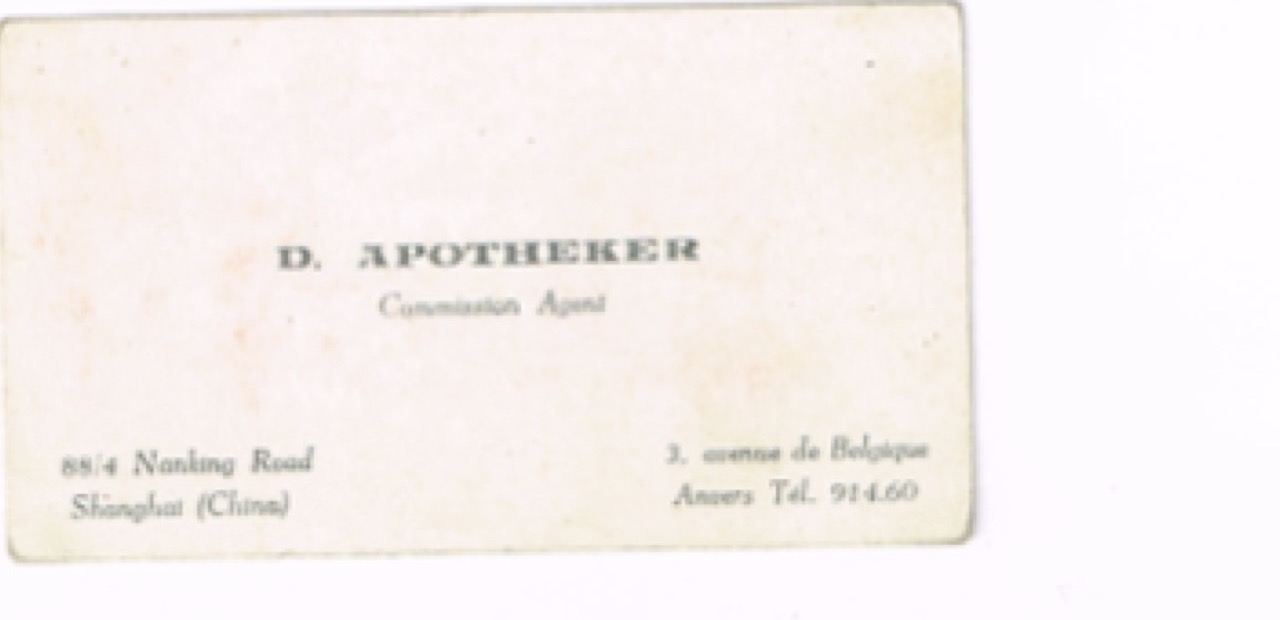
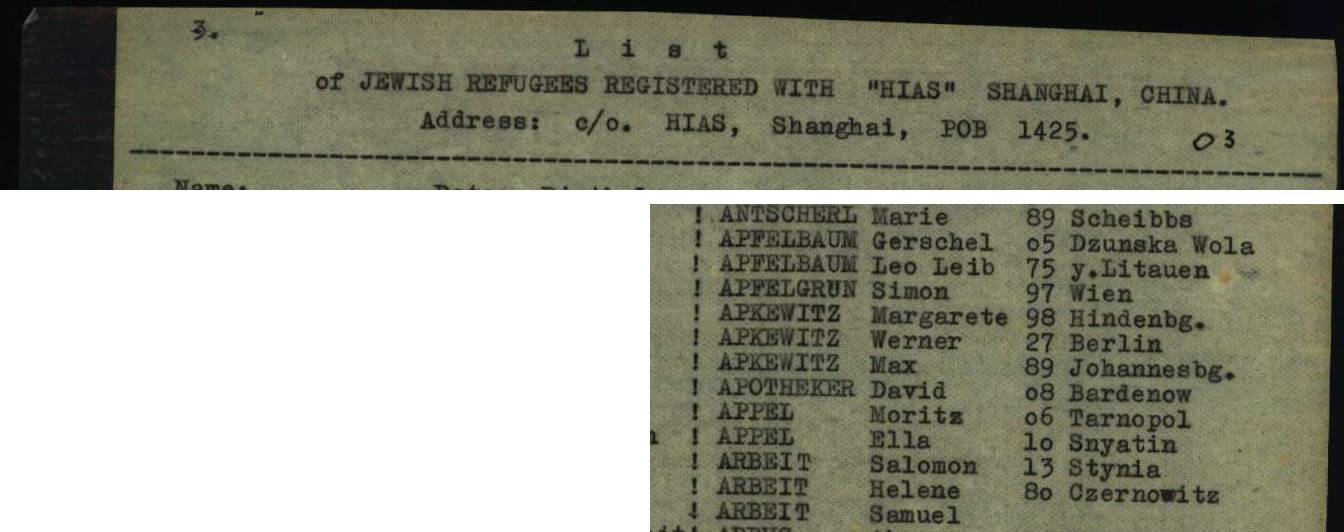
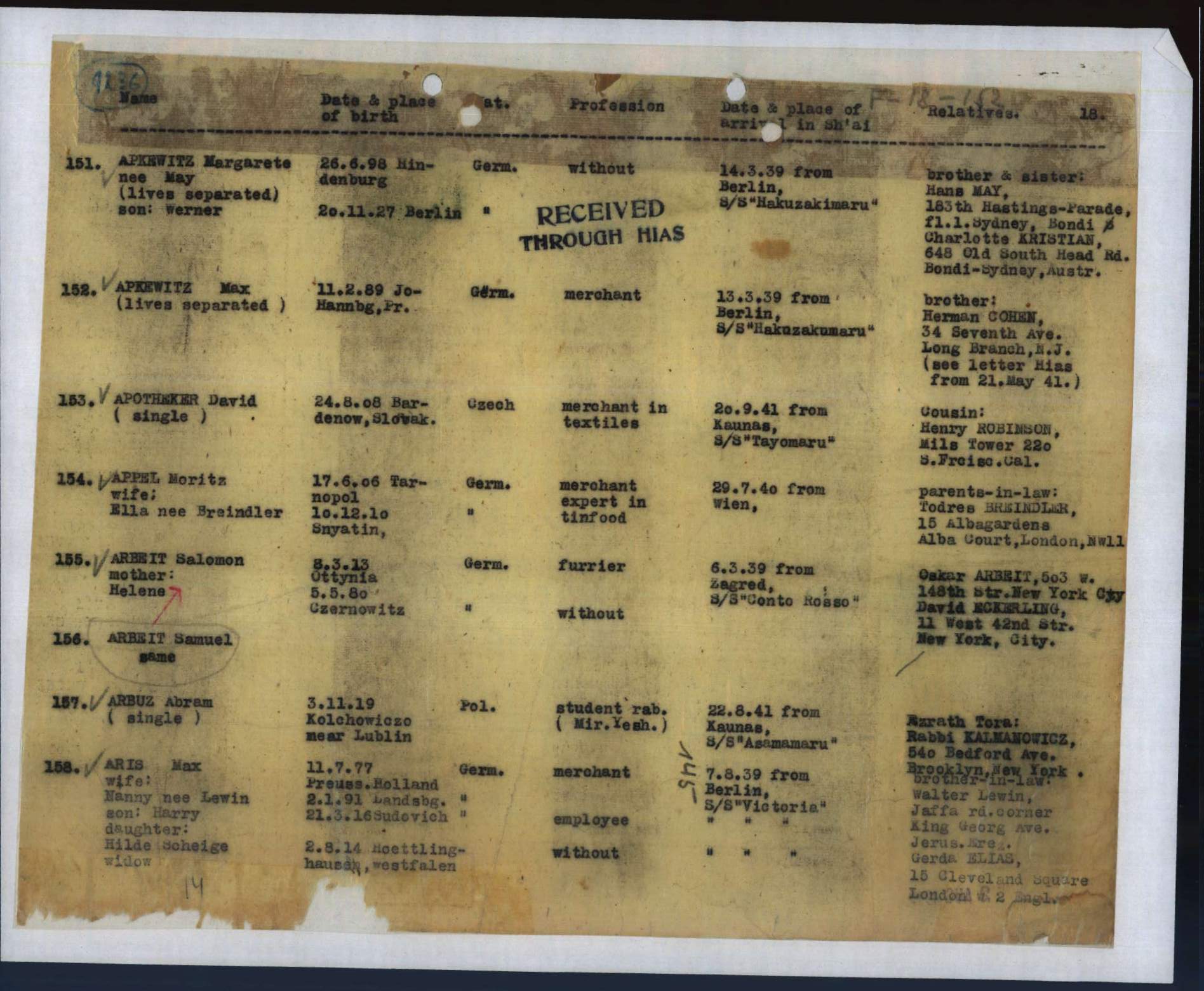
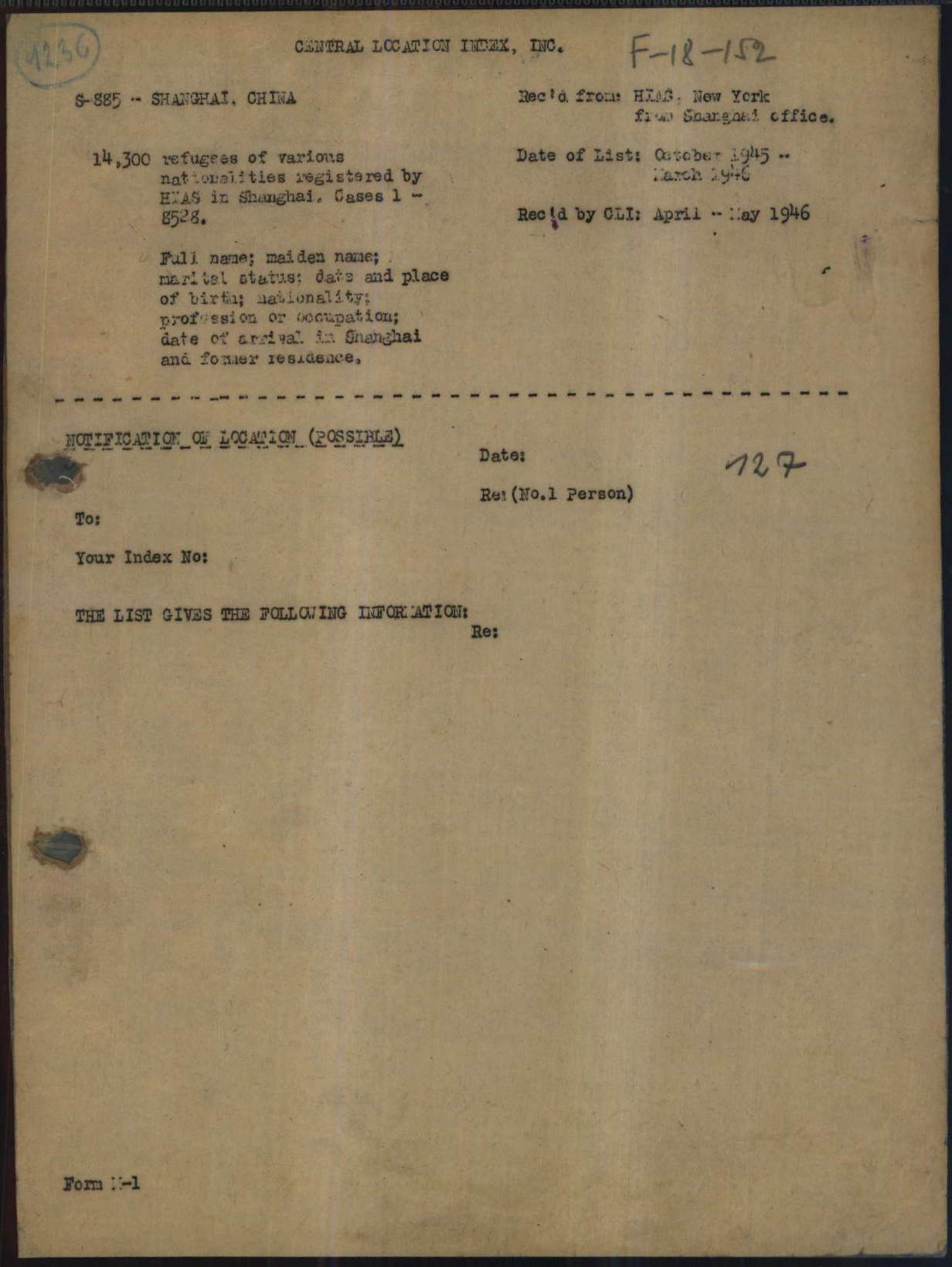
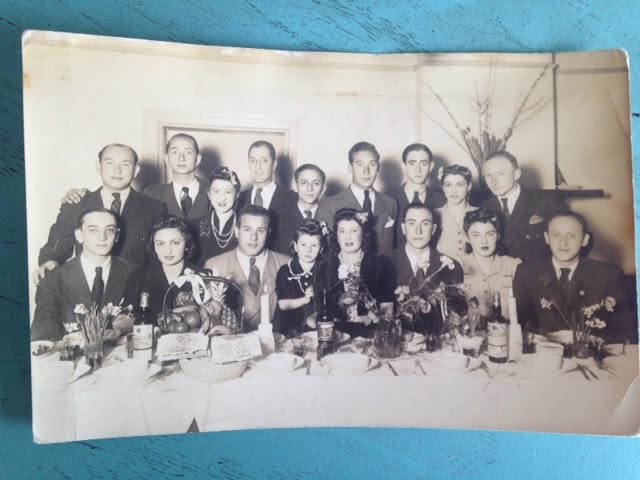
PhotographsShared document, filed under No. 1300. It is not a second surviving visa. Group of about twenty refugees, with one child, before a Japanese house amid garden foliage — from the same family collection as the Kobe Seder photograph; most of the sitters and the occasion not yet identified. Shared by Jacob Rosen-Koenigsbuch, Aug 2026. Asaf Feig identifies his grandfather Izaak Leiwand and Miriam Flitman, later Rottenberg, among those present; his marked copy is shown with Izaak Leiwand's record (Asaf Feig, 23 September 2026).PhotographsShared document, filed under No. 1300. It is not a second surviving visa. Bar mitzvah of Miron Meller, Rokiskis, November 1939 — the photograph David Apotheker carried through Siberia, Japan and Shanghai and kept for life; he stands as figure 35. Owned by his daughter Annette Apotheker Rosen; the thirty-five figures identified by Samuil Meller and Sana Meller Levin for the Rokiskis KehilaLinks page (JewishGen). Half of those named were murdered in Rokiskis in August 1941 or died in Soviet exilePhotographsShared document, filed under No. 1300. It is not a second surviving visa. Jacob Rosen-Koenigsbuch, 'Discovering a Rabbinic Lineage: From Bardejov to Brody', The Galitzianer (Gesher Galicia), June 2020, pp. 33-38 — opening page, with the photograph of the Apotheker siblings in the mid-1930s (Dawid second from left); sent by the author 21 Aug 2026PhotographsShared document, filed under No. 1300. It is not a second surviving visa. Shanghai identity book of David Apotheker, kept by his family — a bilingual Chinese and English booklet of the occupied city. Name: David Apotheker. Nationality: Czechoslovakian. Occupation: diamond cutter. Date of birth: 24 August 1908. Date of arrival: 20 September 1941. Duration of stay: indefinite. Address: 772/9 Ward Road. Passport No. 237839. Organisation: the Czechoslovakian Circle. His photograph is fixed at the right: a man of about thirty-five in jacket and tie, and the clearest portrait of him this archive holds. Given by his son-in-law Jacob Rosen-Koenigsbuch, 29 August 2026Kaunas 1940Sugihara's register of transit visas, as typed at Kaunas in 1940: line 1654.Original: Diplomatic Archives of the Ministry of Foreign Affairs of Japan, Tokyo; scan:Wikimedia CommonsJapan 1941Shared document, filed under No. 1300. It is not a second surviving visa. Passover Seder in Kobe, spring 1941 — some two dozen refugees around a laid table, a Haggadah among the glasses, two Japanese guests standing at the rear; Dawid Apotheker sits first from the right; the couple at his right are Nathan and Susan Bluman (register No.1569), the parents of Prof. George Bluman — identified by Jacob Rosen-Koenigsbuch, Aug 2026. Shared by Jacob Rosen-Koenigsbuch, Aug 2026; Asaf Feig's grandfather is also at the table | GEORGE BLUMAN CONFIRMS, 25 August 2026: the couple at David Apotheker's right ARE his parents, Nathan and Susan Bluman (register No. 1569) — Jacob Rosen-Koenigsbuch's identification, confirmed by the son, who holds a copy of this photograph himself. He recognised no one else at the table. He adds that THERE WERE TWO SEDERS in Kobe that spring: he has a photograph of his parents at the other one, which he is not able to share at present. Asaf Feig identifies his grandfather Izaak Leiwand and Miriam Flitman, later Rottenberg, among those present; his marked copy is shown with Izaak Leiwand's record (Asaf Feig, 23 September 2026).Japan 1941Shared document, filed under No. 1300. It is not a second surviving visa. Dawid Apotheker's suitcase, kept by his family: luggage labels of the Yamato Hotel Kobe, the Daiichi Hotel Tokyo, the Central Hotel Ltd, a Tourist Hotel and a Hotel Terminus — the transit through Japan recorded in stickers. Shared by Jacob Rosen-Koenigsbuch, Aug 2026Japan 1941Shared document, filed under No. 1300. It is not a second surviving visa. Poster of 'Valises ! Histoires d'un objet dans la guerre' — Musee de la Resistance et de la Deportation, Citadelle de Besancon, 27 May to 31 December 2025: David Apotheker's suitcase, with its Kobe and Tokyo hotel labels, chosen as the face of the exhibition. Supplied by Jacob Rosen-KoenigsbuchShanghaiShared document, filed under No. 1300. It is not a second surviving visa. A page of a Shanghai roll of Czechoslovakian refugees — typescript, page 448, columns for name, sex, age, address, occupation and remarks — reading 'APOTHEKER David, M, 36, 725/57 Tongshan Road, Secretary', in a column of Adlers, Baikinds, Bellaks, Ehrlichs and Ertlers at the same few addresses on Tongshan Road, Chusan Road and Zang Yang Lu. His age of 36 places the page at about 1944. Given by his son-in-law Jacob Rosen-Koenigsbuch, 29 August 2026, from the Exil Shanghai documentationShanghaiShared document, filed under No. 1300. It is not a second surviving visa. Business card of D. Apotheker, commission agent, kept by his family — '88/4 Nanking Road, Shanghai (China)' printed at one corner and '3, avenue de Belgique, Anvers, Tel. 914.60' at the other: the Shanghai years and the Antwerp of his return set side by side on one card. Given by his son-in-law Jacob Rosen-Koenigsbuch, 29 August 2026ShanghaiShared document, filed under No. 1300. It is not a second surviving visa. World Jewish Congress, London: 'List of refugees in Shanghai', received in London 11 June 1946, 10 sheets, no list of nationalities — sheet 3, headed 'List of Jewish refugees registered with HIAS Shanghai, China, address c/o HIAS, Shanghai, P.O.B. 1425' (Altminc to Arndtheim), each line giving surname, given name, birth year and birthplace. Arolsen Archives, 3.1.1.3, item 717000, WJC London n° 352, DocID 78796289. Shown as a crop; the full sheet is held. Cited as: 3.1.1.3/ 78796289/ ITS Digital Archive, Arolsen Archives.ArrivalShared document, filed under No. 1300. It is not a second surviving visa. The HIAS Shanghai registration list of refugees (Central Location Index case S-885: 14,300 refugees registered by HIAS in Shanghai, cases 1–8528, list dated October 1945 – March 1946, received by the CLI April–May 1946), page 18, entries 151–158. Each entry gives name, marital status, date and place of birth, nationality, profession, date and place of arrival in Shanghai with the ship, and relatives abroad. Arolsen Archives, 3.1.1.3, folder 0139, DocID 78796462. Cited as: 3.1.1.3/ 78796462/ ITS Digital Archive, Arolsen Archives.ArrivalShared document, filed under No. 1300. It is not a second surviving visa. Central Location Index, Inc., New York: the cover sheet of case S-885, Shanghai, China — '14,300 refugees of various nationalities registered by HIAS in Shanghai. Cases 1 – 8528', stating the fields each entry gives (full name; maiden name; marital status; date and place of birth; nationality; profession or occupation; date of arrival in Shanghai and former residence), received from HIAS New York from its Shanghai office, date of list October 1945 – March 1946, received by the CLI April – May 1946; a blank 'Notification of Location (Possible)' form below the rule. The title sheet of the list on which David Apotheker is entry 153 (page 18, DocID 78796462) and Abram Saul Licht entry 4541 (page 604, DocID 78797133). Names no person. Arolsen Archives, 3.1.1.3 (lists of refugees registered by HIAS in Shanghai), folder 0139, DocID 78796444; marked F-18-152, ITS stamp of 2 August 1949 on the back. Cited as: 3.1.1.3/ 78796444/ ITS Digital Archive, Arolsen Archives.Later lifeShared document, filed under No. 1300. It is not a second surviving visa. Seventeen around a celebration table — flowers, fruit baskets and wine — from the same family collection; occasion, place and sitters not yet identified. Shared by Jacob Rosen-Koenigsbuch, Aug 2026
Telegram filed at Vilnius and addressed to JEWCOM, care of Halina Jakubowicz, Kobe, concerning David Apotheker. Supplied to the archive by Jacob Rosen-Koenigsbuch. The Vilnius telegram, given by Jacob Rosen-Koenigsbuch in August 2026 — the document behind the family's account of the OTHER David Apotheker. A telegram form of the Japanese posts, filed at Vilnius ('109 VILNIUS 242 17 15 2035 TOK'), addressed 'JEWCOM HALINA JAKUBOWICZ KOBE' — that is, to the Kobe Jewish community, care of Halina Jakubowicz — and reading, in telegraphese German: 'UEBERWACHET JEWCOM RASCHESTE ERLEDIGUNG SHANGHAI PERMITE DRAHTET TRAIDENIO 14 MARJAN MIRVEEK DAWID APOTHEKER' — supervise Jewcom for the quickest issue of the Shanghai permits, wire to Traidenio 14. Traidenio gatve 14 is an address in VILNIUS; the three senders are Marjan, Mirveek (reading uncertain) and Dawid Apotheker. So a David Apotheker was still in Vilnius, pressing Kobe for Shanghai permits, at the date of this cable. The Japanese receiving stamp appears to read 1941, which is not confirmed, and the signatories' given names are read from a photocopy. Jacob's annotations in red gloss the Japanese: c/o, 'Jews', 'community', and the clerk's name Yamamoto. A second reading on 25 August 2026, against the scan at full resolution, confirmed the wording except the second signature word, better read MIRYLEK than MIRVEEK — which suggests TWO senders, 'Marjan Mirylek' and 'Dawid Apotheker', rather than three ('Mirveek' is no given name; 'Marjan Mirylek' is a natural Polish forename+surname). No Mirylek on the register; the register's two Marjans (Nos. 313, 1239) are name-alone and not connected. The preamble '109 VILNIUS 242 17 15 2035 TOK MCW' parses as telegram no. The Kobe receiving postmark shows day '15' and 'NIPPON'; its month/year slug is NOT legible in this scan, so no year is stated from the stamp; the violet '.. 7 43' figures are read as a clerk or time mark, not a date. The 1941 dating therefore rests on the Moscow routing and on Jewcom Kobe's operating window (1940 - late 1941), not on a read year.