Isak Levin
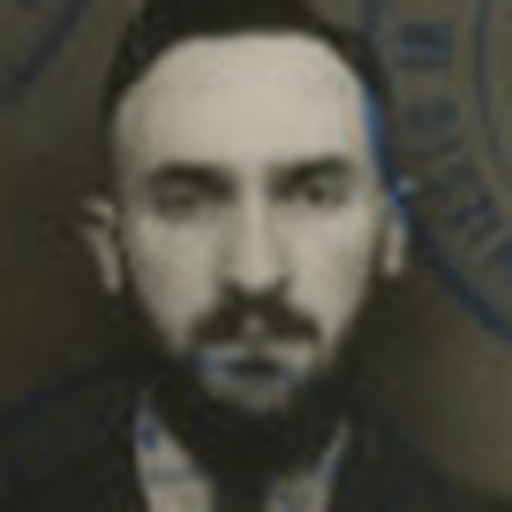
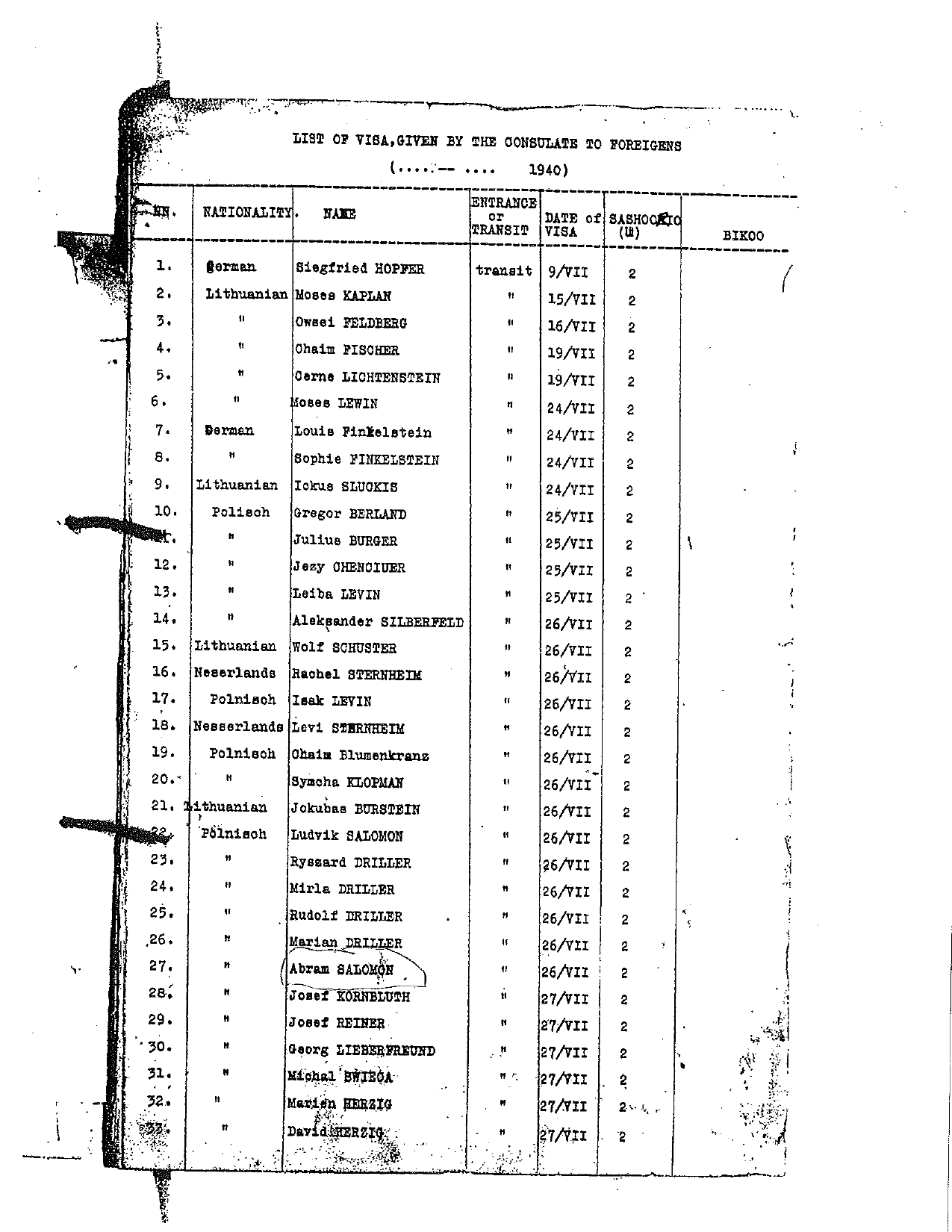
Isak Levin received transit visa no. 17 at the Japanese consulate in Kaunas on 26 July 1940. The register records rabbi, aged 34.
Documents
| Name | Isak Levin |
|---|---|
| Citizenship | Polnisch [Polish] |
| Visa | Transit |
| Issued | 26 Jul 1940 · arrived in Japan 2 Jan 1941 |
| Line | 17 |
What the register records
- Nationality as recorded
- Polnisch
- Age in 1940
- 34
- Occupation
- Rabbi
- Family, per the Kitade-Bluman list
- son Natan (4), husband of #13
The journey
Reached Japan; aided by the Polish ambassador Tadeusz Romer; registered in Kobe for USA.
Travelled with, and never given a number
- Natan — child, aged 5
The register recorded visa holders. It did not reliably record the wives and children who travelled on somebody else’s visa, so these people have no entry of their own and cannot be searched for. Where the archive has recovered a name, it is here.
What is known
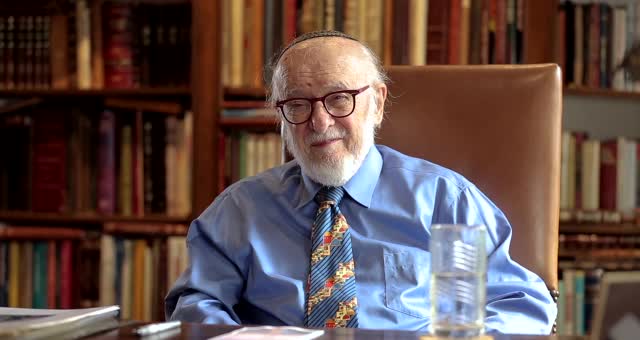
Nathan Lewin — four years old on the journey, later one of America's noted appellate lawyers — told the USC Shoah Foundation in 2024 (interview 62029) how his family travelled. His mother went to 'the Japanese consul, whose name was Chiune Sugihara' (32:46), and the visa was 'hand wrote out on the 26th of July, 1940' (33:11-33:16); the party was 'my mother, my father, myself, my maternal grandmother... and her brother' (34:50-34:55) — the grandmother and her brother 'were Dutch citizens and are so listed on the list of Sugihara visas' (35:03-35:13). Vilna to Moscow, the Trans-Siberian to Vladivostok — 'I'm told, a three week trip' (34:11-34:19) — then the boat to Japan, 'ultimately, to Yokohama and then to Kobe. So that at the age of four, I was in Japan' (34:22-34:32). In Kobe, because his father and grandfather were well-known rabbinic figures, 'there were Jewish organizations in the United States that requested the State Department to issue visas that would enable these famous rabbis to come' (35:36-35:52). Credit: USC Shoah Foundation Visual History Archive, interview 62029; quotations by timecode.
Peppy Sternheim Lewin — Amsterdam-raised, newly Polish by marriage — refused to take no for an answer. Turned down by Zwartendijk for a Dutch East Indies visa, she wrote twice to Ambassador de Decker in Riga until he penned in her passport, on 11 July 1940: no entry visa is required for Surinam, Curaçao and the other Dutch possessions in America. Zwartendijk copied the formula onto her family's Leidimas on 22 July — the first Curaçao visa — and Sugihara stamped the family's transit visas four days later (register Nos.16, 17, 18). When the refugees of Vilna heard what she had done, hundreds crowded the Kaunas consulate, and Sugihara began the month of visa-writing that saved thousands. Her son, three-year-old Nathan, became one of Washington's most celebrated attorneys; her granddaughter Alyza told the story.
The Lewin family—Rabbi Dr. Isaac Lewin, his Dutch-born wife Pessla "Peppy" Lewin, and their young son Nathan (later a famous Washington attorney)—fled Lodz, Poland to Lithuania at the outbreak of war in 1939, joined by Peppy's visiting mother and brother from Amsterdam. Peppy repeatedly petitioned Dutch ambassador de Decker until she obtained the Curacao notation for her family's passports, and Zwartendijk issued the visas for the rest of the family. Sugihara honored the visa and issued transit visas, and the Lewins undertook the journey east across Russia. Unlike most refugees who remained in Shanghai, the Lewins did not stay there.
He got his chance when a Jewish woman named Pessla "Peppy" Lewin walked into the consulate. their three-year-old son, Nathan (who would grow up to become a famous Washington attorney) (So, yes, the Lewins got their transit visa.)
Where this comes from
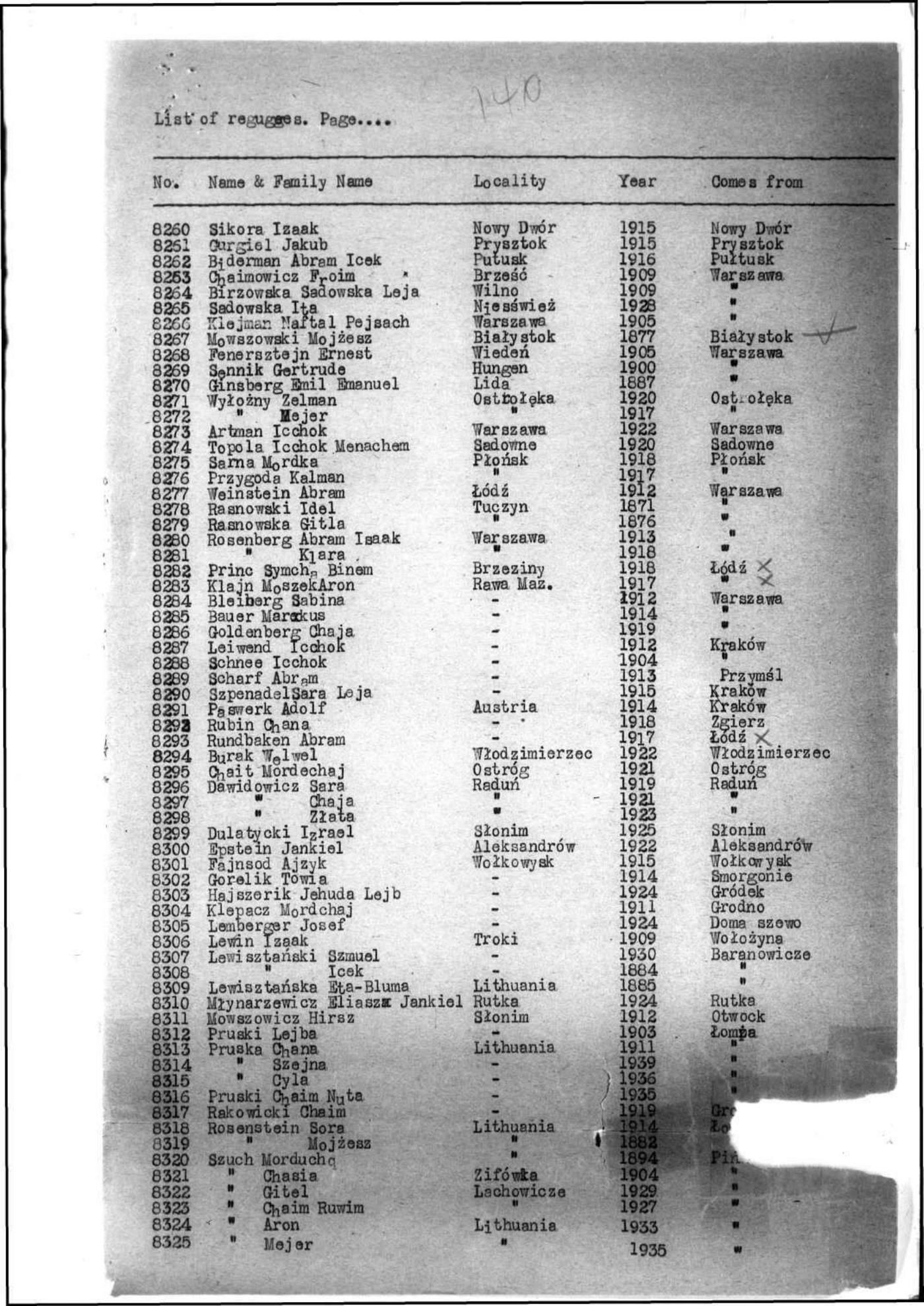
- List of Refugees, Vilna, 1940 — JDC Archives, New York, collection AR 33/44, file 00876. The contemporary register of Polish Jewish refugees in Lithuania, running to more than nine thousand numbered entries; the fullest independent check…
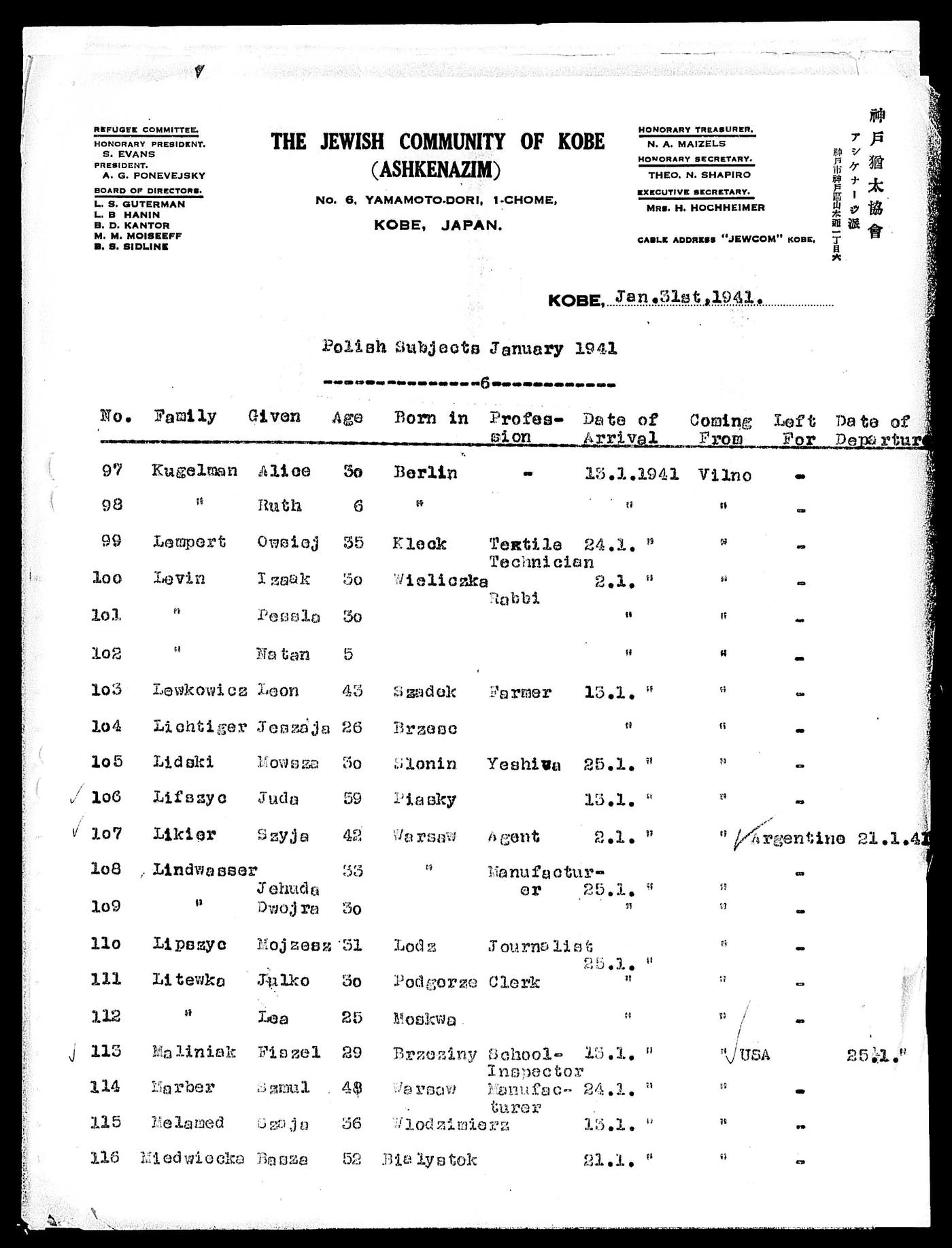
The 1940 Vilna refugee list has an Izaak Lewin at entry 8306, born 1909 at Troki, who had come from Wolozyna; the register's compiled age points to a birth about 1906, so the archive shows the entry as a lead, not as this person's record. - The JEWCOM register — the refugee register kept by the Refugee Committee of the Jewish Community of Kobe (Ashkenazim) at No. 6 Yamamoto-dori, 1-chome, whose cable address was 'JEWCOM Kobe'. Eighty-four pages on the committee's own printe…
Entry 100 of the Kobe Jewish Community's refugee register: aged 30, born at Wieliczka, a rabbi, who arrived in Japan from Vilnius on 2 January 1941. - United States Holocaust Memorial Museum, Holocaust Survivors and Victims Database — the Flight and Rescue electronic dataset (source 20725): USHMM's own transcription of the Kaunas register, 2,140 persons with citizenship, visa type, iss…
USHMM Flight and Rescue dataset: arrived in Japan 2 Jan 1941 (line 17) - Oral history interview with Nathan Lewin — USC Shoah Foundation Visual History Archive, in… — transcript read 24 Aug 2026 (streams online; interviewed Potomac, Maryland, 17 April 2024, interviewer Ginny Glickman; captions in 14 languages)
USC Shoah Foundation VHA interview 62029: Nathan Lewin — his father Isaac — gave a testimony (catalogue: born Jan 31 1936, Łódź (Łódź, Poland)); born Lodz 31 Jan 1936; parents Isaak and Doba (Pessla) Lewin, Nos.17 and 13 - Manifest of alien passengers, SS Tatuta Maru, sailing from Yokohama 6 March 1941, arrived San Francisco 20 March 1941 (US National Archives, M1410, film 368; read on FamilySearch's copy)
He arrived at San Francisco on 20 March 1941 aboard the Tatuta Maru from Yokohama, with his young son, on a US visitor's visa issued at Kobe on 28 February 1941; the manifest gives his birthplace as Wieliczka, his calling as rabbi, his father as A. Lewin of Lwów, and his destination as a friend in Brooklyn (manifest held by the US National Archives, read on FamilySearch's copy). The calling of rabbi and the young son are what the register's compilers recorded for him. - "How my mother's chutzpah helped deDecke… — Dr. Les Glassman, 32 minutes. Recorded interview, transcript held by the archive. Subtitles as published with the recording. places named: Vilna, Kobe, Vladivostok, Curaçao; bodies named: Lubavitch.
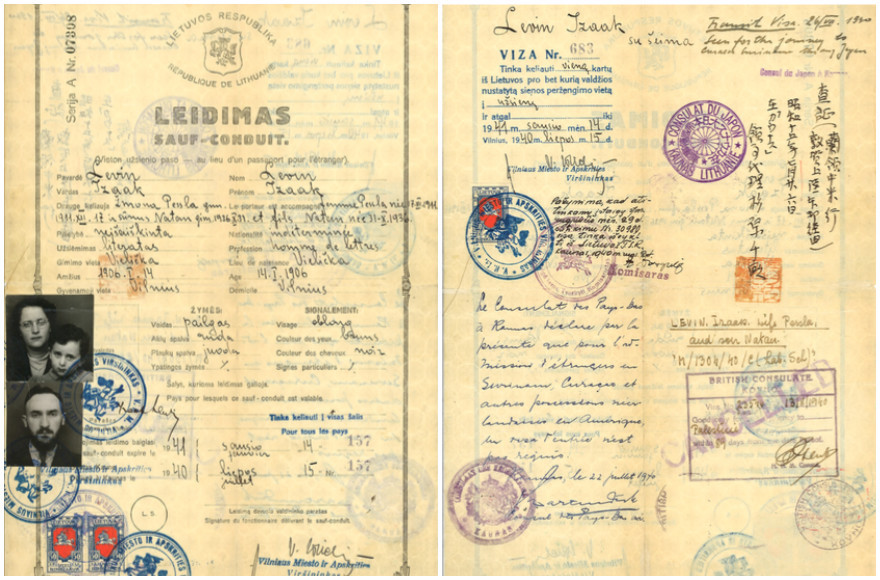
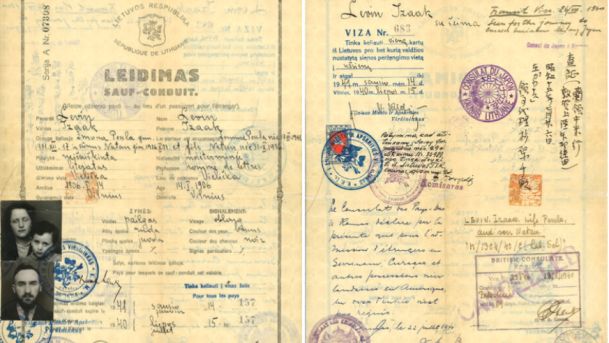
Nathan Lewin, who was four in 1940, has said in public talks that his father's transit visa was Sugihara's number 17, written by hand on 26 July 1940, and that his father, a member of the Łódź city council, went to Kobe and on to the United States in 1941 as a non-immigrant, then crossed to Canada to immigrate (Dr Les Glassman's interview, 2023; about seventeen to twenty-eight minutes in). - The Lithuanian sauf-conduit of Isaak Levin (No. 17), with his wife's and his photographs, and the facing visa page with his Sugihara transit visa for Curaçao — two pages side by side.
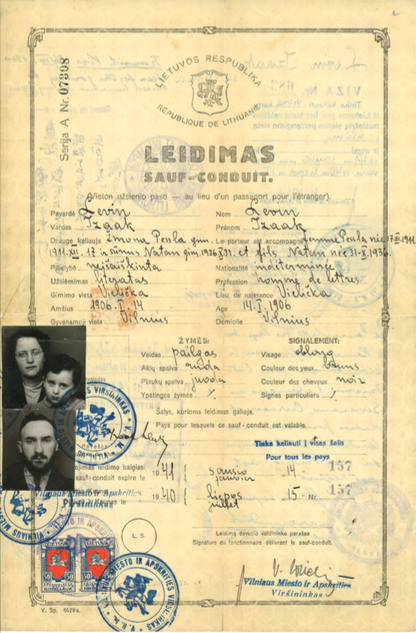
- The Lithuanian sauf-conduit (Leidimas) of Isaak Levin (No. 17), Series A No. 07808, issued at Vilnius in 1940, with his wife's and his photographs.
- The Lithuanian sauf-conduit of Isaak Levin (No. 17), Series A No. 07808, with his wife's and his photographs — a second copy.
- How my grandmother’s chutzpah helped Japan's consul save thousands of Jews | The Times of Israel
- A document held in the archive's files
- Jan Zwartendyk Jr., "Jan Zwartendijk — his activities as Dutch consul in Lithuania, 1940" (remember.org, updated 3 December 2005)
- Chiune Sugihara Facts - The Sugihara Curaçao Visas
- The Angel of Curaçao – Mishpacha
- Alyza D. Lewin, Times of Israel/JTA (26 Apr 2016): "How my grandmother's chutzpah helped Japan's consul save thousands of Jews" — Peppy Sternheim Lewin obtained the FIRST Curaçao formula (de Decker, Riga, 11 Jul 1940 in her passport; Zwa…
- Akira Kitade, Japan Forward (22 Jan 2018): "The Woman Who Opened the Path for Visas for Life" — Peppy Sternheim Lewin (b.1911); only THREE Dutch nationals on the register: Rachel Sternheim No.16, Levi Sternheim No.18, Nathan Gutwirth No.…
- Lucas Bruijn / remember.org "Chiune Sugihara Facts" (canonical URL): Zwartendijk first declaration 22 Jul, LAST 2 Aug (No.2345 to ELIASZ KUPINSKI AND FAMILY — highest recovered; first ~1,300 handwritten, then stamp; stopped when Soviets…
- [self-reference] Screenshot of sugiharavisas.org gallery page, 26 Jul 2026 — not an archive source
- livedoor blog: Isaac Lewin family Leidimas — VIZA Nr.683, wife Pesla and son Nathan photos
- Oral history interview with Nathan Lewin — USC Shoah Foundation Visual History Archive, in… — transcript read 24 Aug 2026 (streams online; interviewed Potomac, Maryland, 17 April 2024, interviewer Ginny Glickman; captions in 14 languages)
- Catalogue still for the oral history of Nathan Lewin — USC Shoah Foundation Visual History Archive, interview 62029 (the archive's public catalogue frame, 352x240); links to the testimony at vha.usc.edu/testimony/62029
