Tenenbaum Josef
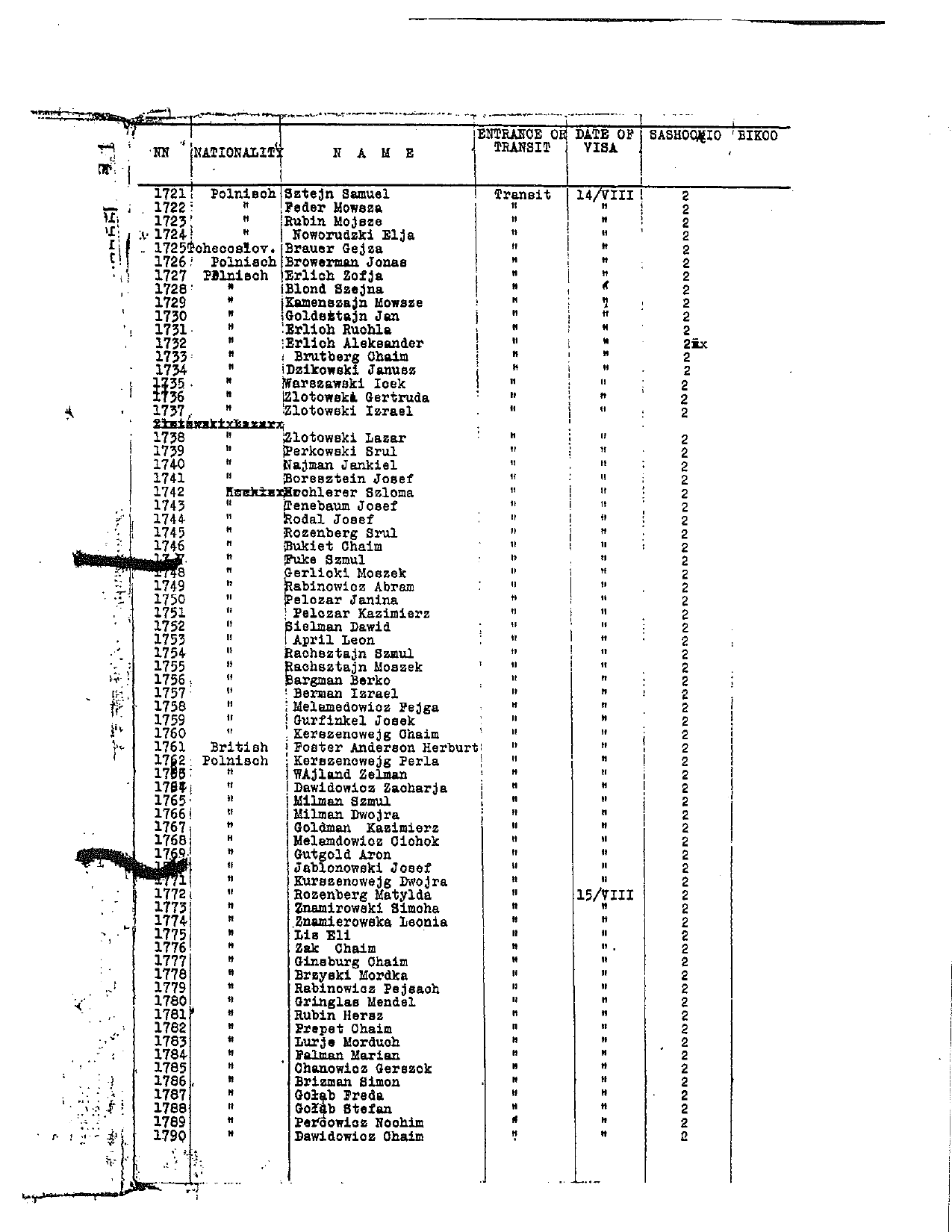
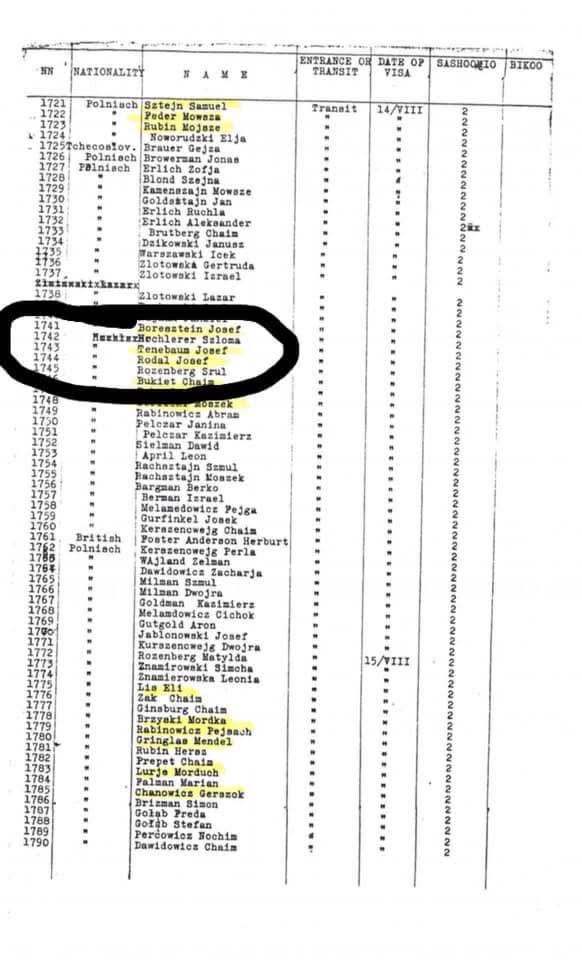
Tenenbaum Josef received transit visa no. 1743 at the Japanese consulate in Kaunas on 14 August 1940. The register records rabbinical student - lubavitsch yeshiva, aged 23.
Documents
| Name | Josef Tenebaum |
|---|---|
| Citizenship | Polnisch [Polish] |
| Visa | Transit |
| Issued | 14 Aug 1940 · arrived in Japan 14 Feb 1941 |
| Line | 1743 |
What the register records
- Nationality as recorded
- Polnisch
- Age in 1940
- 23
- Occupation
- Rabbinical Student - Lubavitsch Yeshiva
The journey
Reached Japan; reached Shanghai; aided by the Polish ambassador Tadeusz Romer; registered in Kobe for Canada.
What is known
Reb Mendel Tenenbaum, the Otwock yeshiva's most luminous student — of whose davening the Previous Rebbe said it was worth crossing the ocean just to see — fled Poland in 1939, was caught at the border and made to clean the Shedlitz train platform under German guns, and reached Vilna, where the refugee yeshiva never dropped its study schedule. He escaped on a Sugihara visa (register No.1743, 14 Aug 1940) with the Tomchei Tmimim group, waited out 1941 in Shanghai, and was one of nine students granted Canadian visas — sailing to San Francisco on fruit and sardines rather than eat doubtful meat. The only survivor of his family, he became the quiet Tanya master behind the famous radio shiurim, and the baal tokea at the Rebbe's minyan, until his passing in 1993.
It was worthwhile to travel by boat from the United States to Poland to see Mendel Tennenbaum's davening.
Where this comes from
- List of Refugees, Vilna, 1940 — JDC Archives, New York, collection AR 33/44, file 00876. The contemporary register of Polish Jewish refugees in Lithuania, running to more than nine thousand numbered entries; the fullest independent check…
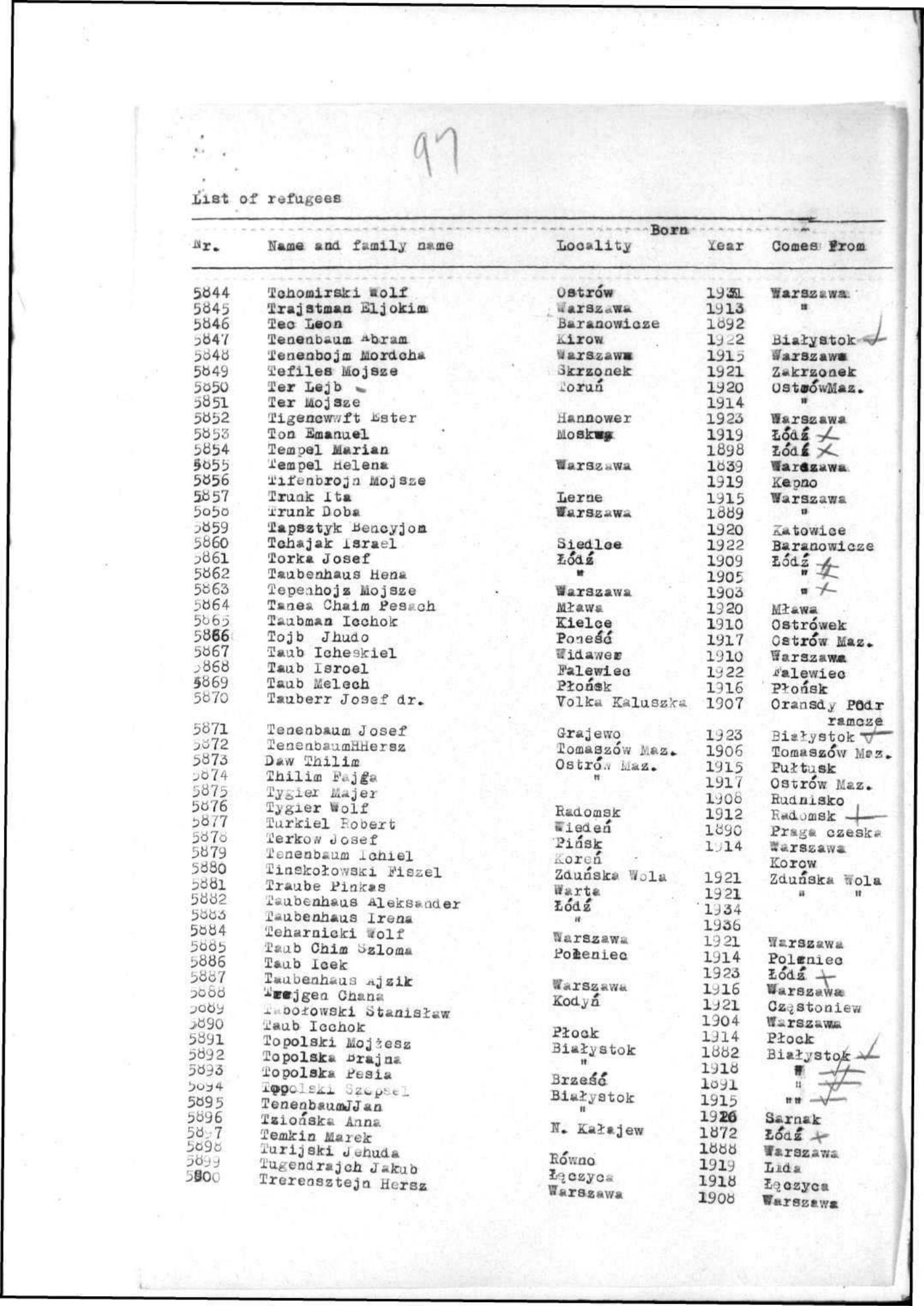
The 1940 Vilna refugee list has a Josef Tenenbaum at entry 5871, born 1923 at Grajewo, who had come from Białystok. It is shown as a lead, not as this person: born 1923 against the register's age of 23, which puts the birth about 1917. - United States Holocaust Memorial Museum, Holocaust Survivors and Victims Database — the Flight and Rescue electronic dataset (source 20725): USHMM's own transcription of the Kaunas register, 2,140 persons with citizenship, visa type, iss…
USHMM Flight and Rescue dataset: arrived in Japan 14 Feb 1941 (line 1743) - American Jewish Joint Distribution Committee Archives: the Kobe Jewish committee's JDC relief list of February 1941, page 35
Page 35 of the Kobe committee's list of refugees receiving JDC aid, February 1941, enters Tenenbaum Josef-Mendel, 24, of Kock. The given name agrees, and the age of 24 in February 1941 fits the register's 23 in 1940. Mendel, the name by which his grandson Rabbi Chesky Tenenbaum knows him, is this second given name. - "California, San Francisco, Passenger Lists, 1893-1953", FamilySearch — index entry for Josef Mendel Tenenbaum, 1941: born about 1917, Poland. Digitised from NARA microfilm publication M1410 (passenger lists of vessels arriving at San Fr…
FamilySearch's index of the San Francisco passenger lists, read by the archive on 20 September 2026, has Josef Mendel Tenenbaum, born about 1917 in Poland, arriving at San Francisco in 1941. The register's compiled line gives 1917, and the two agree. The name occurs once on the register, and a Polish-born passenger landing at San Francisco in 1941 fits the route through Japan, so the entry is taken as this person's under the archive's rule of 19 September 2026 for records from the route. - Rabbi Michoel Seligson, 'Our Heros: Reb Yosef… — a biography of Rabbi Yosef Menachem Mendel Tenenbaum of Kock, a student of Tomchei Tmimim at Otwock, who reached Shanghai on a Sugihara visa and sailed for San Francisco on a Canadian visa
A biography by Rabbi Michoel Seligson, published on CrownHeights.info in December 2012, gives the life of Rabbi Yosef Menachem Mendel Tenenbaum: born in 1917 at Kock to Yitzchok and Sima Masha Tenenbaum, a leading student of the Lubavitch yeshiva Tomchei Tmimim at Otwock, who reached Vilna after the yeshiva closed in September 1939, received one of Sugihara's transit visas, went on to Japan and then to Shanghai, was one of the nine Lubavitch students given Canadian visas there in 1941, and sailed from Shanghai for San Francisco. He died in 1993. The Kobe committee's aid list of February 1941 already had this line as Tenenbaum Josef-Mendel, 24, of Kock, and the San Francisco index has a Josef Mendel Tenenbaum born about 1917 landing in 1941; the given names, the year, the town and the route all agree. - Rabbi Chesky Tenenbaum (Facebook): register page rows 1721-1790, grandfather's name circled at No.1743 Tenebaum Josef (Rabbi Mendel Tenenbaum A"H, sole family survivor)
- Rabbi Michoel Seligson, "Our Heros: Reb Yosef M. M. Tenenbaum (1917-1993)" — full biography provided by owner (Chabad community publication)