Artur Lermer
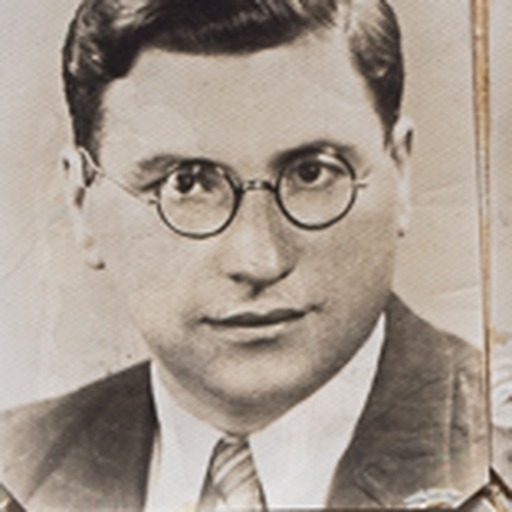
Artur Lermer received transit visa no. 1829 at the Japanese consulate in Kaunas on 16 August 1940. The register records teacher, aged 31.
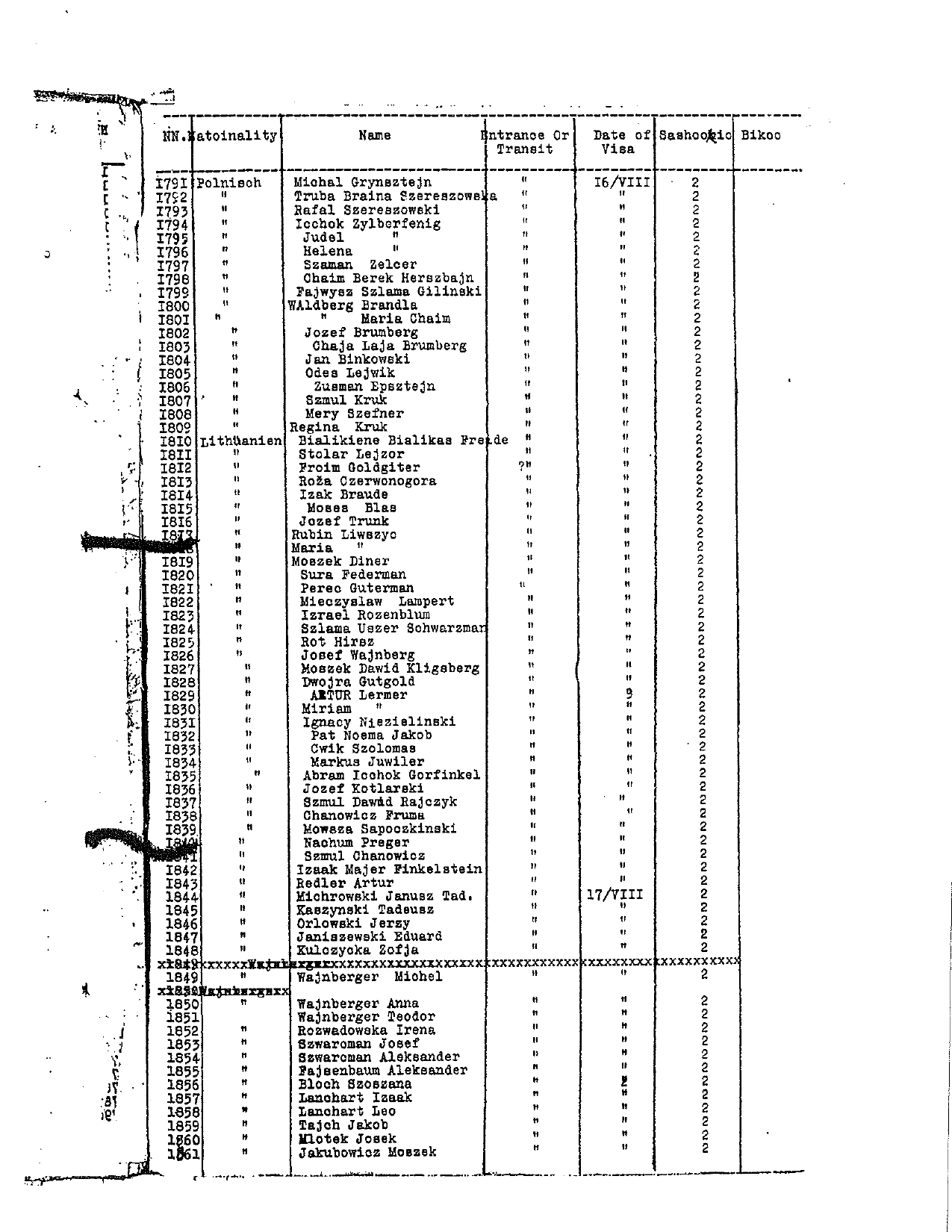
What the register records
- Nationality as recorded
- Lithuanien
- Age in 1940
- 31
- Occupation
- Teacher
- Family, per the Kitade-Bluman list
- husband of #1830, child Soria (1)
The journey
Reached Japan; aided by the Polish ambassador Tadeusz Romer; registered in Kobe for Canada.
Travelled with, and never given a number
- Soria — child, aged 1
The register recorded visa holders. It did not reliably record the wives and children who travelled on somebody else’s visa, so these people have no entry of their own and cannot be searched for. Where the archive has recovered a name, it is here.
What is known
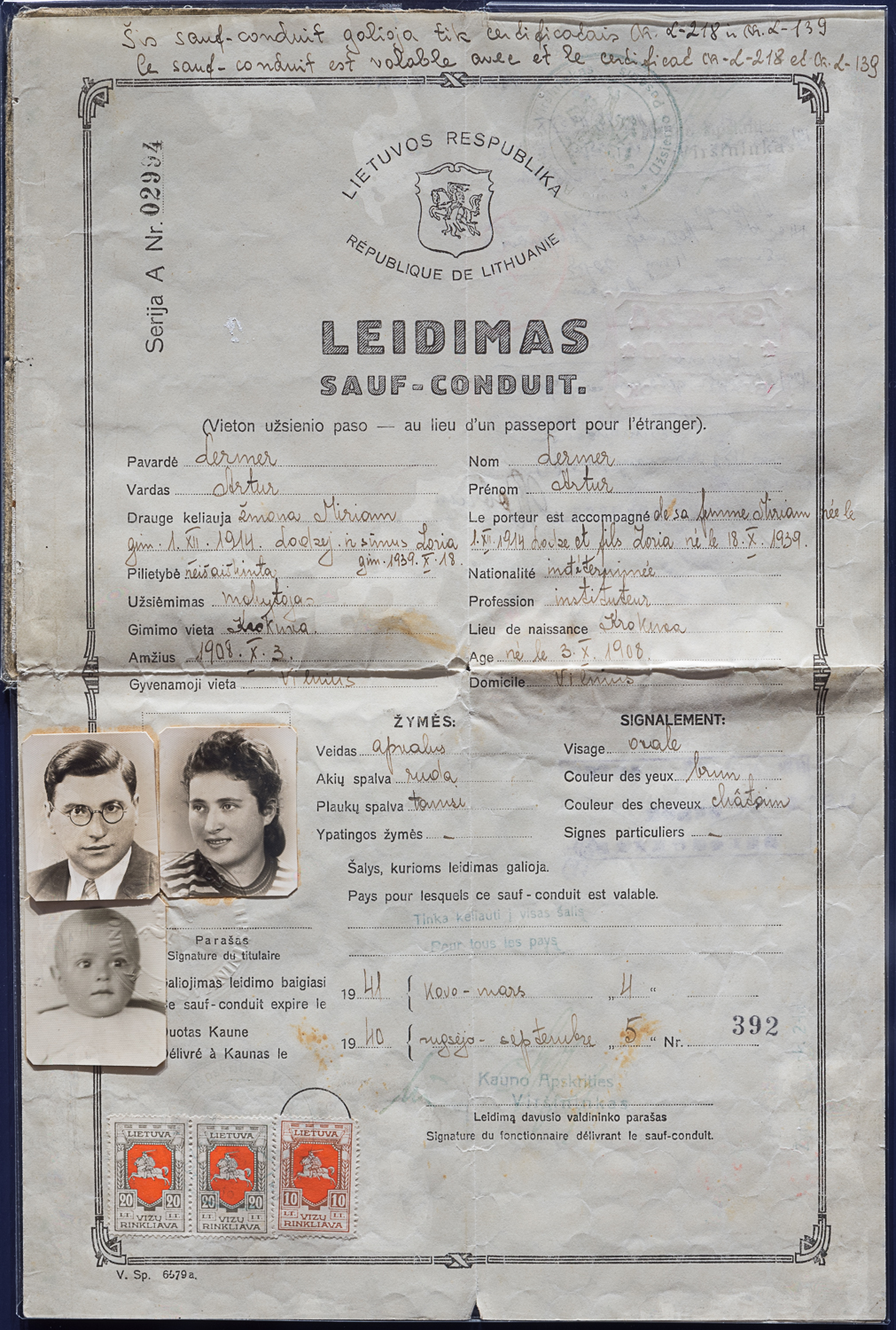
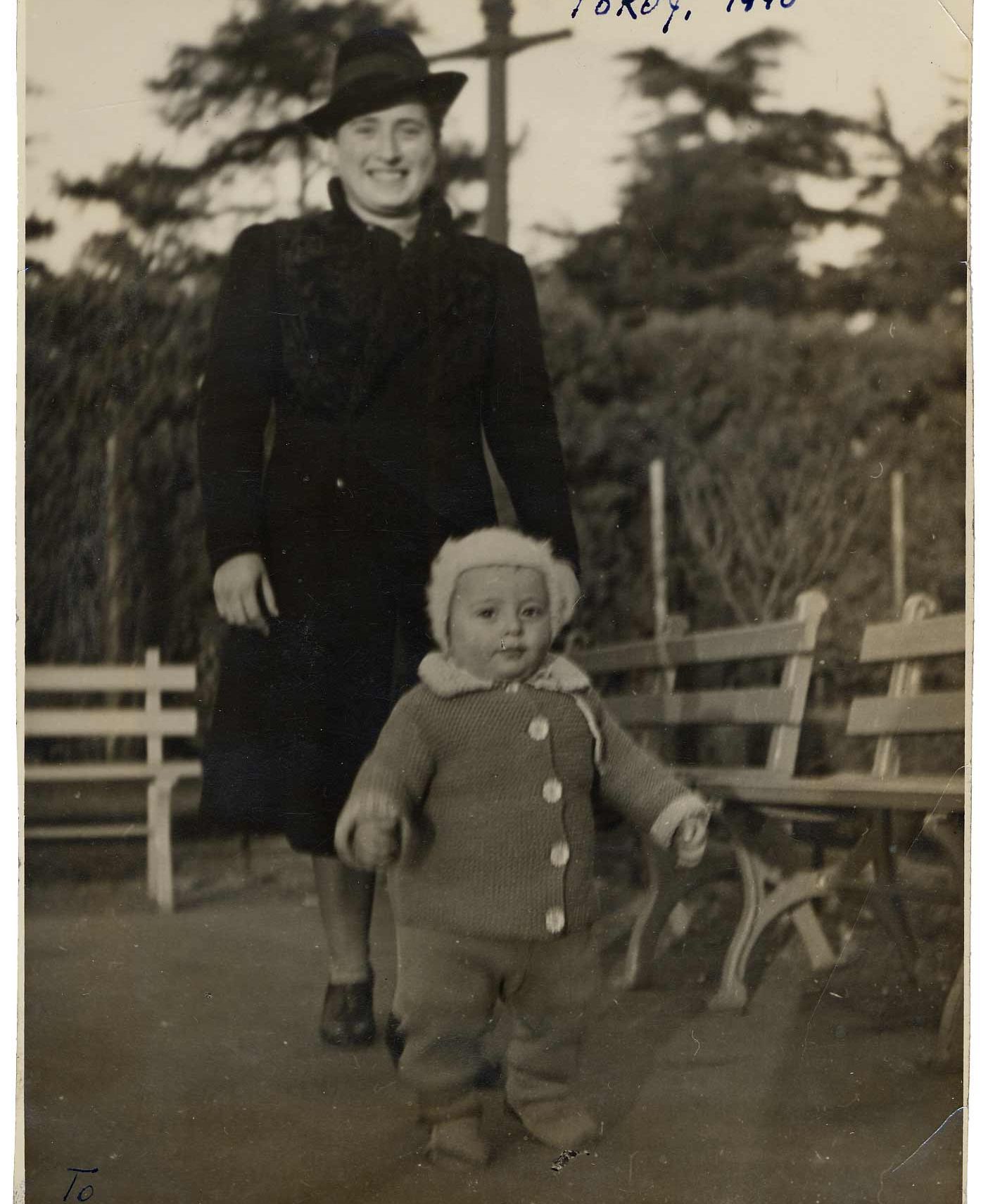
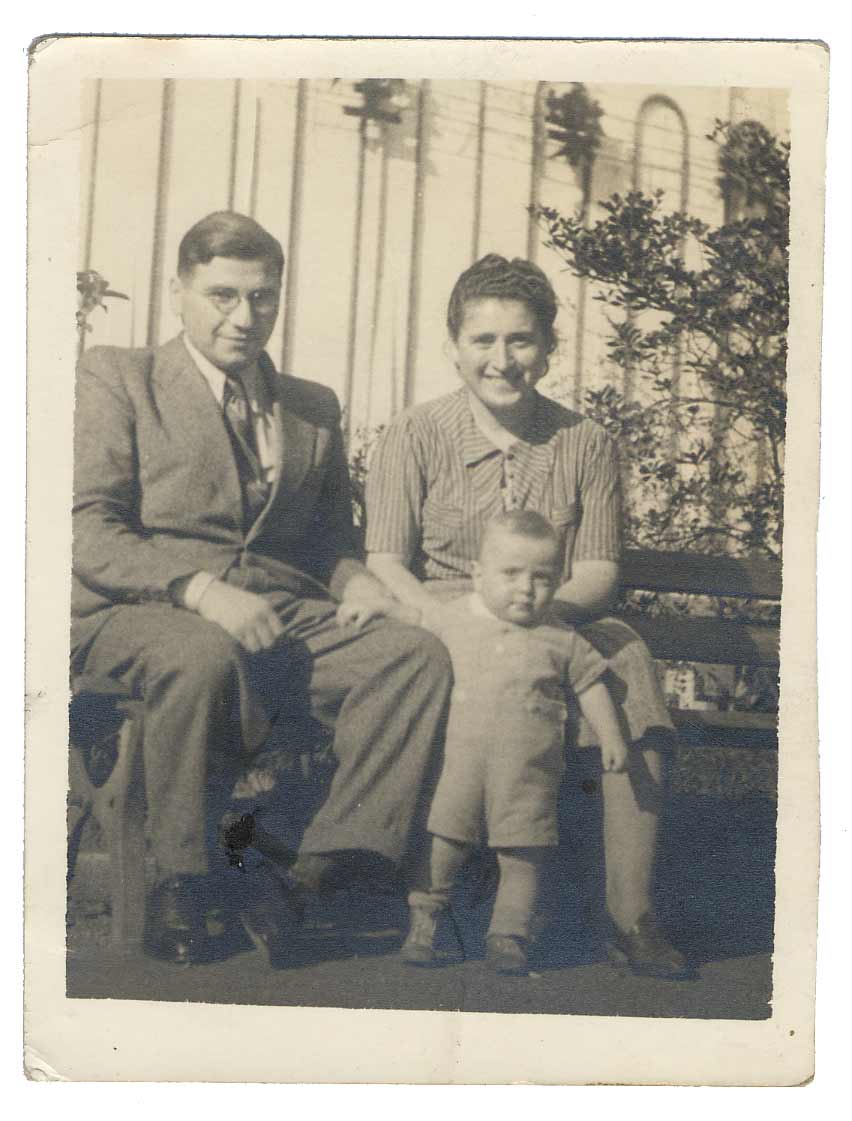
The family's Lithuanian safe-conduct — issued 5 September 1940, carrying Sugihara visas Nos.1829 and 1830 — survives at the Montreal Holocaust Museum, donated in 2002 by Judith Lermer Crawley, Arthur and Miriam's daughter. The museum's telling of the escape: the story began in Poland, and in the autumn of 1939 Arthur fled eastward with his pregnant wife and her sister, staying ahead of the German advance. Their son Zoria was born in Łuck on the road; the family was smuggled into Vilnius. Both the American and the Dutch consulates turned them down before Sugihara approved a ten-day transit visa. In Tokyo — where two 1940 photographs show Miriam and little Zoria in a park, and the three together on a bench — they secured visas to Canada, and arrived in May 1941.
Arthur Lermer, his pregnant wife Miriam, and her sister fled Poland in autumn 1939, traveling eastward. Their son Zoria was born in Łuck during the journey. The family was smuggled into Vilnius but denied transit visas by both the American and Dutch consulates. Chiune Sugihara granted them a ten-day transit visa (5 September 1940), enabling their escape to Tokyo. They secured Canadian visas in Tokyo and arrived in Canada in May 1941. Their daughter Judith Lermer Crawley later donated the safe-conduct and family photographs to the Musée de l'Holocauste Montréal in 2002.
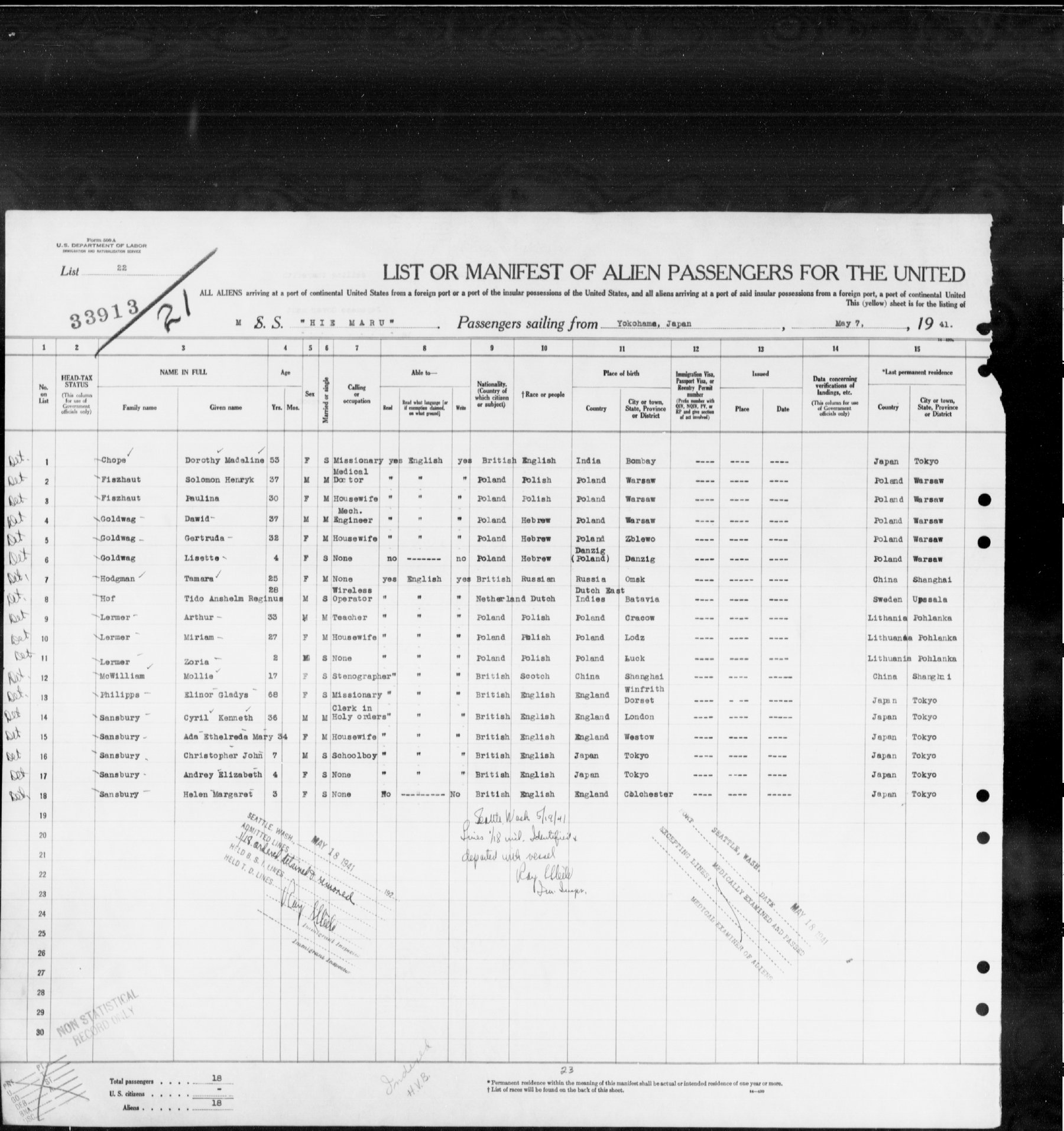
The Hie Maru manifest of 7 May 1941 — now in the archive — carries the family at lines 9-11: Arthur, 33, his profession given as TEACHER, born Cracow; Miriam, 27, born Lodz; and Zoria, age two, his birthplace recorded exactly as the museum tells it: ŁUCK, on the road east. They landed at Seattle in mid-May and were in Canada within the month. Sharing the sheet, lines 2-3: Dr. Solomon and Paulina Fiszhaut of Warsaw — another of this archive's families, on the same crossing.
the family's flight began in Poland, autumn 1939 — Arthur, his pregnant wife and HER SISTER fled eastward son Zoria born in Łuck on the road denied by both the American and Dutch consulates before Sugihara granted the ten-day transit visa arrived Canada May 1941
Where this comes from
- US arrival manifest: Miriam Lermer, Seattle, 1941
"Seattle Passenger Lists", FamilySearch, entry for Arthur Lermer, 1941. Ship: Hie Maru. Matched from the Hie Maru's Polish-born passenger list (87 people). Register No.1829 'Artur Lermer' records age 31; the manifest gives born 1908, arriving 1941. - Oral history interview with Arthur Lermer — USC Shoah Foundation Visual History Archive, interview 59296. Catalogue: born Oct 3 1908, Kraków (Kraków, Poland); born Krakow 3 Oct 1908; No.1829 Artur Lermer.… — the interviewee may be living
USC Shoah Foundation VHA interview 59296: Arthur Lermer — the interviewee himself — gave a testimony (catalogue: born Oct 3 1908, Kraków (Kraków, Poland)); born Krakow 3 Oct 1908; No.1829 Artur Lermer - "Washington, King, Seattle, Passenger Lists, 1890-1957", FamilySearch — index entry for Arthur Lermer, 1941: born about 1908, Poland. Digitised from NARA microfilm publication M1383 (passenger and crew lists of vessels arriving at Seattl…
FamilySearch's index of the Seattle passenger lists, read by the archive on 20 September 2026, has Arthur Lermer, born about 1908 in Poland, arriving at Seattle in 1941. The register's compiled line gives 1909, and the two are 1 year apart. The name occurs once on the register, and a Polish-born passenger landing at Seattle in 1941 fits the route through Japan, so the entry is taken as this person's under the archive's rule of 19 September 2026 for records from the route. - JDC Archives, New York, collection AR 33/44 file 53 (the Jewish Community of Kobe's returns to the JDC, 1941; Set I, item 00761) — Set… — "List of refugees who left Japan to places other than Shanghai in the month of May 1941", Nos. 1–321
He left Yokohama on the Hie Maru on 7 May 1941, from Yokohama (the Jewish Community of Kobe's list of departures, May 1941 (JDC Archives, AR 33/44 file 53)). The list reads: No. 68–70: "Le[r/m]mer Artur, ″ Mirjam, ″ Soria — Polish". (Hie Maru, Yokohama, 7 May 1941.) - Canadian Jewish Heritage Network / Alex Dworkin Canadian Jewish Archives
The Canadian Jewish Heritage Network's authority record for Arthur Lermer, read on 24 October 2026, describes a man born in Krakow in 1908 (life dates 1908 to 2001) who was a lecturer and writer on Yiddish culture, a professor of economics at Sir George Williams University in Montreal, and an officer of the Canadian Jewish Congress. Three things tie the record to him: the birth year, 1908 against the register's 1909; Montreal, where the register sends him; and the calling, a lecturer against the register's teacher. He is the only Artur Lermer on the register. The record does not mention Japan, a wife or the crossing. - M.S. Hie Maru, Kobe 4 May – Yokohama 7 May – Seattle 18 May 1941, sheet 7 of 11 — transcribed for the Immigrant Ships Transcribers Guild by David Rosen
The Hie Maru's list of alien passengers, sailing from Kobe and Yokohama and arriving at Seattle on 18 May 1941, gives Arthur Lermer, 33, a teacher, born at Cracow, with his wife Miriam next on the sheet. The register has Artur Lermer, a teacher, and his wife Miriam, so the archive takes this to be the same person. (Transcribed by David Rosen for the Immigrant Ships Transcribers Guild.) - Takaharu Furue, Director, Port of Humanity Institute: “Table of Jewish refugees entering Japan in October — from the records of Sugihara survivors who landed at Tsuruga” (資料調査: 10月分ユダヤ避難民入国者表), Journal of the Japan Sea Coastal History Re…
The Fukui prefectural police's table of the Jewish refugees who entered Japan in October 1940, as Takaharu Furue publishes it, records the landing at Tsuruga on 17 October 1940 of アルツール・ラーマ―, aged 32, Polish, a teacher, bound for the United States, with a wife (No. 1830), 26; a son of 1. The police wrote the names in Japanese script; Furue gives the entry Sugihara's number 1829, and the archive takes it as this line on his reading, the name and the age agreeing with the compiled register. - The Lithuanian sauf-conduit of Artur Lermer (No. 1829), Series A No. 02994, No. 392, issued at Kaunas in 1940, with the photographs of a man, a woman and an infant.
- Montreal Holocaust Museum, Objects of Interest: the Lermer family's Lithuanian safe-conduct, issued 5 Sep 1940 for Arthur Lermer, wife Miriam and son Zoria, signed by Sugihara; family photos in Tokyo 1940 (photo Peter Berra)
- "Message for Chiune Sugihara" Parts 1-2 (dir./prod. Aya Takahashi, 201… — Yad Vashem film collection: testimony of seven Vancouver families saved by Sugihara visas; interviews with Alan Bayless, Bram Lermer, Deborah Ross and Nathan Zalkow
- Mark Halpern correspondence (8 Aug 2026) + Yad Vashem "Fragments of Memory" page: five of seven Os… — Vera Harrang, [name withheld], Nissim Segaloff, Zosia Gertler (visa No.1820 as Sura Federman), Antonina Altszuler (Amakusa Maru 74 list)
- Musée de l'Holocauste Montréal — the Lermer family's safe-conduct (Chiune Sugihara): Lithuanian safe-conduct of 5 September 1940; Arthur Lermer, his wife Miriam and their son Zoria escaped to Tokyo; donated by their daughter Judith Lerme…
- The Hie Maru, sailed Yokohama 7 May 1941 for Seattle: list or manifest of alien passengers, sheet 22 — the sheet that names Dr Solomon Henryk Fiszhaut and Paulina Fiszhaut of Warsaw, and… — the National Archives' own frame is on the page.
- Oral history interview with Arthur Lermer — USC Shoah Foundation Visual History Archive, interview 59296. Catalogue: born Oct 3 1908, Kraków (Kraków, Poland); born Krakow 3 Oct 1908; No.1829 Artur Lermer.… — the interviewee may be living
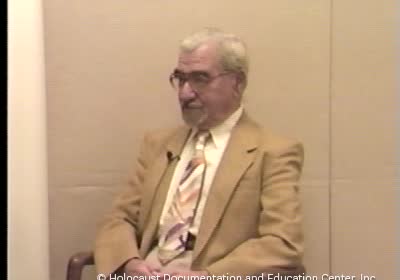
- Catalogue still for the oral history of Arthur Lermer — USC Shoah Foundation Visual History Archive, interview 59296 (the archive's public catalogue frame, 352x240); links to the testimony at vha.usc.edu/testimony/59296
- The HIE, arriving at Seattle in 1941: list or manifest of alien passengers, the sheet that names Solomon Henryk Fiszhaut — US National Archives, Record Group 85 (Immigration and Naturalization Service), Passenger and Crew Lists of Vessel…
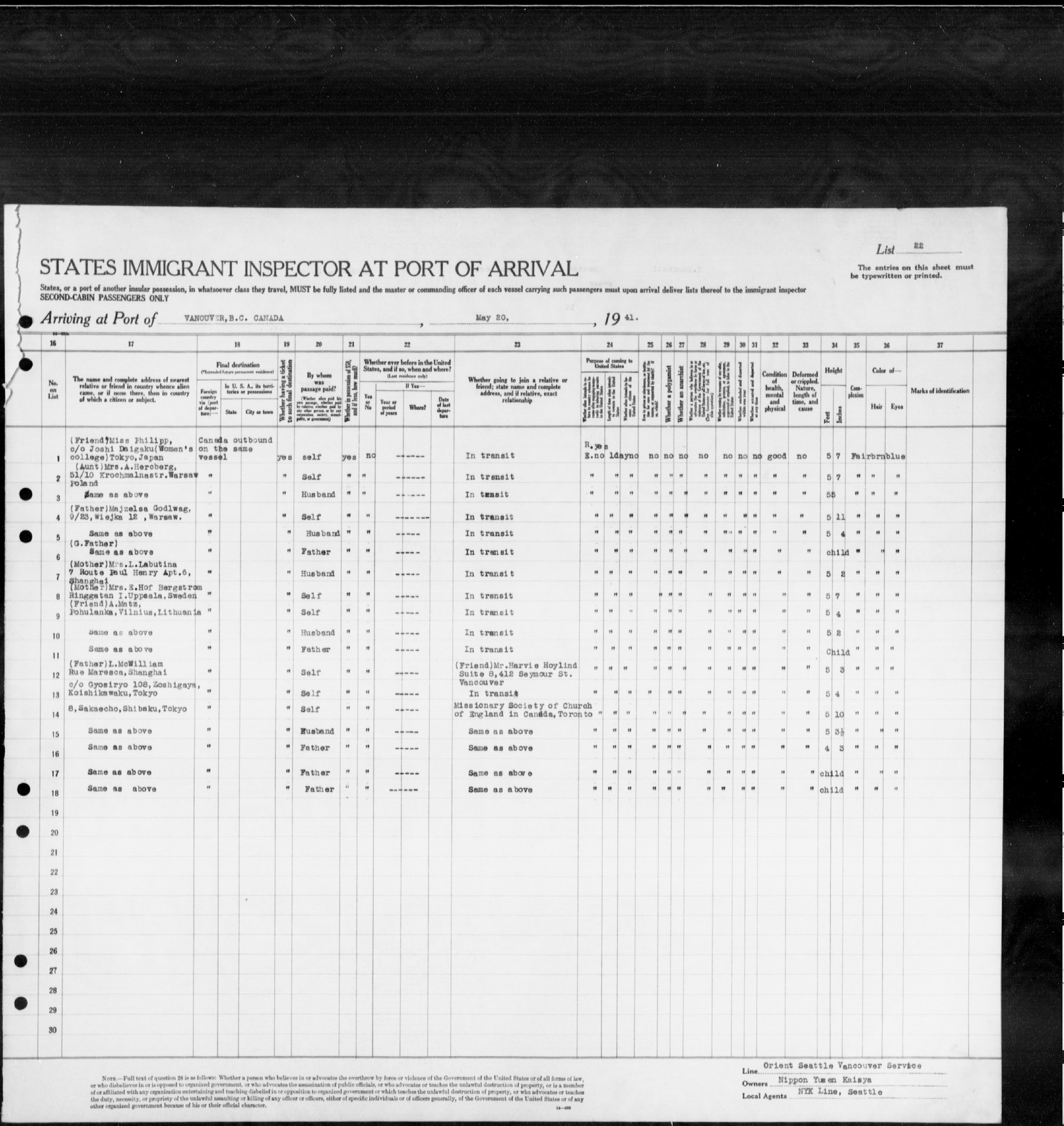
- Arriving at Seattle: the continuation sheet, with the relatives named and the destinations, for the sheet that names Salomon Henryk Fiszhaut — US National Archives, Record Group 85 (Immigration and Naturalization Service), Passenger and…