Dobekirer Jechil
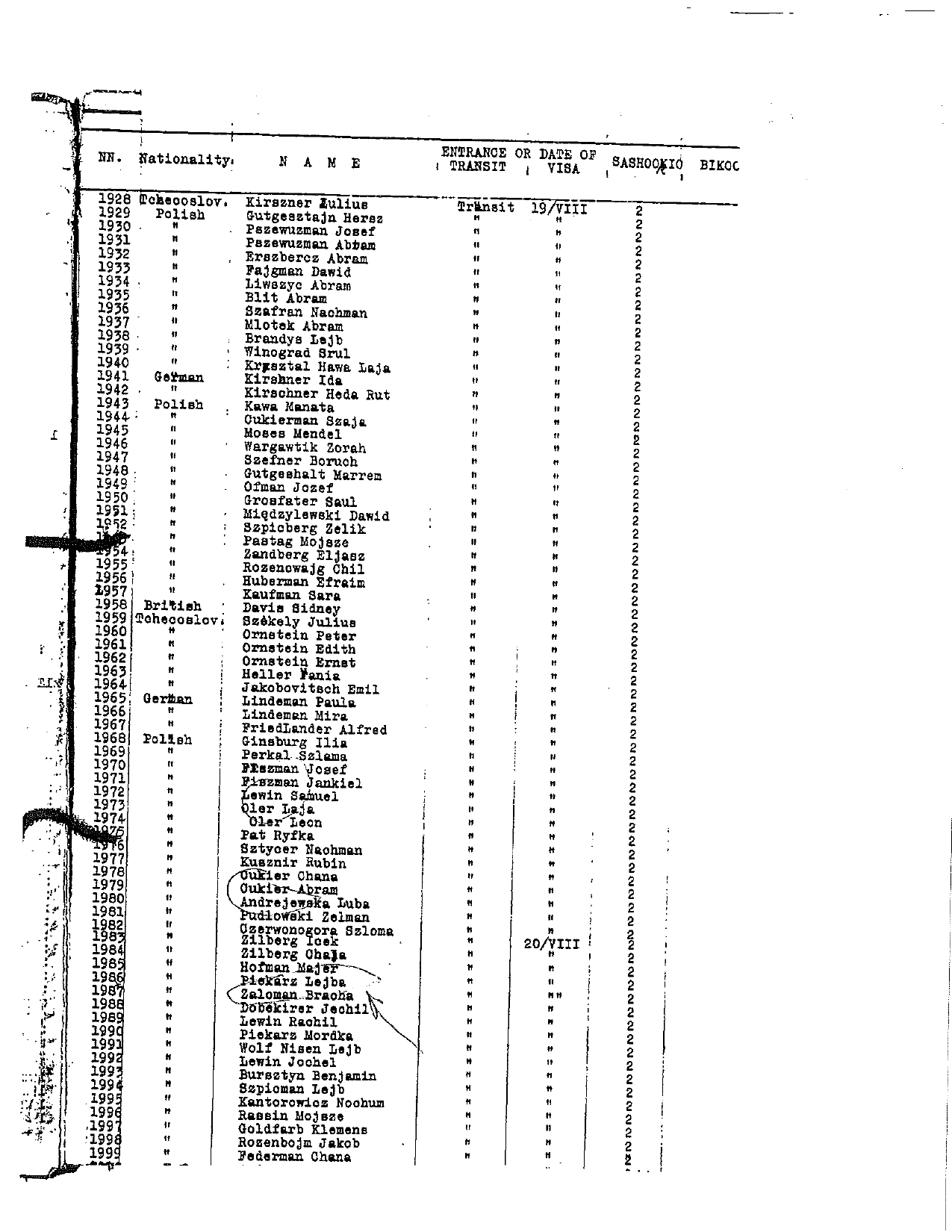
Dobekirer Jechil received transit visa no. 1988 at the Japanese consulate in Kaunas on 20 August 1940. The register records clerk, aged 34.
Documents
| Name | Jechil Dobekirer |
|---|---|
| Citizenship | Polnisch [Polish] |
| Visa | Transit |
| Issued | 20 Aug 1940 · arrived in Japan 24 Feb 1941 |
| Line | 1988 |
What the register records
- Nationality as recorded
- Polish
- Age in 1940
- 34
- Occupation
- Clerk
- Family, per the Kitade-Bluman list
- husband of #2008, daughter Malka (5)
The journey
Reached Japan; reached Shanghai; registered in Kobe for USA.
Travelled with, and never given a number
- Malka — daughter, aged 5
The register recorded visa holders. It did not reliably record the wives and children who travelled on somebody else’s visa, so these people have no entry of their own and cannot be searched for. Where the archive has recovered a name, it is here.
What is known
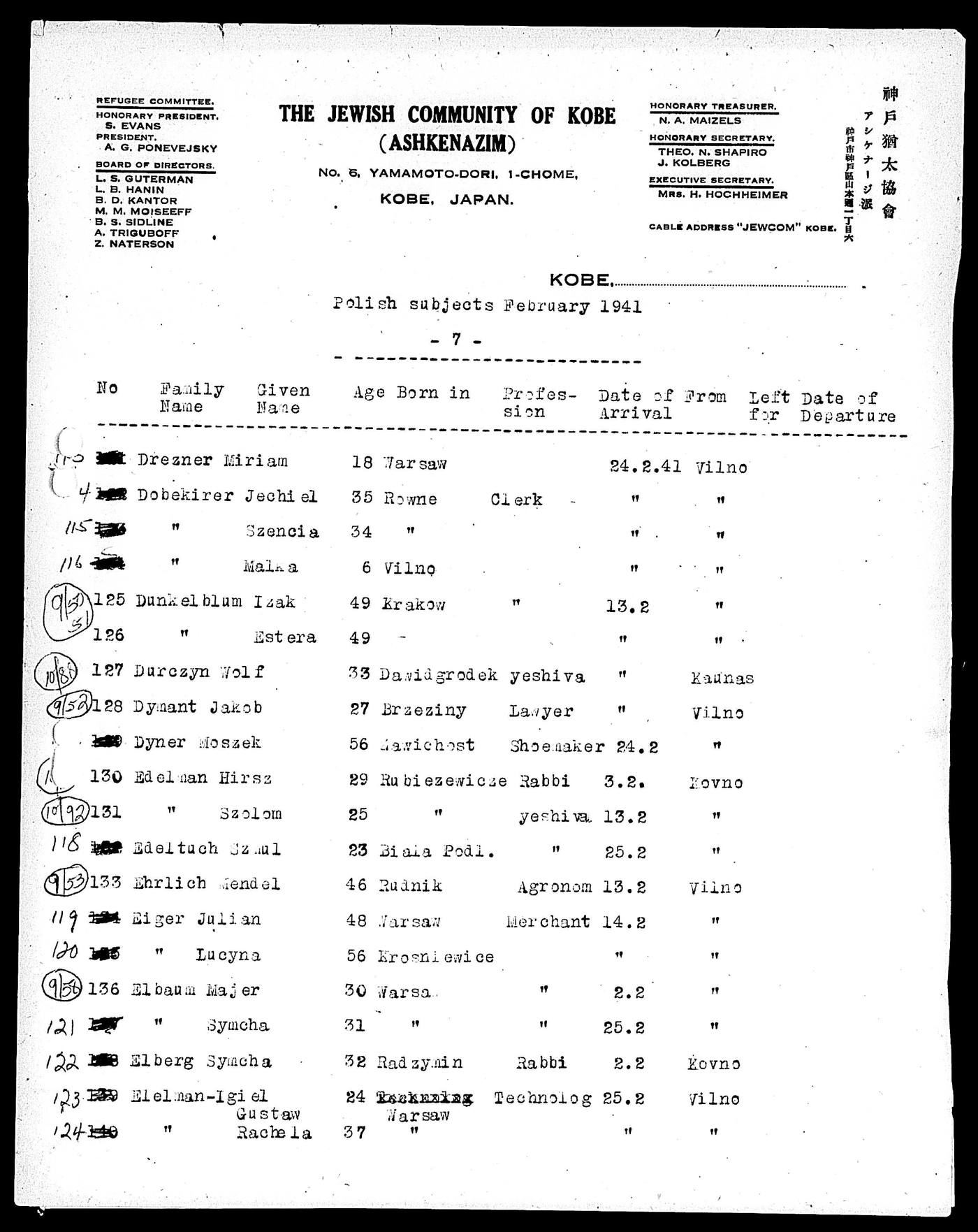
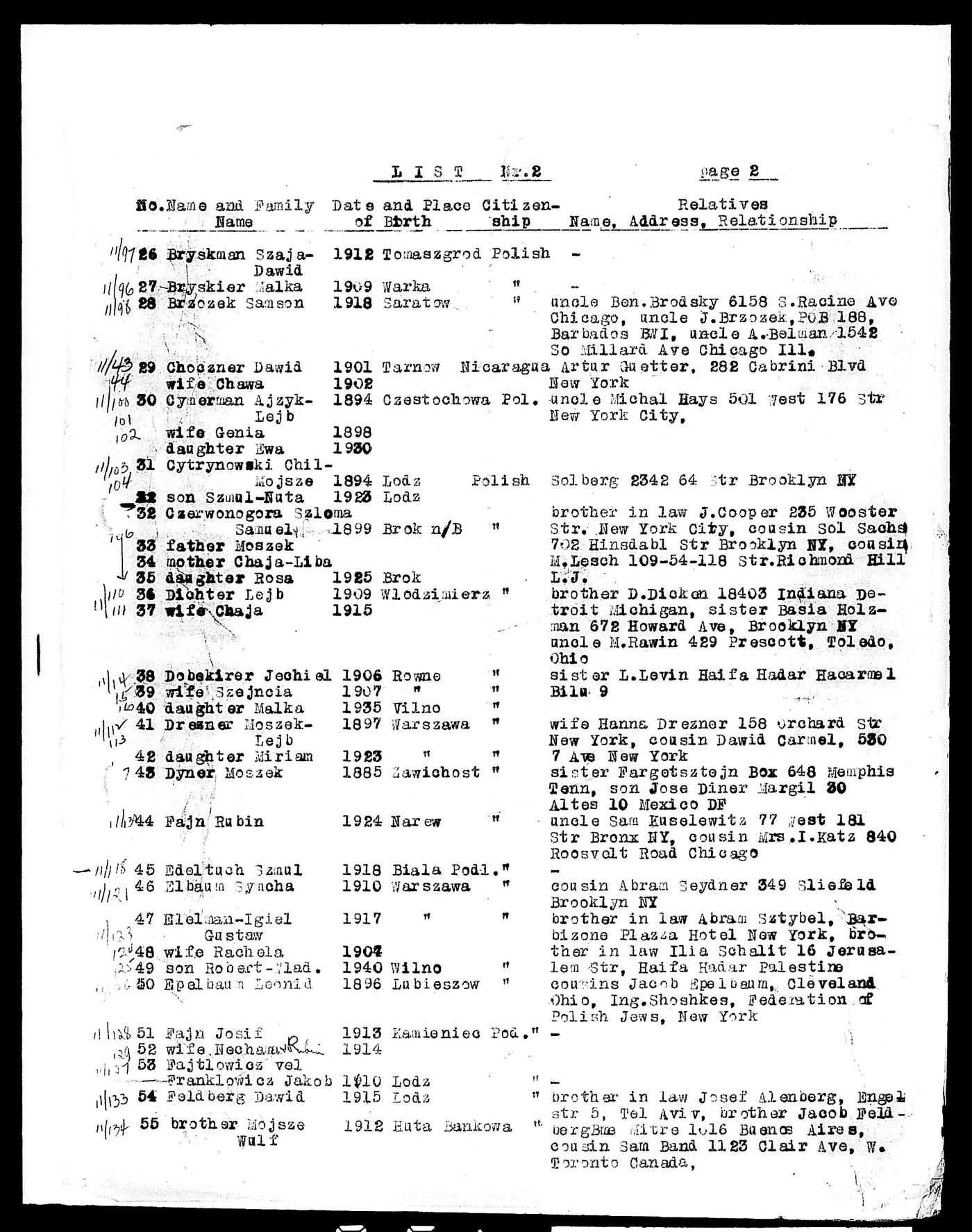
Jechil Dobekirer, a clerk born at Rowne in 1906, lived at Wilno. In his oral history for the Holocaust Memorial Museum in 1999 he said he was called up on 25 September 1939 as a medical orderly in the Polish army and taken prisoner when the Soviets arrived; he jumped from a prisoner train in Germany, walked back to Wilno, and went into hiding because the Soviet secret police twice came for him as one of the Labor Zionist leaders. He said his wife went to Kaunas with both passports and came back the same day with the Sugihara visas, which are dated 20 August 1940. Kobe's Jewish community recorded him on its list of refugees and their relatives abroad as born in 1906 at Rowne, with a sister in Haifa, and registered him as a clerk of thirty-five who had travelled from Vilnius; the Holocaust Museum's dataset gives his arrival in Japan as 24 February 1941. He recalled the twelve-day Trans-Siberian journey and the Jewish committee taking them to Kobe, where they stayed almost a year. He said he lived in Shanghai from 1941 until 1948, importing plastic from America and making leather handbags, and left in 1948 with his wife and daughter. The JDC opened an emigration case file for him there, and a San Francisco passenger list of 1948 has Jechil Dobekirer, born about 1907, arriving on the President Cleveland, which sailed from Shanghai. That is the last record the archive holds.
Where this comes from
- The Kobe relatives list — refugees at Kobe in 1941 recorded with their relatives abroad. Seventy-six pages in numbered sheets (LIST No. 7, No. 16 and others), each line giving a name, age, birthplace, occupation and citizenship, and then…
Entry 38 of the Kobe community's list of refugees and their relatives abroad: born 1906 at Rowne; relatives abroad: a sister, L. Levin, Bilu 9, Hadar Hacarmel, Haifa. - The JEWCOM register — the refugee register kept by the Refugee Committee of the Jewish Community of Kobe (Ashkenazim) at No. 6 Yamamoto-dori, 1-chome, whose cable address was 'JEWCOM Kobe'. Eighty-four pages on the committee's own printe…
Entry 114 of the Kobe Jewish Community's refugee register: aged 35, born at Rowne, a clerk, who travelled from Vilnius. - JDC Shanghai migration file: DOBEKIRER Jechil
JDC Archives, New York collection AR3344, 'Complete Shanghai Migration Files' (NY_AR3344_00014), page 19: DOBEKIRER Jechil, file no. 8192. Match: register No.1988 'Dobekirer Jechil', and the register independently records this person as reaching Shanghai. Both name parts agree. NOTE: the index carri - JDC Archives, New York — Shanghai Migration Files, box index (AR 33/44, file 00014): the alphabetical index to the JDC's Shanghai emigration case files, 1946-1950 — some 2,640 case files covering about 5,400 persons, each family under on…
JDC Shanghai Migration Files, case file no. 8192 — an emigration case file opened for the family in Shanghai after the war; the file itself can be requested from the JDC Archives - United States Holocaust Memorial Museum, Holocaust Survivors and Victims Database — the Flight and Rescue electronic dataset (source 20725): USHMM's own transcription of the Kaunas register, 2,140 persons with citizenship, visa type, iss…
USHMM Flight and Rescue dataset: arrived in Japan 24 Feb 1941 (line 1988) - "California, San Francisco, Passenger Lists, 1893-1953", FamilySearch — index entry for Jechil Dobekirer, 1948: born about 1907, Poland. Digitised from NARA microfilm publication M1410 (passenger lists of vessels arriving at San Francisc…
FamilySearch's index of the San Francisco passenger lists, read by the archive on 20 September 2026, has Jechil Dobekirer, born about 1907 in Poland, arriving at San Francisco in 1948 on the President Cleveland. The register's compiled line gives 1906, and the two are 1 year apart, and the name occurs once on the register. The ship's manifest heading says she sailed from Shanghai, and a passenger born in Poland landing at San Francisco in 1948 from Shanghai is the route's end: the refugees who waited out the war there. So the entry is taken as this person's under the archive's rule of 19 September 2026 for records from the route. The sheet is NARA microfilm publication M1410, film 396, image 800, read by the archive on 20 September 2026. - Oral history interview with Jechil Dobekirer — United States Holocaust Memorial Museum, oral history interviews of the Flight and Rescue collection, RG-50.494.0018, recorded 1999. Linked; the Museum's still from the interview is shown on…
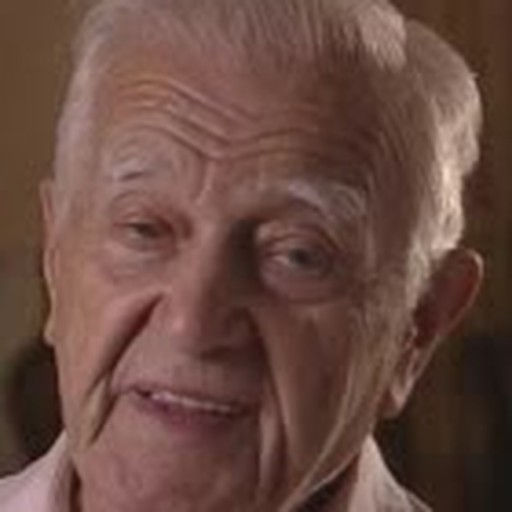
He recorded an oral history for the United States Holocaust Memorial Museum's Flight and Rescue project in 1999, under the same name as on this line, Jechil Dobekirer. The interview is linked here and its still is on the Testimonies page. In his oral history for the United States Holocaust Memorial Museum, Jechil Dobekirer says he lived in Wilno, was called up on 25 September 1939 as a medical orderly in the Polish army, and was taken prisoner near the Bug when the Soviets arrived behind his unit. He jumped from a prisoner train in Germany, walked for twelve days and nights back to Wilno, and went into hiding because the Soviet secret police twice came for him at two in the morning, as one of the Labor Zionist leaders. The Zionists brought him back by wagon. He says his wife went to Kaunas with both passports, stood in line from four in the morning until noon, and returned the same day with the Sugihara visas. Intourist sold the tickets to Moscow and Vladivostok for American dollars. He recalls the twelve-day Trans-Siberian journey, a stop at Birobidzhan where local Jews warned them to speak quietly, and a small, rough ship from Vladivostok. The Jewish committee took them to Kobe, where they stayed almost a year, until the Pacific war. He was in Shanghai, outside the ghetto, with a Polish passport, from 1941 until 1948, importing plastic from America and making leather handbags, and left in 1948 with his wife and daughter when the Communists were approaching, after the American consulate had refused visas to those who would not swear they had no relatives in Poland. - La-karov ve-la-rachok, 28 March 1946 — the Far Eastern Palestine Committee's list of Jewish refugees in Shanghai (National Library of Israel, Historical Jewish Press)
The Far Eastern Palestine Committee's list of Jewish refugees in Shanghai, printed by the Jewish Agency Search Bureau's bulletin La-karov ve-la-rachok on 28 March 1946, lists Jechil Dobekirer: born 1906 at Rowno, an accountant, arrived in 1941 from Wilno; the year and the town agree with the Kobe Jewish community's refugee register, the Kobe community's list of refugees and their relatives (National Library of Israel, Historical Jewish Press).