Artur Marceli Gotesman
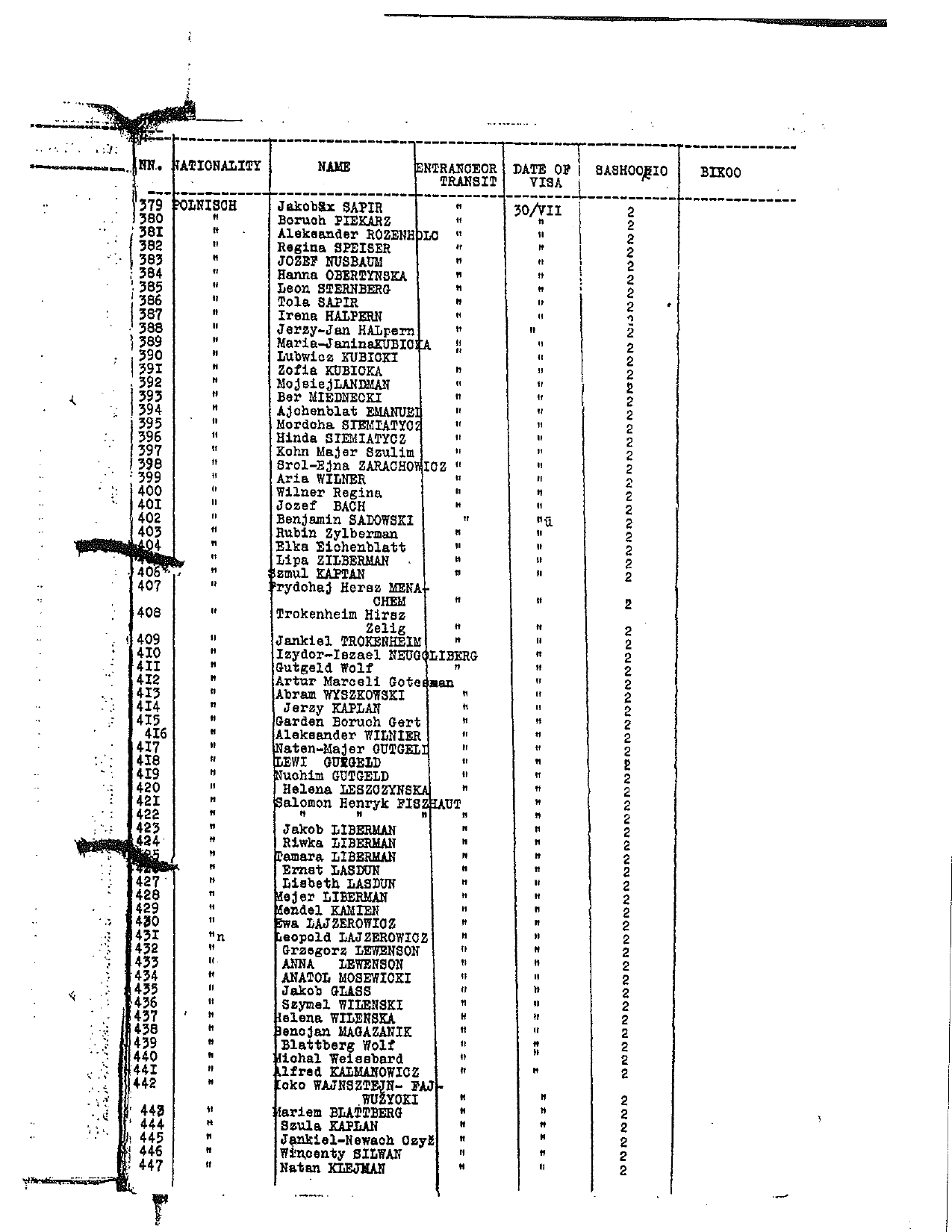
Artur Marceli Gotesman received transit visa no. 412 at the Japanese consulate in Kaunas on 30 July 1940. The register records student, aged 21.
Documents
| Name | Artur Marceli Gotesman |
|---|---|
| Citizenship | Polnisch [Polish] |
| Visa | Transit |
| Issued | 30 Jul 1940 · arrived in Japan 13 Feb 1941 |
| Line | 412 |
What the register records
- Nationality as recorded
- Polnisch
- Age in 1940
- 21
- Occupation
- Student
The journey
Reached Japan; reached Shanghai; registered in Kobe for South America.
What is known
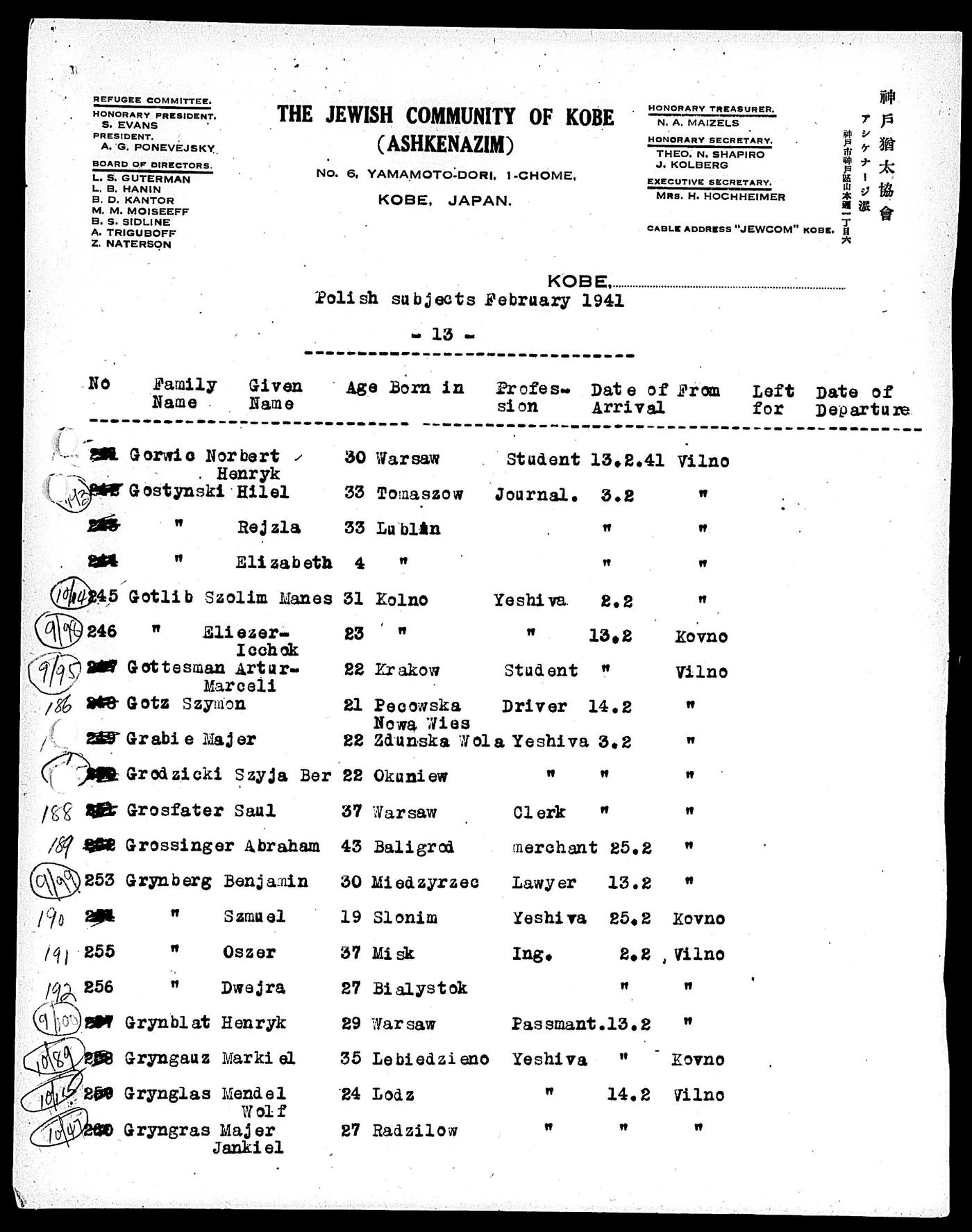
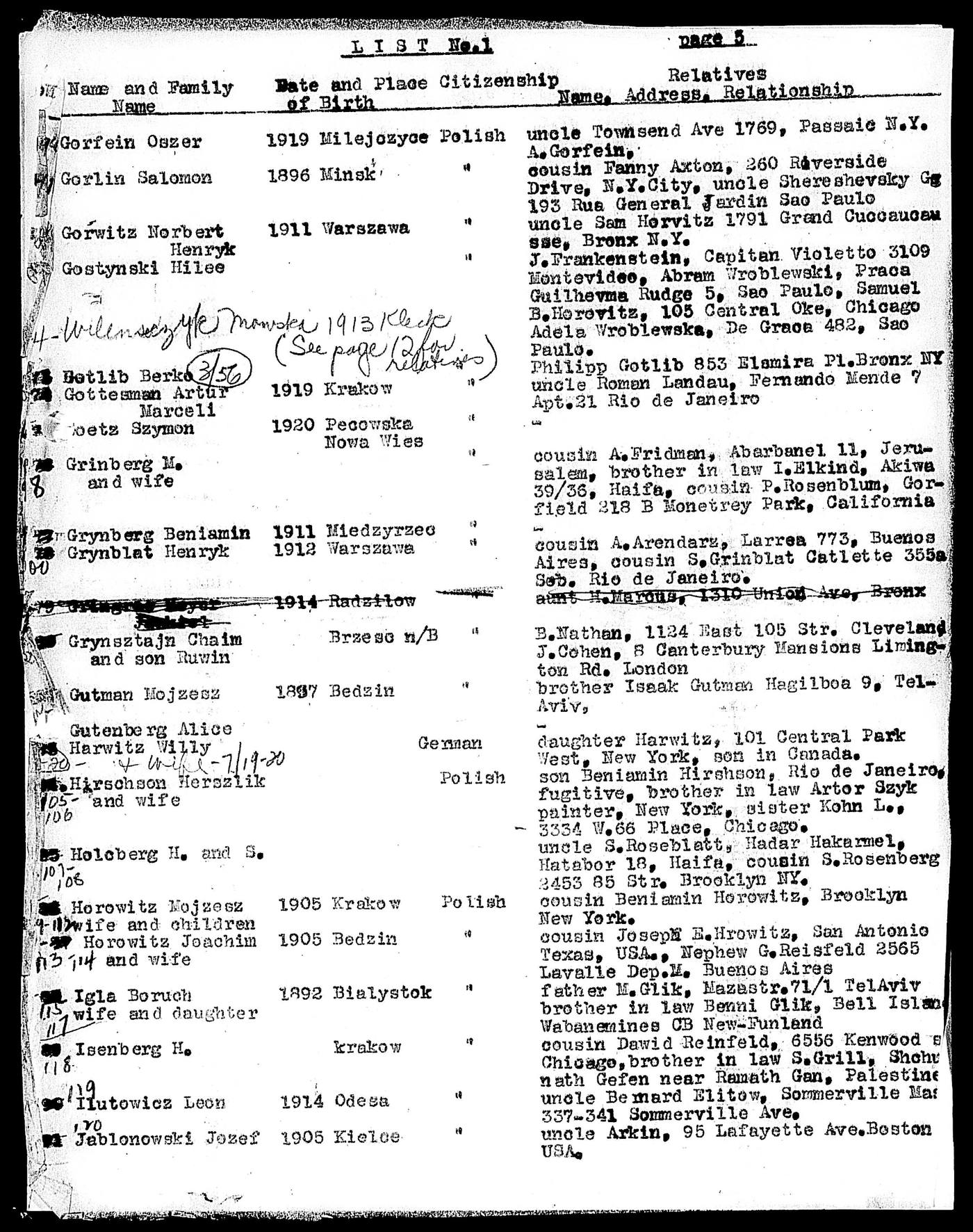
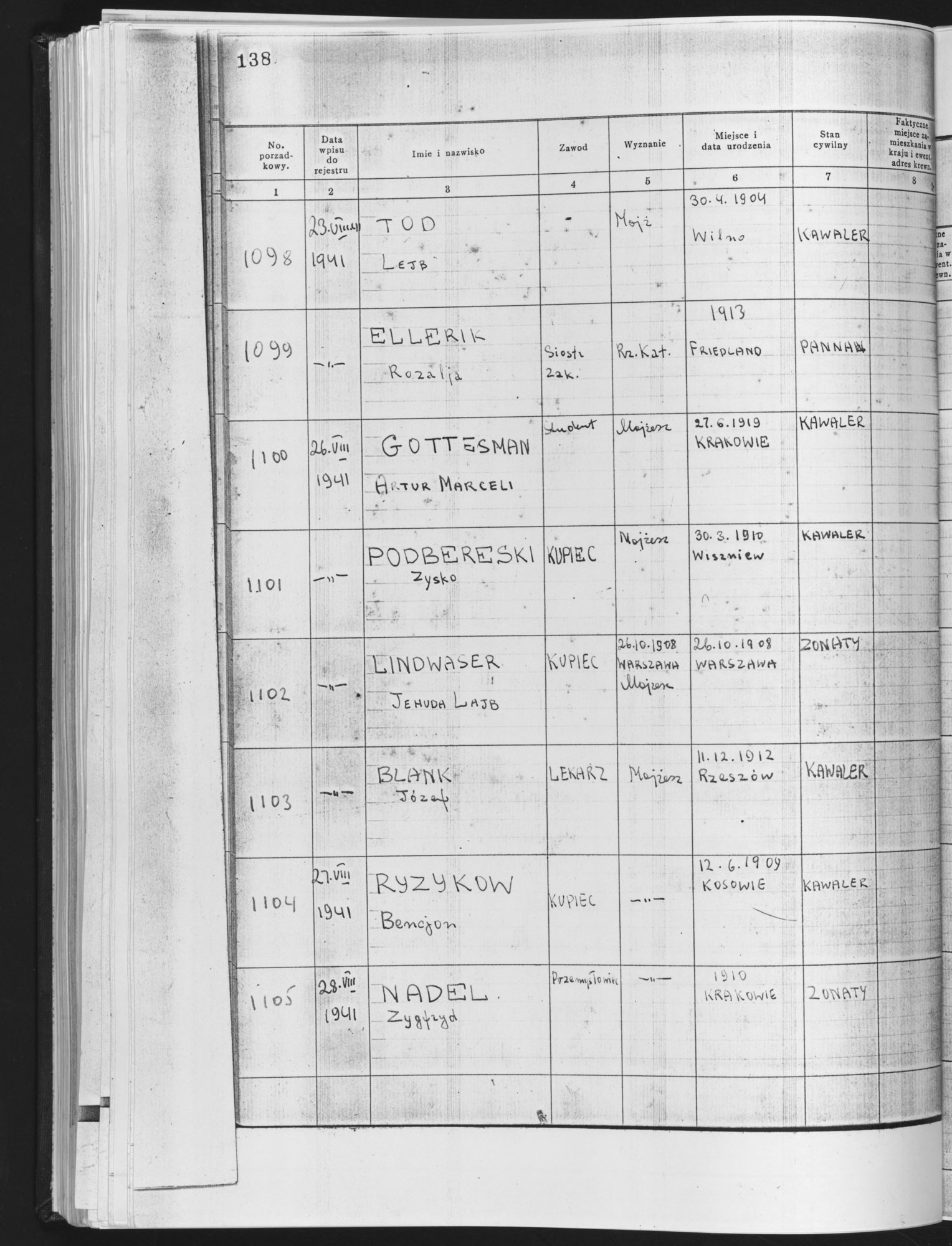
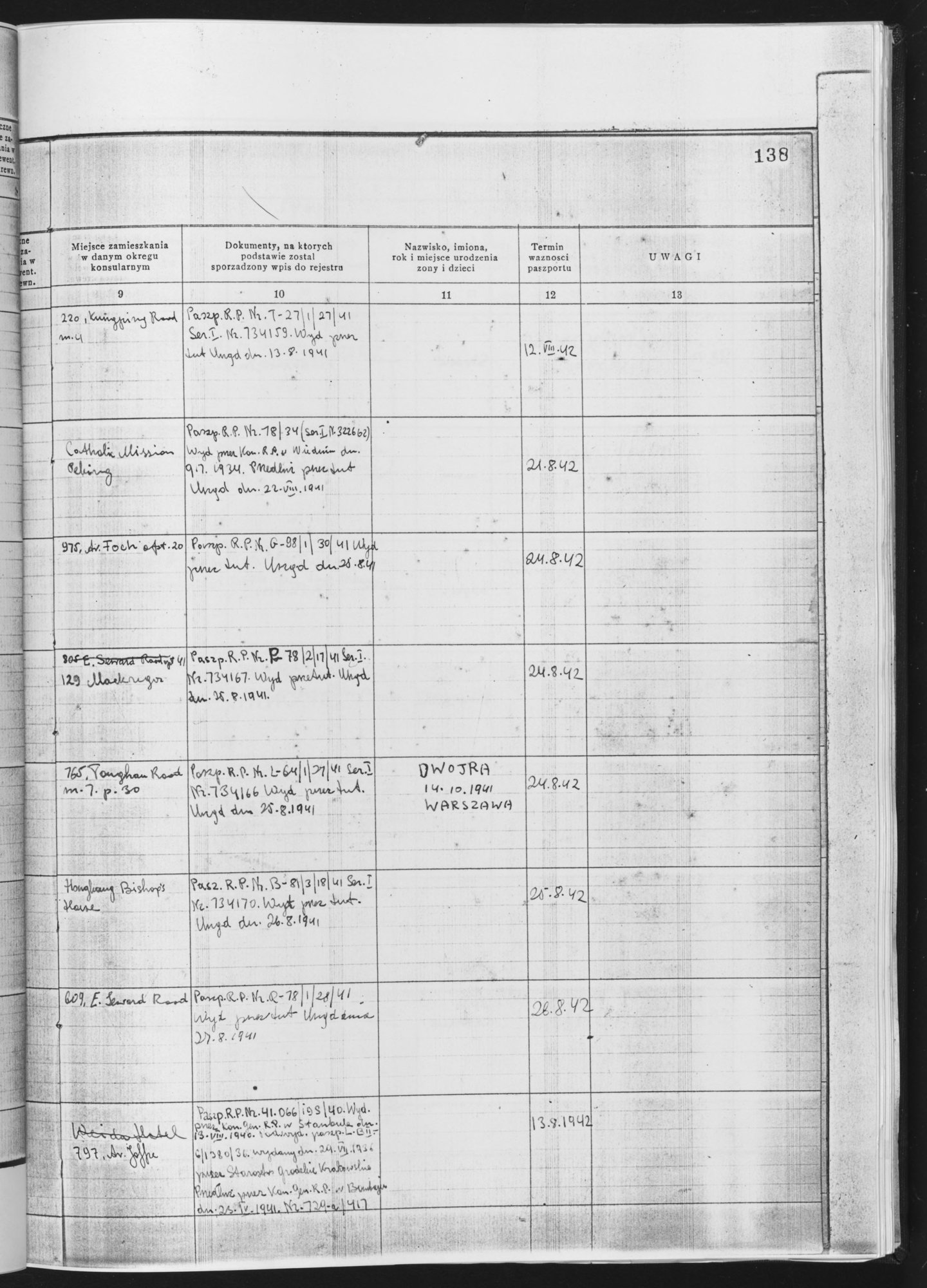
Artur Marceli Gotesman, whom the Kobe lists spell Gottesman, was a student born at Krakow in 1919 when Sugihara's consulate in Kaunas wrote him a transit visa on 30 July 1940. Kobe's community recorded him on its list of refugees and their relatives abroad as born at Krakow in 1919, with an uncle in Rio de Janeiro, and registered him as a student of twenty-two who had come from Vilna. The Holocaust Museum's Flight and Rescue dataset gives his arrival in Japan as 13 February 1941. He sailed from Kobe for Shanghai on the Kamakura Maru on 24 May 1941, as the community's list of refugees leaving for Shanghai and Harbin records. The Polish consulate in Shanghai registered him on 26 August 1941 as a single student born at Krakow on 27 June 1919. In March 1946 a Jewish Agency bulletin listed him as a student who had come in 1941 from Vilnius. A San Francisco passenger list of 1946 has Arthur M. Gottesman, born about 1919, arriving on the General M. C. Meigs, which sailed from Shanghai. That is the last record the archive holds.
Where this comes from
- The Kobe relatives list — refugees at Kobe in 1941 recorded with their relatives abroad. Seventy-six pages in numbered sheets (LIST No. 7, No. 16 and others), each line giving a name, age, birthplace, occupation and citizenship, and then…
The Kobe community's list of refugees and their relatives abroad: born 1919 at Krakow, Polish; relatives abroad: an uncle, Roman Landau, Fernando Mende 7, Apartment 21, Rio de Janeiro. - United States Holocaust Memorial Museum, Holocaust Survivors and Victims Database — the Flight and Rescue electronic dataset (source 20725): USHMM's own transcription of the Kaunas register, 2,140 persons with citizenship, visa type, iss…
USHMM Flight and Rescue dataset: arrived in Japan 13 Feb 1941 (line 412) - JDC Archives, New York, collection AR33-44 fi… — “List of persons who left Japan for Shanghai and Harbin in the month of May 1941”, compiled by the Jewish Community of Kobe (Ashkenazim) for the American Jewish Joint Distribution Committee
Named in the Kobe committee's list of persons who left Japan for Shanghai and Harbin in the month of May 1941 (JDC Archives). Gottesman Artur, Polish, sailed from Kobe for Shanghai on 24 May 1941 aboard the Kamakura Maru. The Kobe relatives list spells the surname with the double t exactly as this document does, and gives Krakow, 1919. He had reached Japan on 13 February 1941. - "California, San Francisco, Passenger Lists, 1893-1953", FamilySearch — index entry for Arthur M Gottesman, 1946: born about 1919, Poland. Digitised from NARA microfilm publication M1410 (passenger lists of vessels arriving at San Franci…
FamilySearch's index of the San Francisco passenger lists, read by the archive on 20 September 2026, has Arthur M Gottesman, born about 1919 in Poland, arriving at San Francisco in 1946 on the General M. C. Meigs. The register's compiled line gives 1919, and the two are 0 years apart, and the name occurs once on the register. The ship's manifest heading says she sailed from Shanghai, and a passenger born in Poland landing at San Francisco in 1946 from Shanghai is the route's end: the refugees who waited out the war there. So the entry is taken as this person's under the archive's rule of 19 September 2026 for records from the route. The sheet is NARA microfilm publication M1410, film 385, image 489, read by the archive on 20 September 2026. - The Shanghai Ledger — register of Polish citizens kept by the Consulate of Poland in Shanghai, 1934-1943 (original at the Archives of the Polish Ministry of Foreign Affairs, ref. 43/2003; digitised by the Library of Congress; indexed as…
Artur Marceli Gottesman registered with the Polish Consulate in Shanghai on 26 August 1941, a student, born in Kraków on 27 June 1919, single. (Polish Ministry of Foreign Affairs Archives, the Shanghai consulate's register, digitised by the Library of Congress.) - La-karov ve-la-rachok, 28 March 1946 — the Far Eastern Palestine Committee's list of Jewish refugees in Shanghai (National Library of Israel, Historical Jewish Press)
The Far Eastern Palestine Committee's list of Jewish refugees in Shanghai, printed by the Jewish Agency Search Bureau's bulletin La-karov ve-la-rachok on 28 March 1946, lists Artur Gottesman: born 1919 at Krakow, a student, arrived in 1941 from Vilnius; the year and the town agree with the Kobe community's list of refugees and their relatives (National Library of Israel, Historical Jewish Press). - The JEWCOM register — the refugee register kept by the Refugee Committee of the Jewish Community of Kobe (Ashkenazim) at No. 6 Yamamoto-dori, 1-chome, whose cable address was 'JEWCOM Kobe'. Eighty-four pages on the committee's own printe…
The Kobe Jewish Community's refugee register lists Artur-Marceli Gottesman, aged 22, born at Krakow, a student, who reached Japan from Vilno.