Jakob Liberman
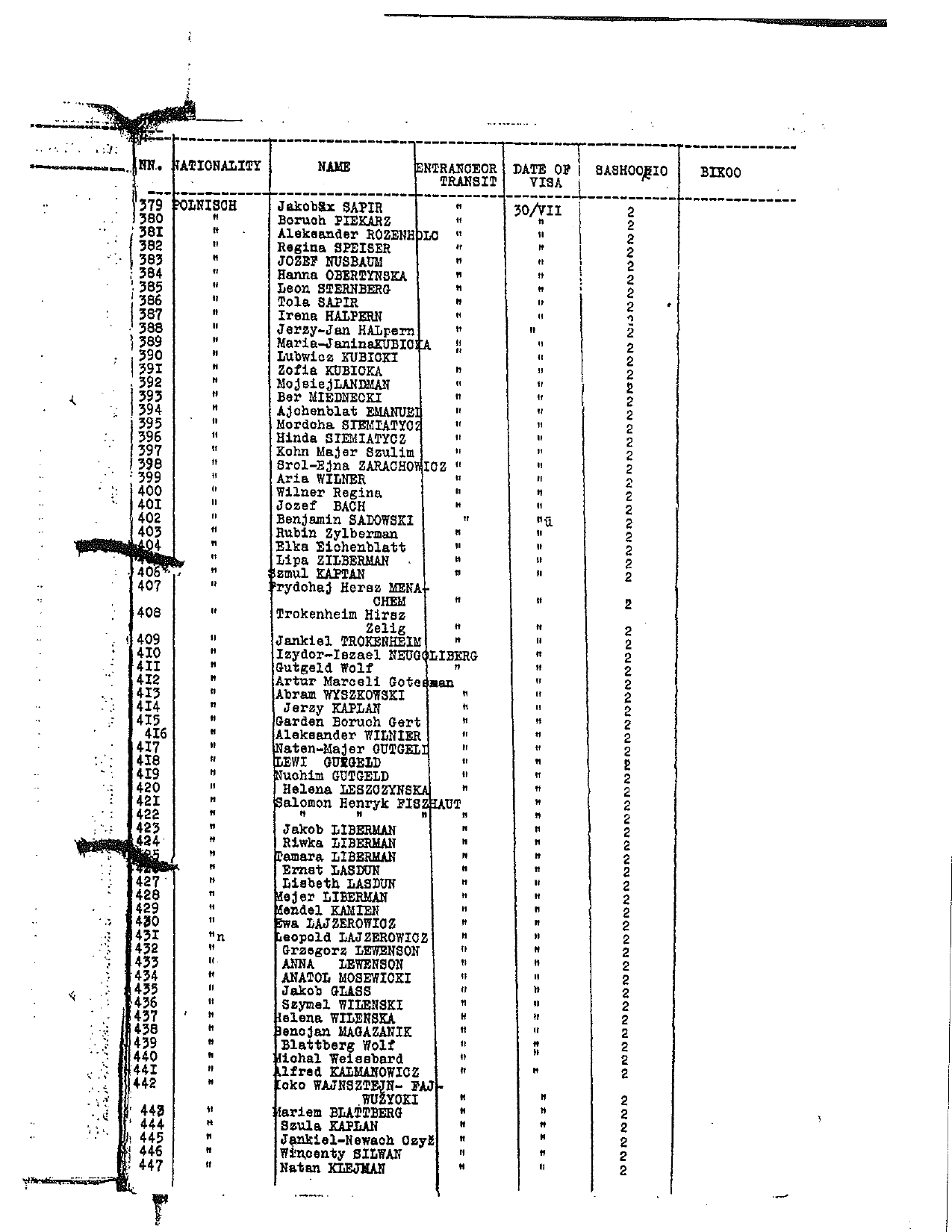
Jakob Liberman received transit visa no. 423 at the Japanese consulate in Kaunas on 30 July 1940. Aged 21 in 1940.
What the register records
- Nationality as recorded
- Polnisch
- Age in 1940
- 21
- Family, per the Kitade-Bluman list
- one child
The journey
Reached Japan; reached Shanghai; registered in Kobe for Palestine.
What is known
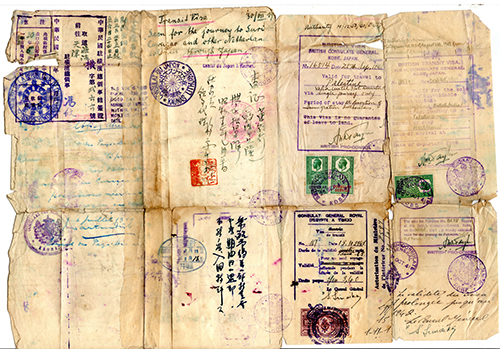
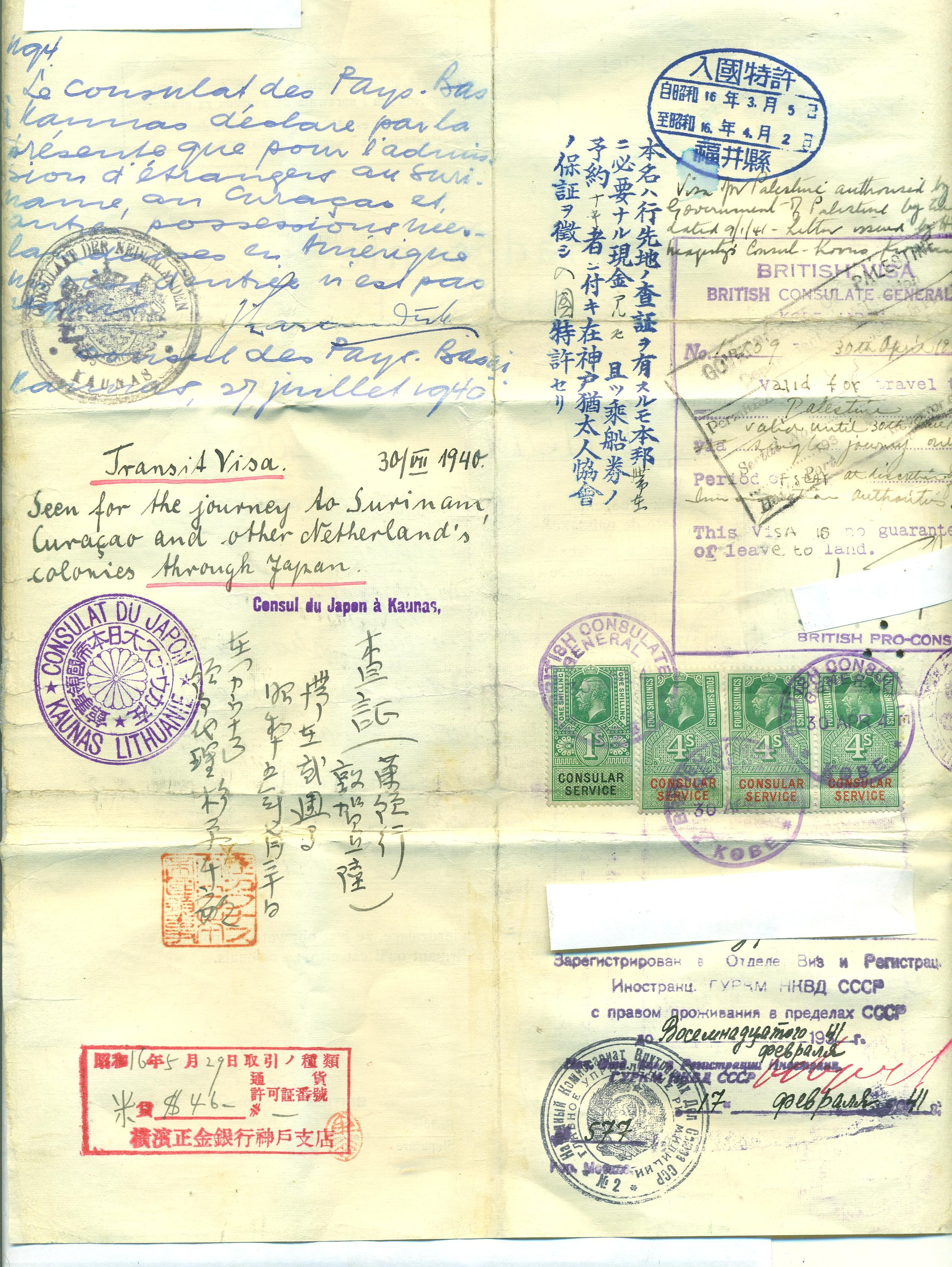
This document is a passport page bearing both a Curacao/Netherlands destination declaration from the Dutch Consulate at Kaunas (dated 27 July 1940, signed by Consul Jan Zwartendijk) and a Japanese transit visa issued by the Japanese Consul at Kaunas dated 30 July 1940. The transit visa permits the journey to Surinam, Curacao and other Netherlands colonies through Japan. Additional stamps show a Soviet NKVD registration (February 1941), a Japanese entry permit (Fukui Prefecture, Showa 16 / 1941), a Yokohama Specie Bank Kobe branch currency stamp, and a British visa for Palestine issued at the British Consulate General in Kobe, indicating the holder traveled the Trans-Siberian route through the USSR to Japan (Kobe) and onward toward Palestine.
An open passport spread showing multiple transit and consular visa stamps, including a British Consulate-General (Kobe, Japan) transit visa and a Netherlands colonial visa reference, consistent with the Sugihara/Zwartendijk escape route through Japan. The document bears numerous Japanese-language stamps and consular seals but no clearly legible holder name.
Le Consulat des Pays-Bas a Kaunas declare par la presente que pour l'admission d'etrangers au Surinam, au Curacao et autres possessions neerlandaises en Amerique Consul des Pays-Bas, Kaunas, 27 juillet 1940 Transit Visa. 30/VII 1940. Seen for the journey to Surinam, Curacao and other Netherland's colonies through Japan. Consul du Japon a Kaunas Visa for Palestine authorised by Government of Palestine BRITISH CONSULATE GENERAL This visa is no guarantee of leave to land.
BRITISH CONSULATE GENERAL, KOBE, JAPAN Transit Visa No. 16346 Good for the journey to Valid for travel to Netherlands colonies This visa to be filled up on leave in transit CONSULAT GENERAL ROYAL, KOBE & TOKIO
Where this comes from
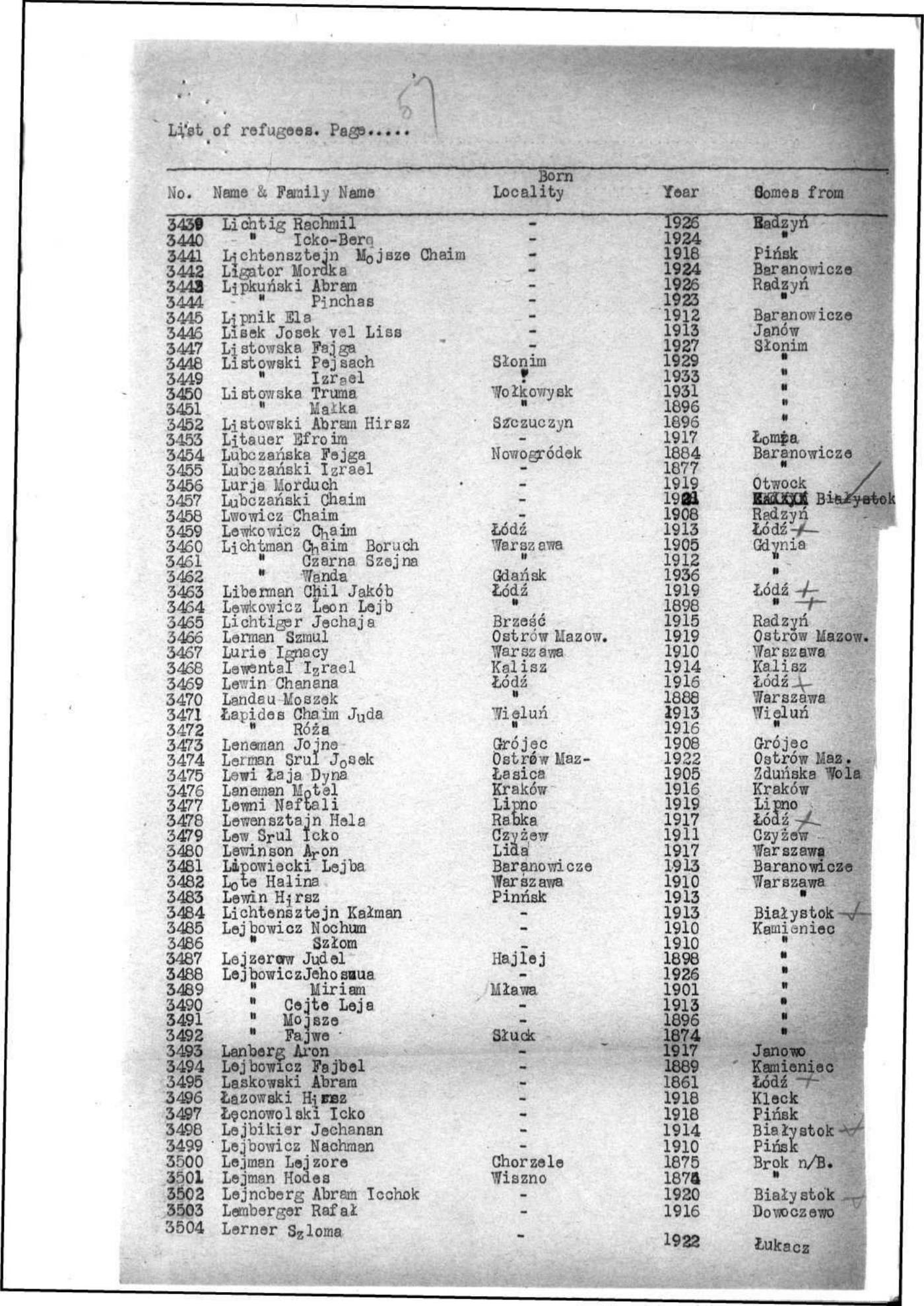
- List of Refugees, Vilna, 1940 — JDC Archives, New York, collection AR 33/44, file 00876. The contemporary register of Polish Jewish refugees in Lithuania, running to more than nine thousand numbered entries; the fullest independent check…
The 1940 Vilna refugee list has, at entry 3463, Chil Jakób Liberman, born 1919 at Łódź, who had come from Łódź; the year agrees with the register's age. - Takaharu Furue, Director, Port of Humanity Institute: “Table of Jewish refugees entering Japan in October — from the records of Sugihara survivors who landed at Tsuruga” (資料調査: 10月分ユダヤ避難民入国者表), Journal of the Japan Sea Coastal History Re…
The Fukui prefectural police's table of the Jewish refugees who entered Japan in October 1940, as Takaharu Furue publishes it, records the landing at Tsuruga on 9 October 1940 of アブラハム, aged 3, as the son of No. 428, written メイエル・リベルマン. Furue gives this entry Sugihara's number 423, but the police record a son Abraham aged 3, and the register line is Jakob Liberman, whom the compiled register makes 21, so the archive shows it as a possible record, not as this person's. - The unfolded pages of a travel document: a Sugihara transit visa, a British visa, Japanese endorsements, and consular fee stamps.
- A visa page: the Dutch consul's Curaçao declaration of July 1940, a handwritten Sugihara transit visa of 30 July 1940, a British visa, a Soviet registration stamp and Japanese stamps; the holder is not named on the page.