Mira Rozenblat
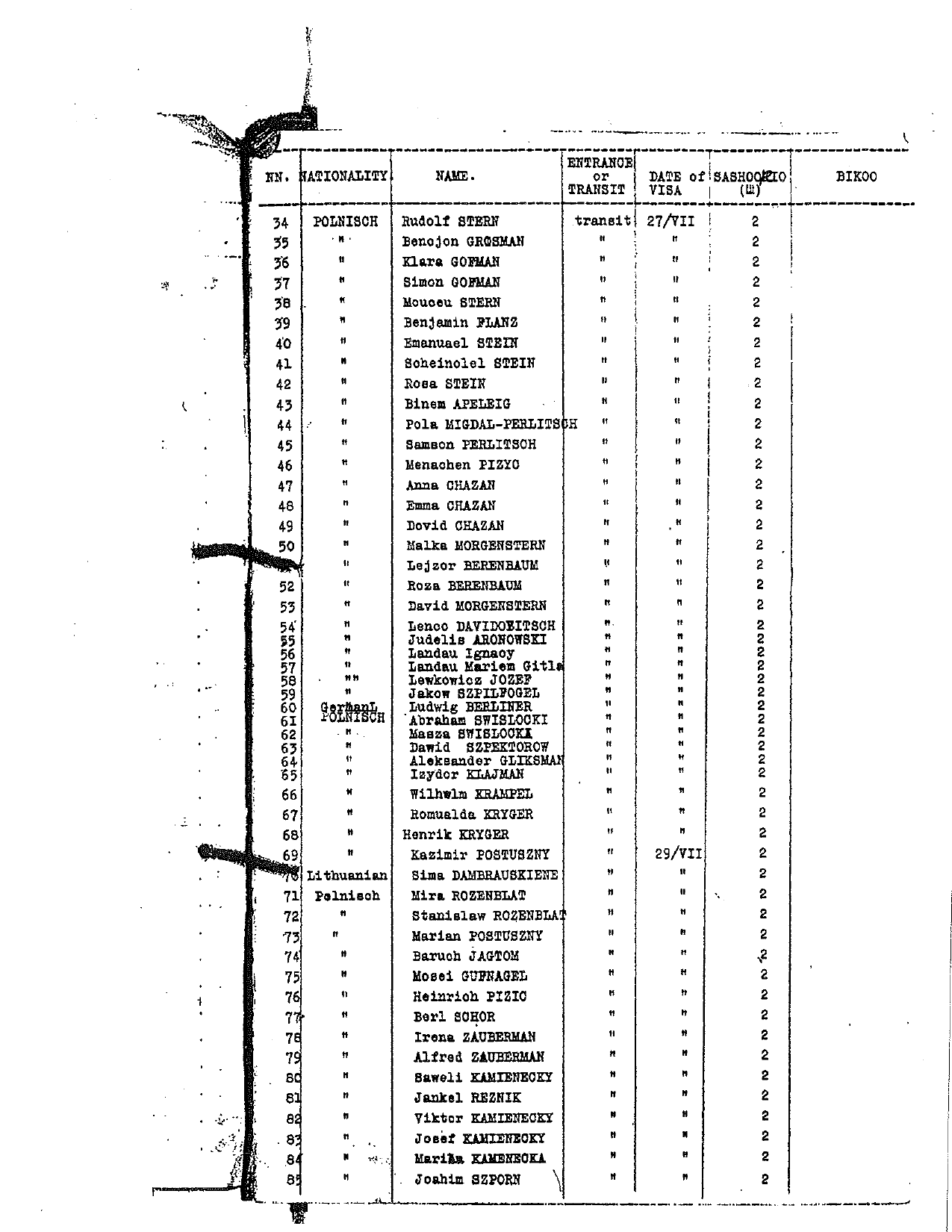
Mira Rozenblat received transit visa no. 71 at the Japanese consulate in Kaunas on 29 July 1940. Aged 25 in 1940.
Documents
| Name | Mira Rozenblat |
|---|---|
| Citizenship | Polnisch [Polish] |
| Visa | Transit |
| Issued | 29 Jul 1940 · arrived in Japan 25 Jan 1941 |
| Line | 71 |
What the register records
- Nationality as recorded
- Polnisch
- Age in 1940
- 25
- Family, per the Kitade-Bluman list
- wife of #72
The journey
Reached Japan; reached Shanghai; aided by the Polish ambassador Tadeusz Romer; registered in Kobe for Australia.
What is known
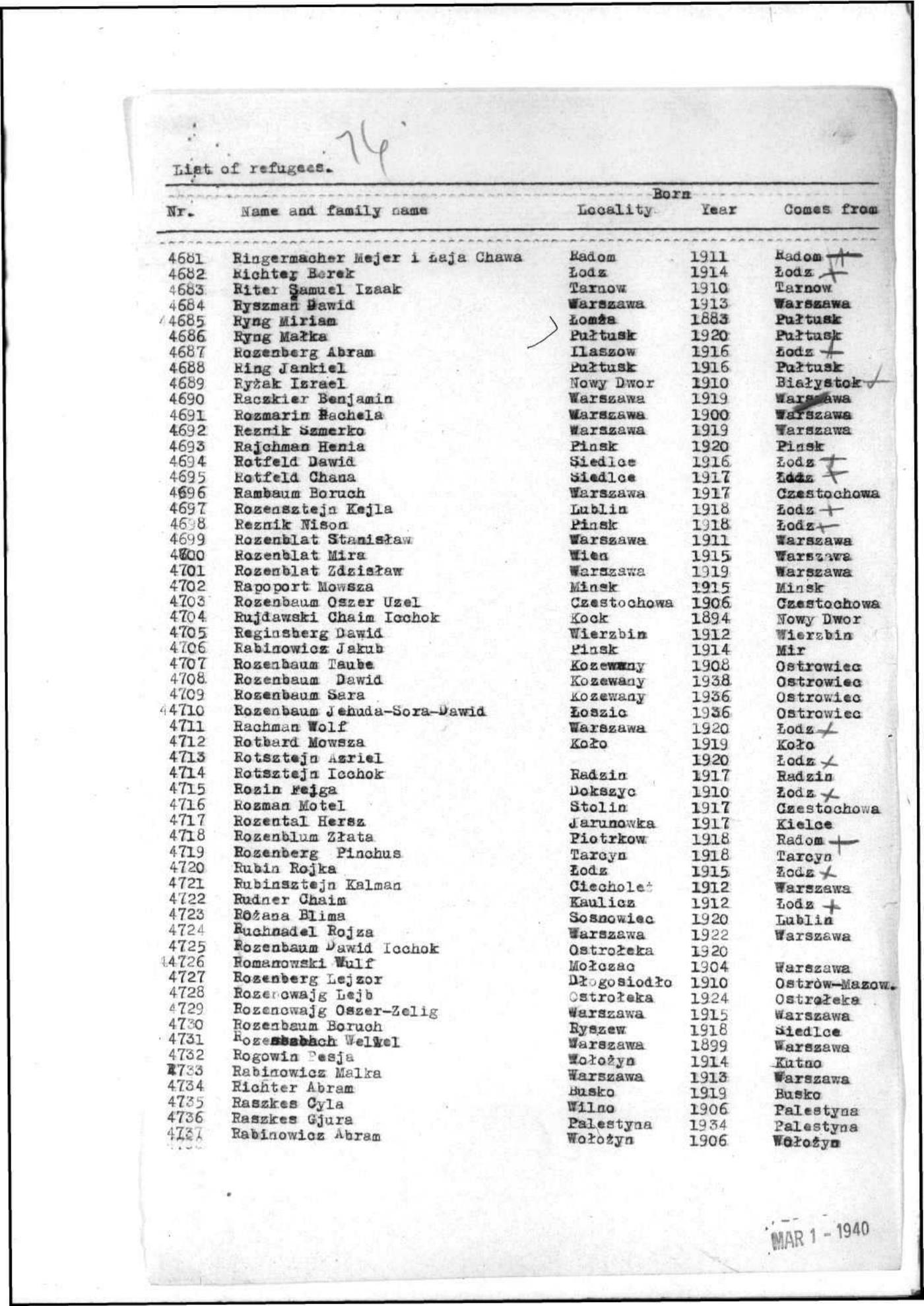
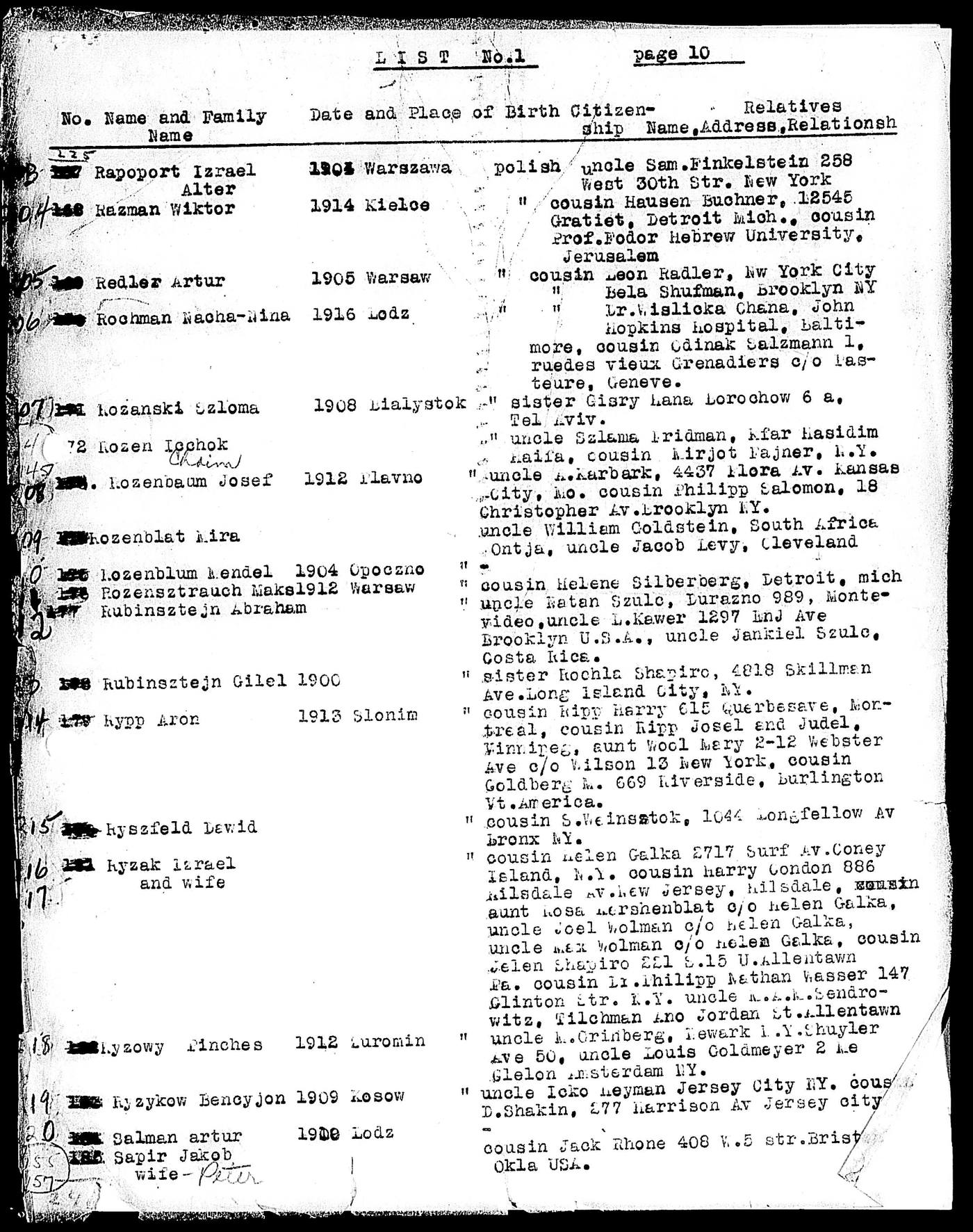
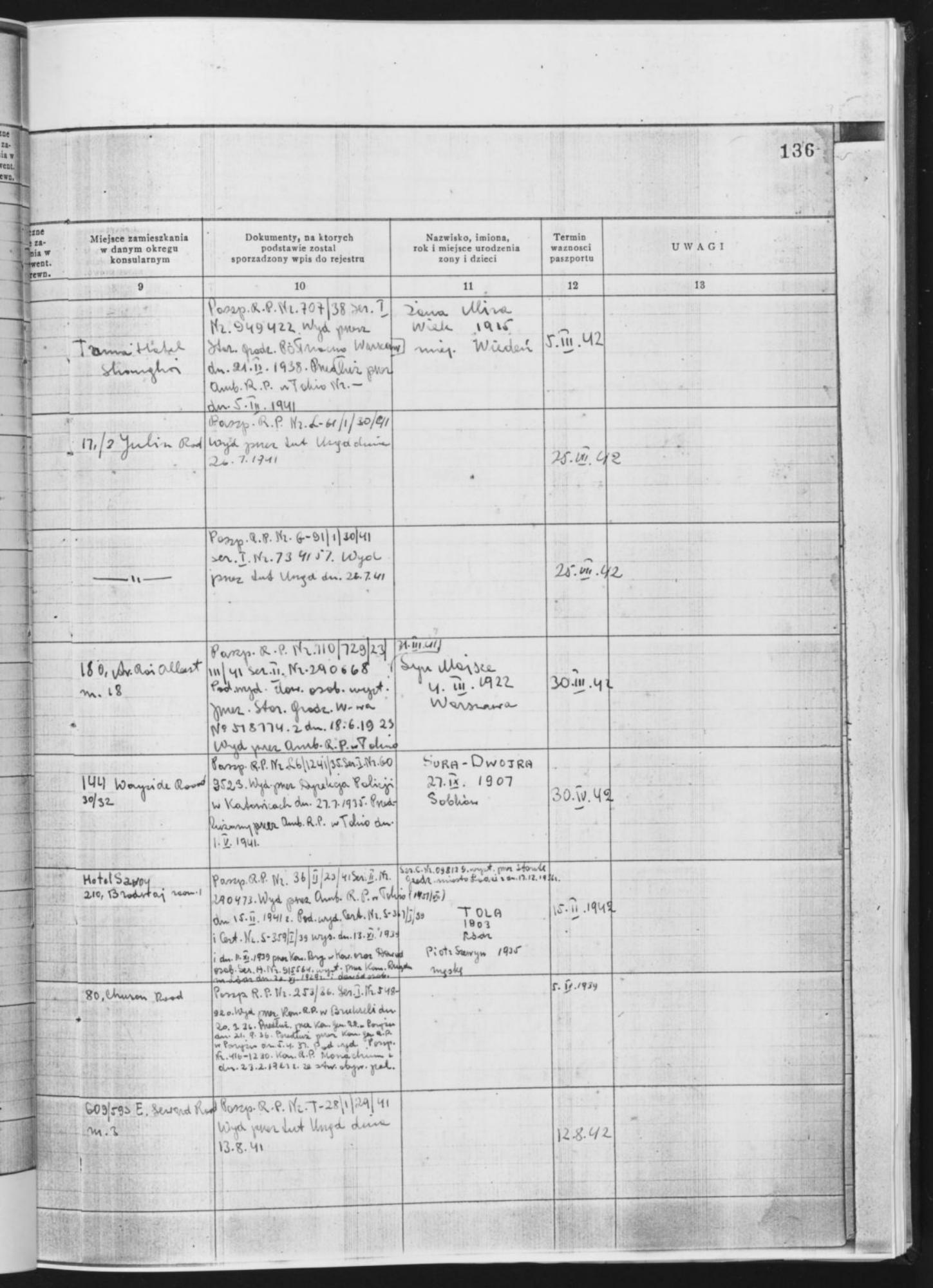
Mira Rozenblat, twenty-five by the compiled register's count, received Sugihara's transit visa at Kaunas on 29 July 1940; the compiled register notes that she was the wife of the man on the next line, No. 72. The 1940 Vilna refugee list has her at entry 4700, born 1915 at Vienna, come from Warsaw. The Kobe community's list of refugees and their relatives abroad names an uncle, William Coldstein, in South Africa and an uncle, Jacob Levy, in Cleveland as the relatives who could be written to, and the American museum's transcription of the Kaunas register puts her arrival in Japan on 25 January 1941. The Polish consulate's ledger at Shanghai has her, born in 1915 at Vienna, as the wife named on the entry of her husband, Stanislaw Rozenblat, made in July 1941 at the Tamai Hotel. The Kobe community's list of departures for July 1941 records her leaving Kobe on the Taiyo Maru on 18 July 1941, bound for Australia. That is the last record the archive holds.
Where this comes from
- List of Refugees, Vilna, 1940 — JDC Archives, New York, collection AR 33/44, file 00876. The contemporary register of Polish Jewish refugees in Lithuania, running to more than nine thousand numbered entries; the fullest independent check…
The 1940 Vilna refugee list has, at entry 4700, Mira Rozenblat, born 1915 at Vienna, who had come from Warsaw; the year agrees with the register's age and Vienna agrees with the archive's other records. - The Kobe relatives list — refugees at Kobe in 1941 recorded with their relatives abroad. Seventy-six pages in numbered sheets (LIST No. 7, No. 16 and others), each line giving a name, age, birthplace, occupation and citizenship, and then…
The Kobe community's list of refugees and their relatives abroad gives as relatives abroad an uncle, William Coldstein, Ontja, South Africa; an uncle, Jacob Levy, Cleveland. - United States Holocaust Memorial Museum, Holocaust Survivors and Victims Database — the Flight and Rescue electronic dataset (source 20725): USHMM's own transcription of the Kaunas register, 2,140 persons with citizenship, visa type, iss…
USHMM Flight and Rescue dataset: arrived in Japan 25 Jan 1941 (line 71) - The Shanghai Ledger — register of Polish citizens kept by the Consulate of Poland in Shanghai, 1934-1943 (original at the Archives of the Polish Ministry of Foreign Affairs, ref. 43/2003; digitised by the Library of Congress; indexed as…
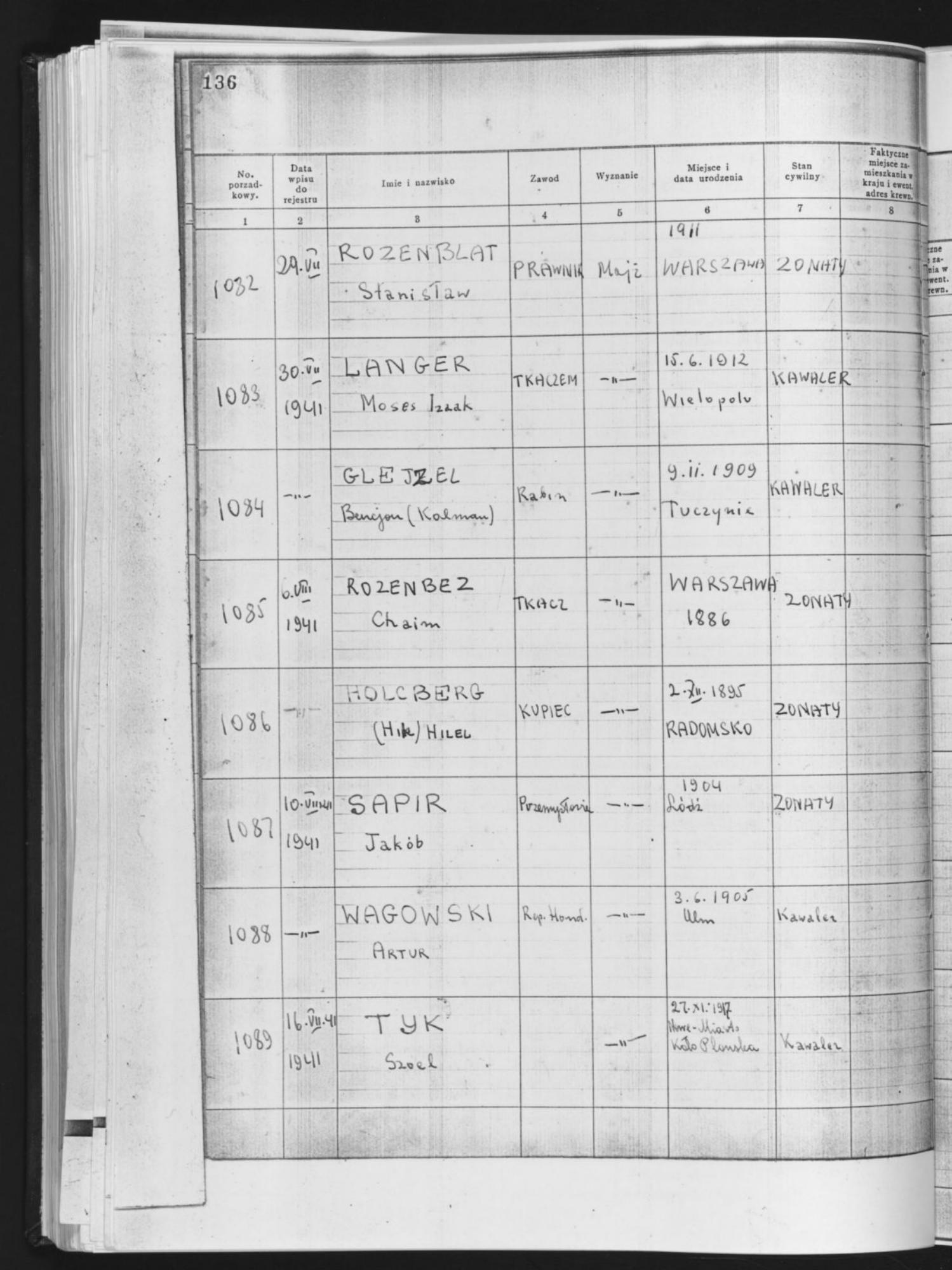
Registered with the Polish Consulate in Shanghai (ledger entry 1082) — found on reading the ledger page itself — the ledger reads: Rozenblat Mira, born 1915 Vienna — named as wife on her husband Stanislaw Rozenblat's Shanghai entry 1082 (July 1941, Tamai Hotel). - Arolsen person record: MIRA ROSENBLATT
[context] PlaceBirth: KAUNAS; Dob: 03/12/1924 - JDC Archives, New York, collection AR 33/44 file 53 (the Jewish Community of Kobe's returns to the JDC, 1941; Set I, item 00761) — Set I pp. 5–7 — "List… — "List of persons who left Japan for Shanghai in the month of July 1941", Nos. 1–15
She left Kobe on the Taiyo Maru on 18 July 1941, bound for Australia (the Jewish Community of Kobe's list of departures, July 1941 (JDC Archives, AR 33/44 file 53)). The list reads: "″ Mira". (Taiyo Maru, Kobe, 18 July 1941, destination Australia.)