Nachman Dawid Gromadzin
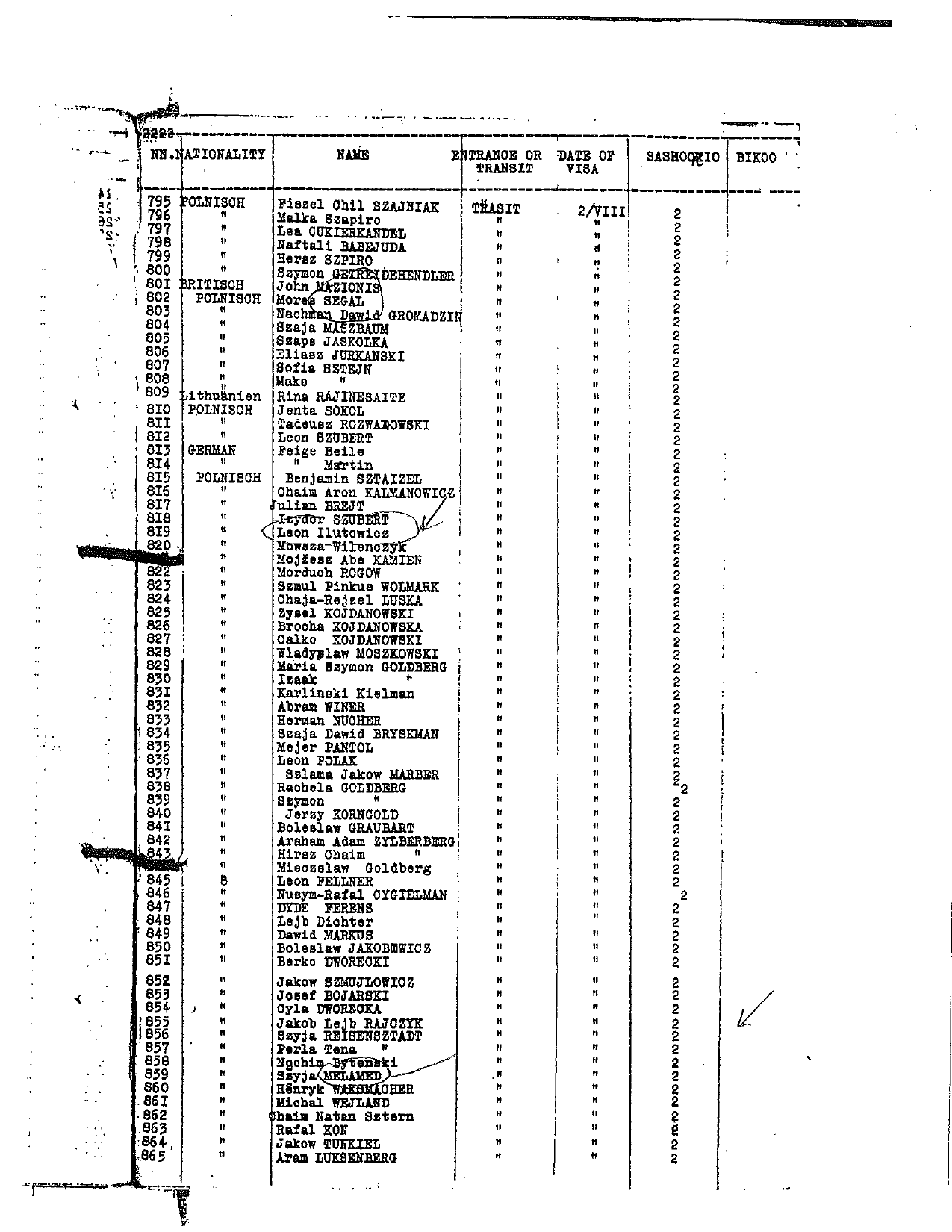
Visa no. 803 · Kaunas, 2 August 1940
Nachman Dawid Gromadzin received transit visa no. 803 at the Japanese consulate in Kaunas on 2 August 1940. Aged 18 in 1940.
The records themselves3 documents
What the register records
- Nationality as recorded
- Polnisch
- Age in 1940
- 18
The journey
Reached Japan.
Where this comes from
- "Washington, King, Seattle, Passenger Lists, 1890-1957", FamilySearch — index entry for Nachman David Gromadzia, 1940: born about 1916, Poland. Digitised from NARA microfilm publication M1383 (passenger and crew lists of vessels arriving…
FamilySearch's index of the Seattle passenger lists, read by the archive on 20 September 2026, has Nachman David Gromadzia, born about 1916 in Poland, arriving at Seattle in 1940. The register's compiled line gives 1922. A lead only: the birth years are 6 years apart, which is more than the archive accepts without the sheet. - Manifest of alien passengers, MS Hikawa Maru, sailing from Kobe 1 November 1940, arrived Seattle 17 November 1940 (NARA, passenger and crew lists of vessels arriving at Seattle, M1383, film 258; read on FamilySearch's copy)
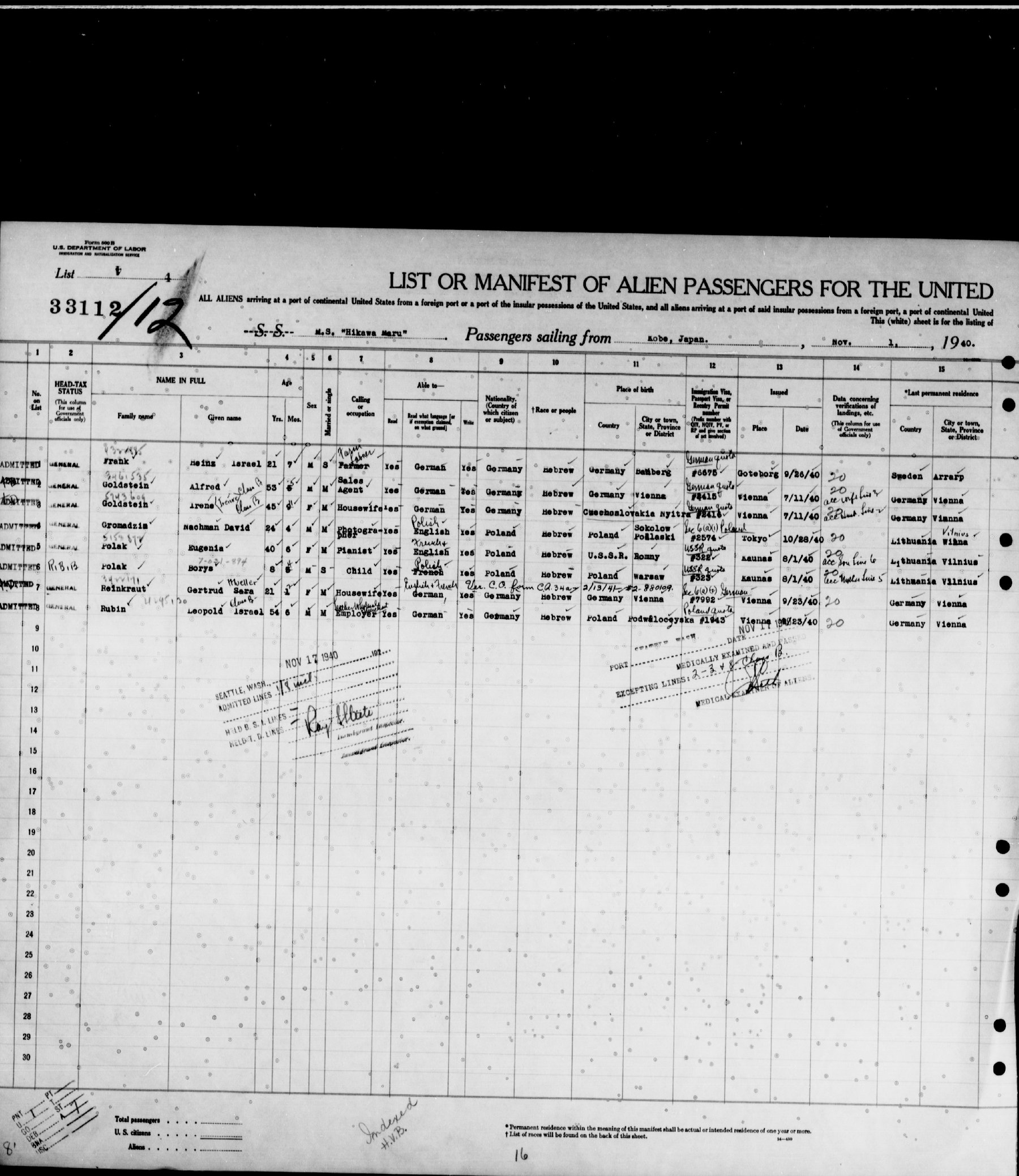
The Hikawa Maru sailed from Kobe on 1 November 1940 and reached Seattle on 17 November, all eight passengers on this page admitted; its manifest has Nachman David Gromadzia, aged 24, married, a photographer, reading Polish and English, born at Sokołów Podlaski, last residence Wilno, on a Polish quota immigration visa, No. 2574, issued at Tokyo on 28 October 1940, four days before sailing. The register's line reads Nachman Dawid Gromadzin, a letter apart from the purser's Gromadzia; the register gives his age as 18, six years less than the purser's, and the archive notes the difference rather than resolving it. (The sheet is in the National Archives' passenger and crew lists of vessels arriving at Seattle, microfilm M1383; the archive read FamilySearch's copy.) - Yad Vashem Archives, Jerusalem — the card file of Jewish refugees from Poland who found refuge in various countries, 1939–1941
Yad Vashem's card file of Jewish refugees from Poland who found refuge in various countries, 1939–1941, has a card for Chaim Gromadzin, who was in Wilno during the war. The archive attaches it under its rule of 19 September 2026: the card file is a record of the refugees in Wilno, where the road through Sugihara's visas began; the full name occurs once on the register; and the card places the person in Wilno in 1939–41, on the road to Sugihara's visas. Credit: Yad Vashem Archives. - Takaharu Furue, Director, Port of Humanity Institute: “Table of Jewish refugees entering Japan in October — from the records of Sugihara survivors who landed at Tsuruga” (資料調査: 10月分ユダヤ避難民入国者表), Journal of the Japan Sea Coastal History Re…
The Fukui prefectural police's table of the Jewish refugees who entered Japan in October 1940, as Takaharu Furue publishes it, records the landing at Tsuruga on 9 October 1940 of ナフマン・ダビッド・グロマヂン, aged 24, Polish, a photographer, bound for the United States. Furue gives this entry Sugihara's number 803, but the police give the age as 24 and the compiled register as 18, so the archive shows it as a possible record, not as this person's. - The numbered Sugihara visa list, the page of 2 August 1940 carrying Nos. 795 to 865 (among them No. 805, Szaps Jaskolka), photographed beside a ruler.
- A ship, arriving at Seattle in 1940: list or manifest of alien passengers, the sheet that names Nachman David Gromadzia — US National Archives, Record Group 85 (Immigration and Naturalization Service), Passenger and Crew Lists of Vessels…
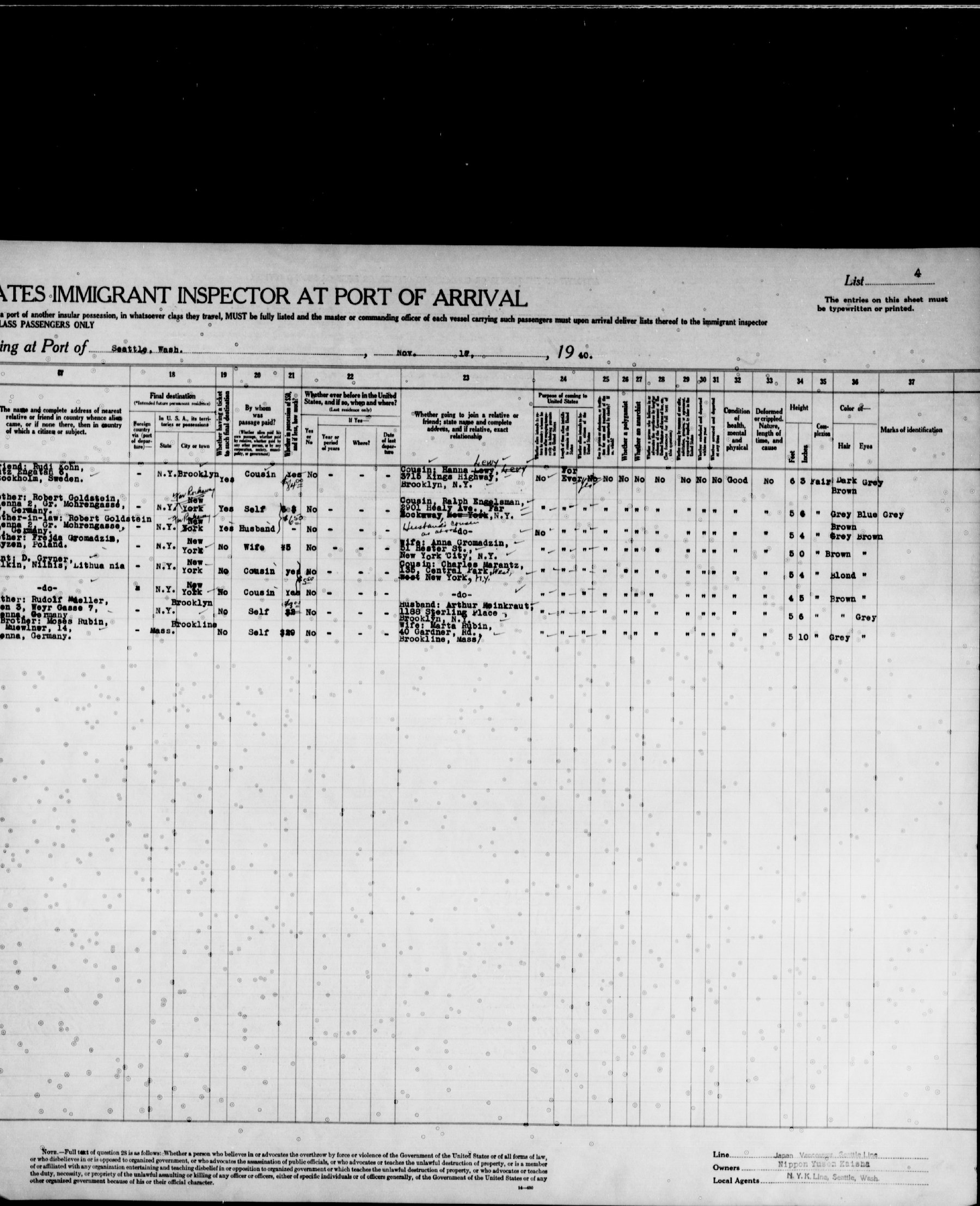
- The PASSENGERS, arriving at Seattle in 1940: the continuation sheet, with the relatives named and the destinations, for the sheet that names Nachman David Gromadzia — US National Archives, Record Group 85 (Immigration and Naturalization…
×![]()