Szyja Melamed
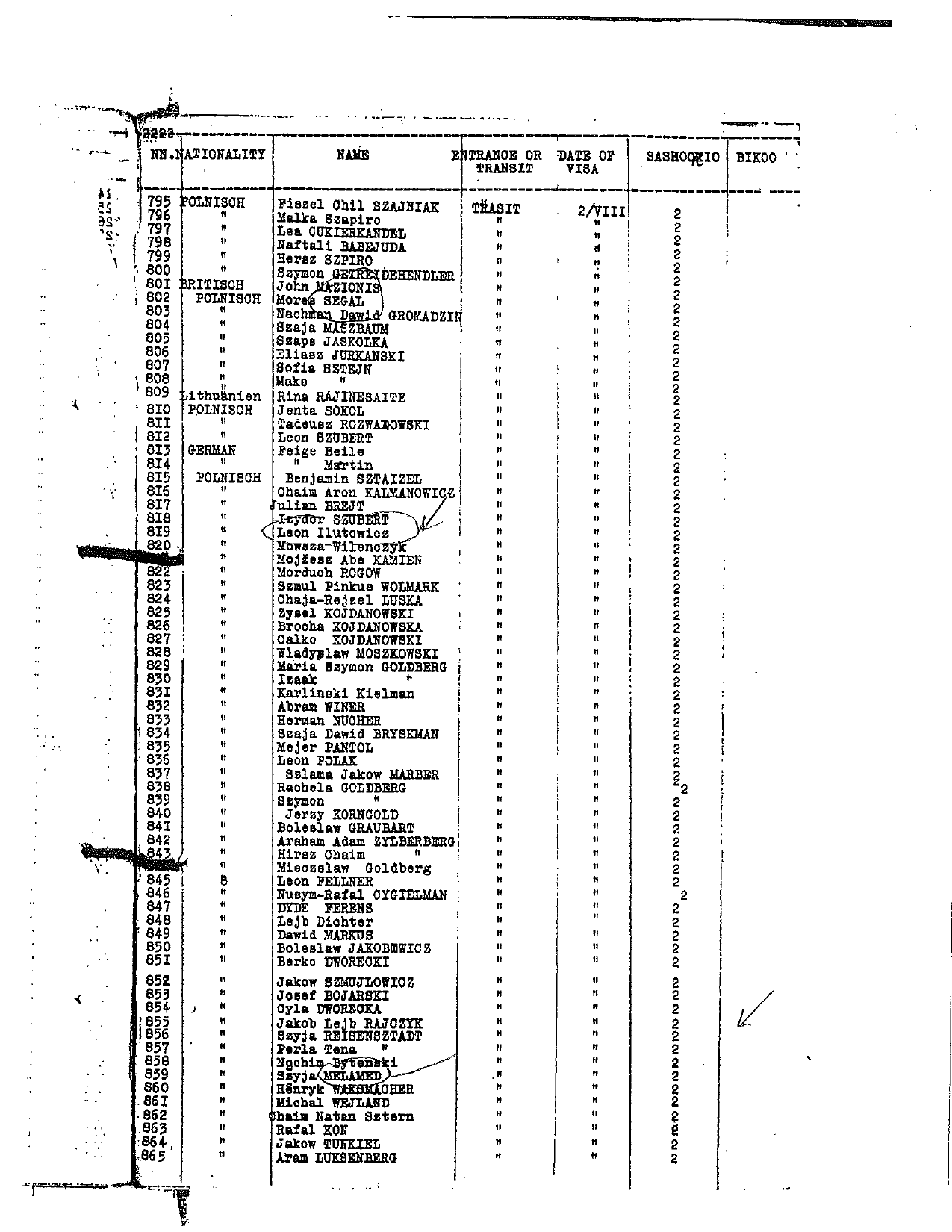
Szyja Melamed received transit visa no. 859 at the Japanese consulate in Kaunas on 2 August 1940. The register records merchant, aged 34.
Documents
| Name | Szyja Melamed |
|---|---|
| Citizenship | Polnisch [Polish] |
| Visa | Transit |
| Issued | 2 Aug 1940 · arrived in Japan 13 Jan 1941 |
| Line | 859 |
What the register records
- Nationality as recorded
- Polnisch
- Age in 1940
- 34
- Occupation
- Merchant
The journey
Reached Japan; aided by the Polish ambassador Tadeusz Romer; registered in Kobe for USA.
What is known
The Melamdovich family fled Bialystok to Wilno, where they lived on Straszuna Street until the Soviets seized Lithuania in July 1940. Father Isaac, an anti-communist Bundist in hiding, obtained a Sugihara transit visa in Kaunas, and the family received their transit visa to Japan on August 31, 1940. They escaped via the Trans-Siberian Railway to Vladivostok, on to Japan, and eventually settled in Chicago, where the son Leo (later Leo Melamed) became a famous futures pioneer.
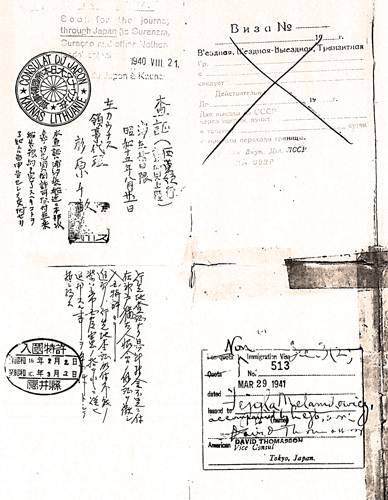
The image shows a Japanese Consulate transit visa stamp associated with Chiune Sugihara, permitting travel through Japan en route to Curacao and other Dutch colonies. The document bears a Soviet transit visa section and a U.S. immigration visa (No. 513) issued March 29, 1941, in Tokyo, Japan, by Vice Consul David Thomasson, for a person named Melamdovich. It is catalogued here under the name Leo Melamed, who as a child escaped with his family via the Sugihara route.
Leo Melamed was seven when Germany invaded Poland in 1939. His father, a mathematics teacher and Bialystok City Council member, fled to Vilna fearing arrest, and Leo and his mother later joined him. After the Soviets occupied Vilna, Leo's father obtained transit visas to Japan; the family left Vilna in December 1940, crossed the Soviet Union on the Trans-Siberian Express, arrived in Japan in January 1941, obtained U.S. visas, and immigrated in April 1941.
We received our transit visa to Japan on August 31,1940. The cost of securing the transit visa was an administrative fee of only one American dollar, the price of a lottery ticket today. A visa from the Russians is a one-way passport to Siberia. Like everyone else, Isaac Moishe Melamdovich was hoping to squeeze through some bureaucratic crack for a dash at freedom.
Good for the journey, through Japan (to Curacao), Curacao and other Nethon Dutch (colonies) 1940 VIII 21 Non-Immigration Visa 513 MAR 29 1941 DAVID THOMASSON Vice Consul Tokyo, Japan
After the Soviets occupied Vilna, Leo's father obtained transit visas to Japan. The family left Vilna in December 1940, traveled across the Soviet Union on the Trans-Siberian Express, and arrived in Japan in January 1941.
Where this comes from
- United States Holocaust Memorial Museum, Holocaust Survivors and Victims Database — the Flight and Rescue electronic dataset (source 20725): USHMM's own transcription of the Kaunas register, 2,140 persons with citizenship, visa type, iss…
USHMM Flight and Rescue dataset: arrived in Japan 13 Jan 1941 (line 859) - "California, San Francisco, Passenger Lists, 1893-1953", FamilySearch — index entry for Szyja or Szija Melamed, 1941: born about 1906, Poland. Digitised from NARA microfilm publication M1410 (passenger lists of vessels arriving at San Fr…
FamilySearch's index of the San Francisco passenger lists, read by the archive on 20 September 2026, has Szyja or Szija Melamed, born about 1906 in Poland, arriving at San Francisco in 1941. The register's compiled line gives 1906, and the two agree. The name occurs once on the register, and a Polish-born passenger landing at San Francisco in 1941 fits the route through Japan, so the entry is taken as this person's under the archive's rule of 19 September 2026 for records from the route. - Manifest of alien passengers, SS Kamakura Maru, sailing from Yokohama March 27th 1941, arrived San Francisco April 10th 1941 (US National Archives, M1410, film 369; read on FamilySearch's copy)
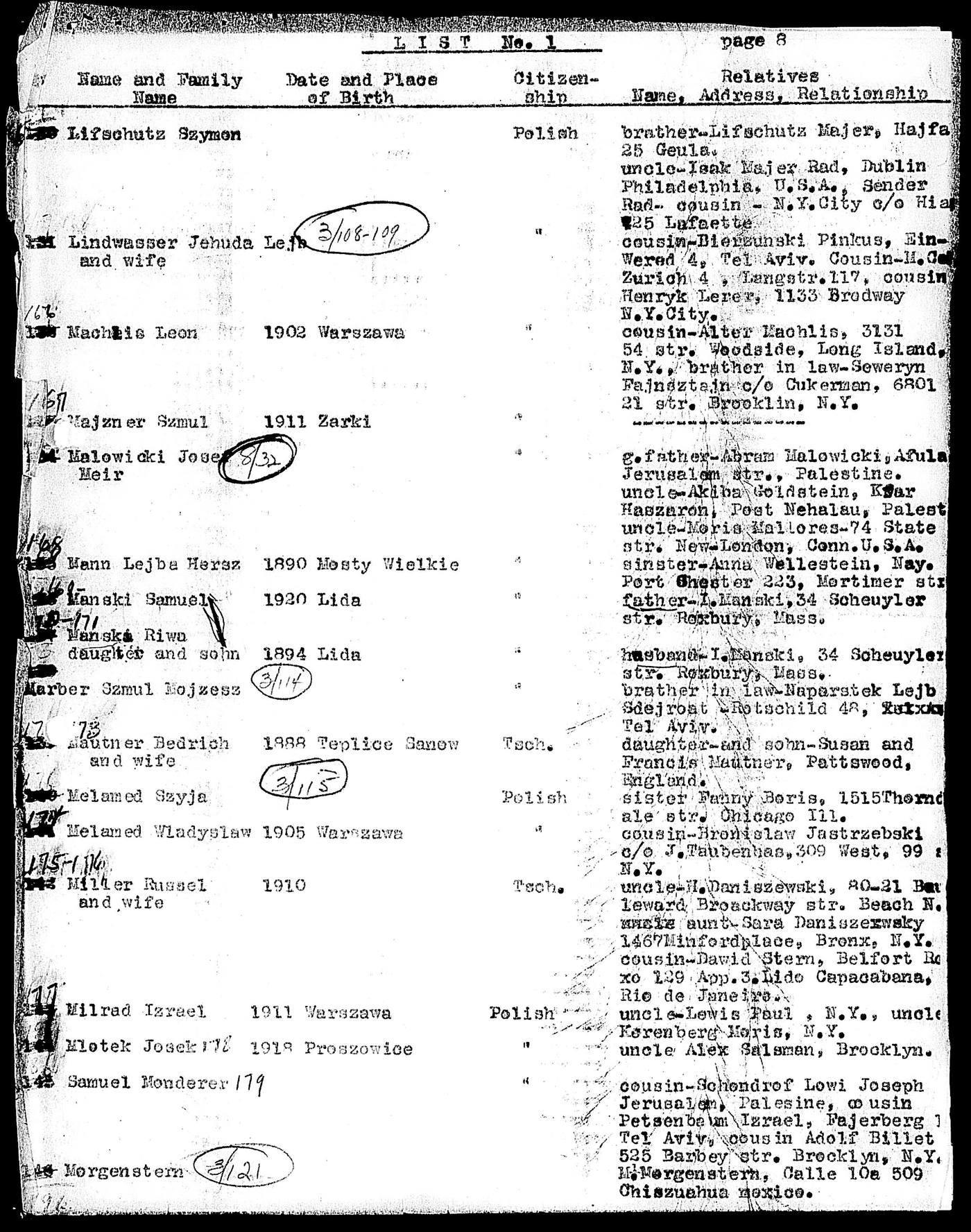
He reached San Francisco on 10 April 1941 on the Kamakura Maru from Yokohama with an American immigration visa issued at Yokohama on 14 March, going to his brother-in-law Benjamin Borris in Chicago, according to the passenger list held by the National Archives (FamilySearch's copy). The list gives his birthplace as Włodzimierzec. - The Kobe relatives list — refugees at Kobe in 1941 recorded with their relatives abroad. Seventy-six pages in numbered sheets (LIST No. 7, No. 16 and others), each line giving a name, age, birthplace, occupation and citizenship, and then…
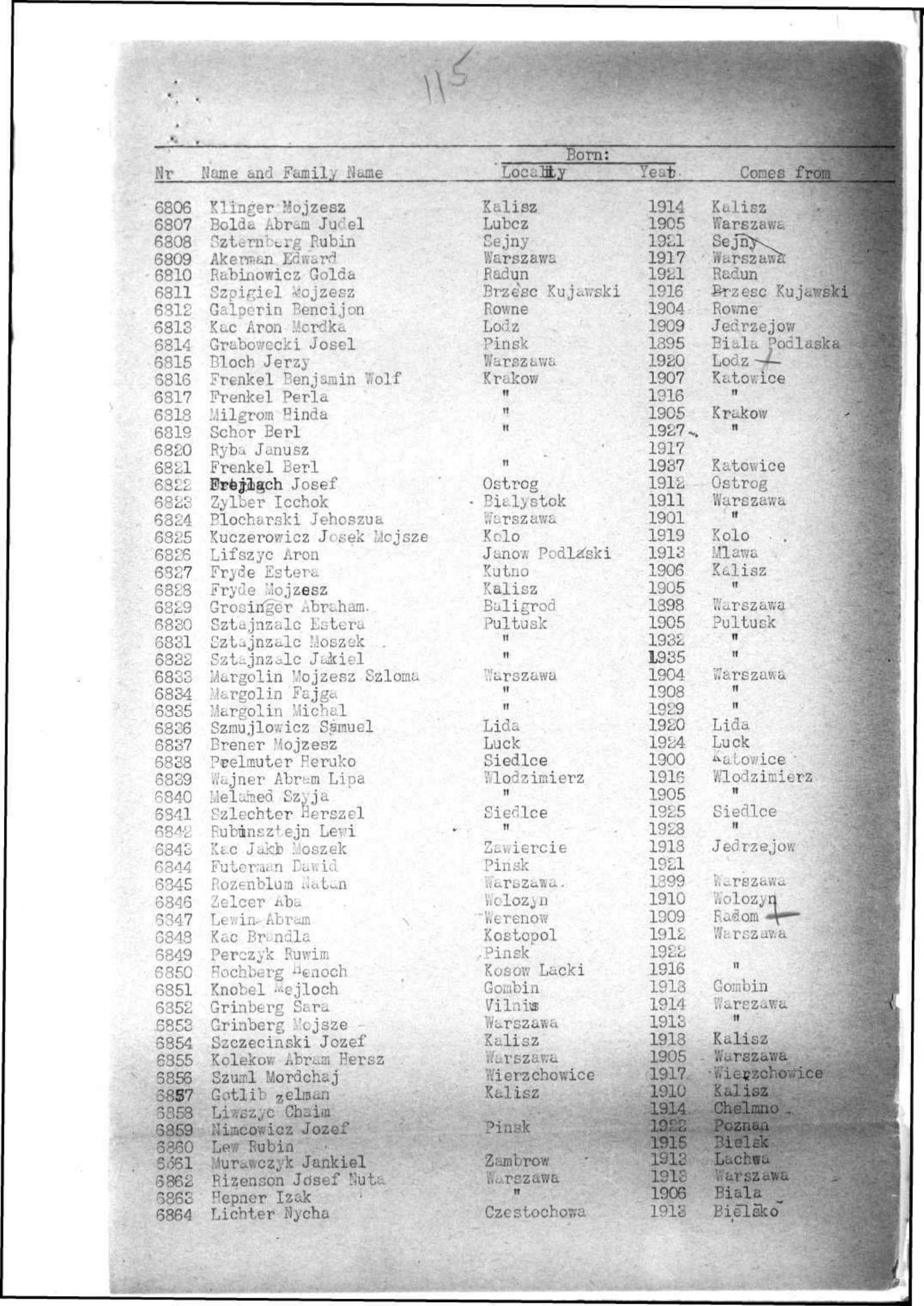
The Kobe community's list of refugees and their relatives abroad has Szyja Melamed, Polish, with no year or birthplace. The name occurs only once on Sugihara's list and the list is of refugees at Kobe in 1941, the route his visa took; that is the basis of this attachment. - List of Refugees, Vilna, 1940 — JDC Archives, New York, collection AR 33/44, file 00876. The contemporary register of Polish Jewish refugees in Lithuania, running to more than nine thousand numbered entries; the fullest independent check…
The 1940 Vilna refugee list has, at entry 6840, Melamed Szyja, born 1905 at Włodzimierz, who came from Włodzimierz; the year agrees with the age the register gives. - The numbered Sugihara visa list, the page of 2 August 1940 carrying Nos. 795 to 865 (among them No. 805, Szaps Jaskolka), photographed beside a ruler.
- A visa page of the Melamdowicz family: the Sugihara transit visa of 21 August 1940, a Japanese landing stamp, and an American immigration visa, No. 513, issued at Tokyo on 29 March 1941 by Vice Consul David Thomasson for Fejga Melamdowic…
- Flight and Rescue: Journey to Japan Personal Stories | Holocaust Encyclopedia
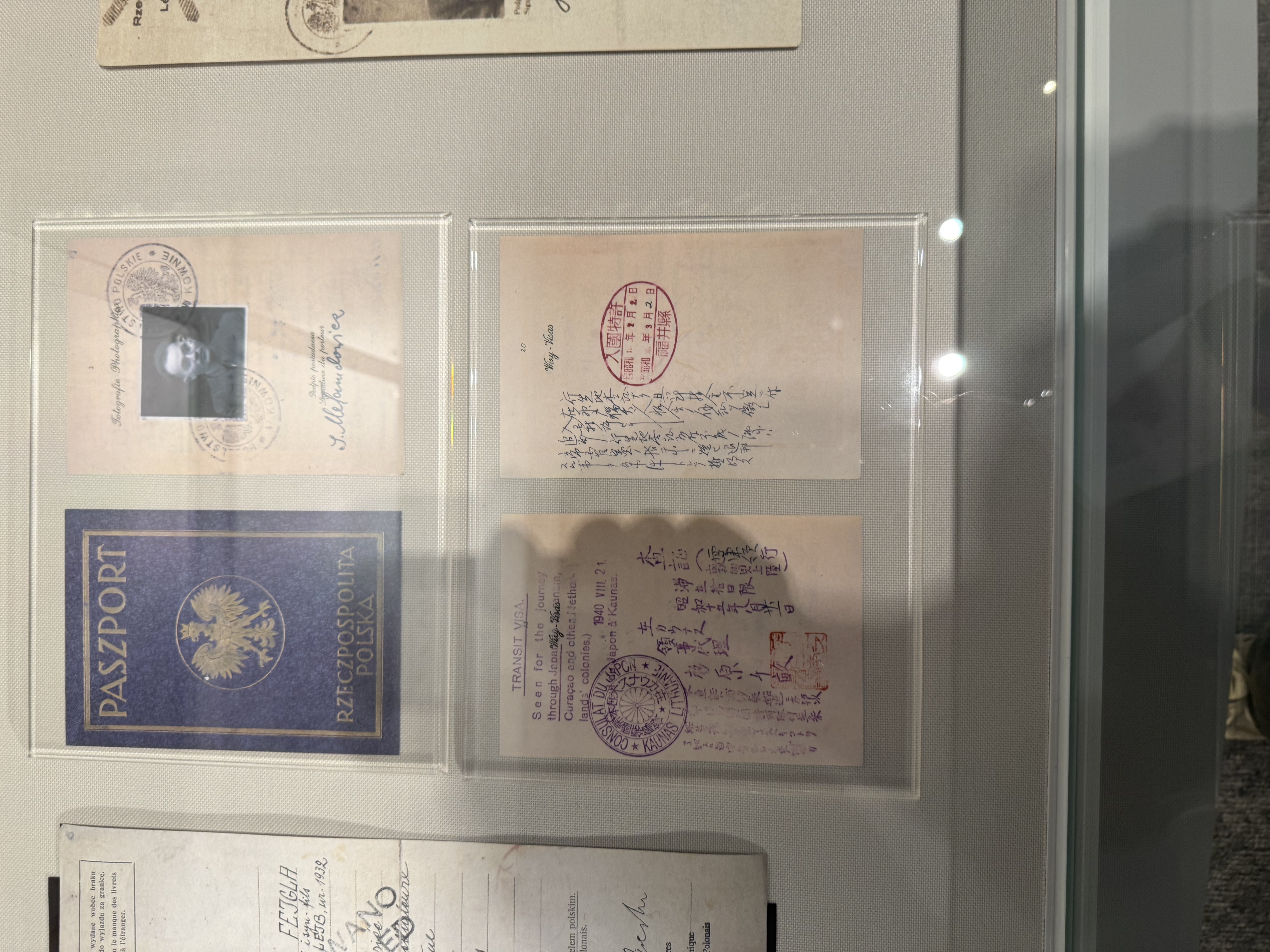
- A Polish passport of the Melamdowicz family with its photograph and visa pages, among them the Sugihara transit visa of 21 August 1940, shown in an exhibition case.
- Leo Melamed: Escape to the Futures - Sugihara's Stand
- Leo Melamed Retraces Path of Escape From Nazis to Japanese Port – The Forward
- Leo Melamed - Wikipedia
- Flyer for Junichi Kajioka's short documentary 'Sugihara Survivors: Jewish and Japanese, Past and Future' (25 minutes, Japan/UK, 2017), with notes on Akira Kitade's search for the people in the Japan Tourist Bureau album; five pages.
- On-Site Panel Discussion: Honoring the Legacy of Chiune Sugihara - Illinois Holocaust Museum
- Melamed family (Szyja/Leo Melamed) — certificate & passport (cleaned)